How Lebanon’s authorities can keep the Iran war from engulfing the country
March 2, 2026
Share
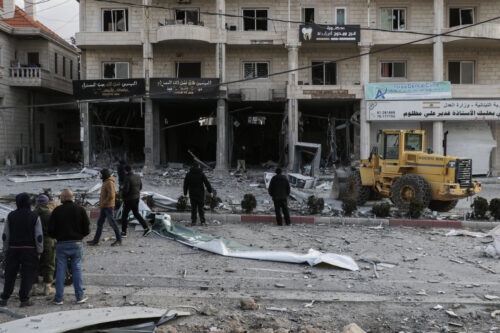
On Sunday night, March 1, Hizballah launched a modest salvo of missiles and drones toward northern Israel, fulfilling its earlier pledge to respond if Iran’s supreme leader, Ali Khamenei, is assassinated. Those six or so projectiles, which either fell in open areas without causing damage or were successfully intercepted, were enough to again sharply enflame the conflict inside of Lebanon. The Israeli military quickly followed up its defensive operation with a series of retaliatory strikes across Lebanese territory, including high-level assassinations. It then issued an evacuation call to more than 50 villages throughout Lebanon, while pledging an imminent forceful response to Hizballah in these areas, signaling how quickly this flare-up could widen the already volatile confrontation between the United States and Israel on the one side and Iran on the other. Images of jammed roads with thousands of residents fleeing their homes will go down as a telling indicator of Hizballah’s willingness to force the Lebanese to pay any price to serve the strategic interests of the Islamic Republic.
The volley of cross-border attacks by the militant group drew swift condemnation from Lebanon’s Prime Minister Nawaf Salam, who convened an urgent meeting of the Council of Ministers within hours. By morning, the Lebanese government announced a legal ban on Hizballah’s military and security activities, obliging it to hand over its arsenal, confining the group to the political sphere, and rejecting any armed operations launched from Lebanese territory. Salam also called on the Lebanese Armed Forces (LAF) to begin the second phase of disarming Hizballah north of the Litani River as well as prevent any further attacks. Finally, he reaffirmed his government’s commitment to the November 2024 cessation of hostilities between Hizballah and Israel along with a return to negotiations under international sponsorship.
Early reports indicate that Hizballah’s attack came from southern Lebanon. Notably, this occurred only weeks after the LAF claimed it had largely disarmed the militia group in the so-called Southern Litani region, between the de facto border and the Litani River, and announced its plan for the second phase of the disarmament process, focused north of the Litani.
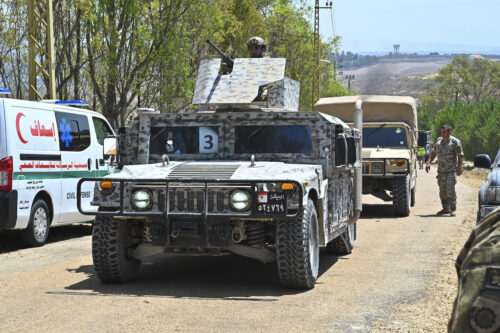
Up to this point, Beirut has largely framed the efficacy of its efforts to disarm the Tehran-backed armed Shi’a group through the framework of operational control. In other words, if paramilitary fighters were found to launch an attack from an area under the control of the LAF, the military would move quickly to stop, arrest, and dismantle the implicated units.
Today’s decision taken by the Lebanese government — to declare all of Hizballah’s security and military activities illegal — is a landmark development. But how the government and the LAF implement this directive now that a new round of attacks has actually taken place will be the ultimate test of their credibility.
On an immediate level, at stake is Lebanon’s legitimacy as a sovereign state capable of fulfilling its own mandate to exclusively decide matters of war and peace. That now rests on Beirut’s ability and willingness to thwart further such attacks by paramilitary groups operating on Lebanese soil as well as respond swiftly and effectively when they happen. Whether the state demonstrates the intent and competency to implement such decisive action will be critical to safeguarding its legitimacy and fulfilling its responsibility to shield the Lebanese population from a catastrophic war. It will also prove decisive in shaping the future of US support for the LAF, a message delivered clearly by US Senator Lindsey Graham, who againwarned that the Lebanese military would “pay a heavy price” if it did not “join the fight.”
Until now, Lebanon’s government and security establishment have avoided directly confronting Hizballah, adopting a phased and delayed approach to disarmament largely contingent on the militia’s compliance and Israel’s de facto enforcement. This risk-averse posture prioritized ensuring short-term internal stability over asserting the state’s monopoly on force, even as the threat of a renewed conflict with Israel remained as long as the Tehran-backed group held onto its arms. That mindset of prioritizing avoidance of confrontation with Hizballah over active steps to disarm it was not ideological; rather, it was born out of past experiences in which the group was able to kill, coerce, marginalize, or coopt domestic rivals and the state with relative impunity, especially during periods when US attention drifted. The lessons internalized by many in Beirut, at least until today, were: survive the present, do not expect US backing will endure, assume Iranian coercion will. Yet those old suppositions, which guided Beirut’s cautious playbook, are gone; and misreading Washington — or the new regional balance — will prove catastrophic.
Lebanon’s leadership must now focus on delivering tangible milestones that demonstrate an irreversible shift in mindset if it is to navigate one of the country’s most consequential inflection points. In the coming days, the government must show both seriousness of intent and capability to uphold its exclusive authority over decisions of war and peace. The LAF, in turn, must prove — to the Lebanese people themselves, as well as the US and regional neighbors — that it can and will stop any attacks that originate from its territory if it is to emerge as a security partner capable of preventing the country from becoming a Levantine launchpad for Iranian escalation.
Most of all, President Joseph Aoun and Prime Minister Salam must finally grasp the new strategic reality in the region and the full weight of the historic moment they occupy. They, too, must make it unmistakably clear to the Lebanese people, to the region, and to Washington that they can be counted on to disarm Hizballah. Their success will not only spare Lebanon from a major military escalation with Israel but also help the country establish its place in a new regional order by proving that a sovereign state can rise above sectarian militias.
Fadi Nicholas Nassar is a Senior Fellow at the Middle East Institute.
Photo by Nidal SOLH / AFP via Getty Images
The Middle East Institute (MEI) is an independent, non-partisan, not-for-profit, educational organization. It does not engage in advocacy and its scholars’ opinions are their own. MEI welcomes financial donations, but retains sole editorial control over its work and its publications reflect only the authors’ views. For a listing of MEI donors, please click here.