This article is part of a report outlining an actionable US roadmap to win in Lebanon, comprising eight chapters of specific policy interventions across the security, economic, and political dimensions needed to secure a sovereign Lebanon, lock in US gains against Iran, and permanently end the Israel-Lebanon conflict.
Key Takeaways
- It is highly unlikely that the Lebanese Armed Forces will be able to disarm Hizballah on their own. Nor can the Israeli military provide the assistance that they need.
- Only the United States military can do so, but current levels of American assistance — and even currently envisioned increases in the US military role — are also likely to prove inadequate.
- There are, however, a range of options that the United States could employ, from combat troops to US advisors backed by fire support to lesser degrees of support without advisors, that would improve the odds for the LAF at very low levels of cost and risk.
- Ultimately, the more support the US is willing to provide, the more likely it is that the LAF will succeed in disarming Hizballah.
Introduction
Perhaps the most immediate question that will determine the success or failure of any effort to help the Lebanese government gain full sovereignty over its territory is whether the Lebanese Armed Forces (LAF) can forcibly disarm Hizballah if it is called on to do so.
As if there were any doubt, Hizballah has made it clear that it will not disarm voluntarily, even by order of the Lebanese government. While it is conceivable that this might change through peaceful, political action, Lebanon’s record points in the opposite direction. From United Nations Security Council Resolution (UNSCR) 1701 that ended the 2006 war to the 2024 US-backed cease-fire agreement, similar arrangements ended with Hizballah exploiting the Lebanese government’s unwillingness to enforce disarmament to keep its guns, regroup, and prepare for the next war on its own or Iran’s timeline.
That means that some external entity will almost certainly have to force Hizballah to disarm. Indeed, the most likely scenario in which Hizballah disarms without a fight is one in which it knows that it will lose such a fight because it cannot defeat the force sent to disarm it. This is especially true because Iran too will have a say in whether Hizballah disarms peacefully or is disarmed by force, and Tehran is even more likely to demand it fight, at least initially.
If Lebanon is to regain its full sovereignty, it is critical that the LAF play that role and disarm Hizballah involuntarily or compel it to surrender its arms out of fear of a confrontation it will lose. Only then will it be incontrovertible that the Lebanese government to which the LAF reports is fully sovereign and able to exercise a monopoly of legitimate, large-scale violence within its borders — the hallmark of a sovereign state. The great unknown is who will help it play that role and there is only one good answer: the United States of America.
The Heart of the Matter
The ultimate problem that Lebanon faces in regaining its sovereignty is that there is widespread doubt that the LAF will be able to disarm Hizballah if ordered to do so. Many would argue that it has already failed to implement government orders and its own plans as they relate to Hizballah’s arsenal and military operations. This may be a question of capability; it is doubtless a question of will.
Despite the losses it has sustained to Israel since October 2023, including severe decapitation in September-October 2024, Hizballah remains a formidable adversary for the LAF. It is still a large, reasonably able non-state military. It claims to have as many as 100,000 trained fighters and has fielded as many as 10,000 in recent years. Its personnel tend to be strongly committed to the organization, and many have combat experience from the Syrian civil war and/or operations against Israel itself. While it is primarily a light infantry force, it has extensive infrastructure across southern Lebanon, although Israel and the LAF have eliminated much in the far south of the country. Hizballah has also lost numerous arms caches, but the LAF must assume that it still possesses many advanced anti-tank weapons; a fast-expanding fleet of ever-more sophisticated drones; and an arsenal of rockets and missiles that probably still number in the tens of thousands. It is an army that the Israel Defense Forces (IDF) do not take lightly.
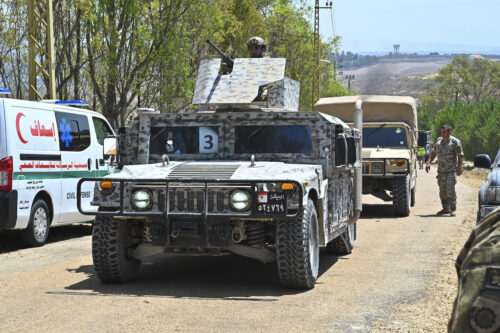
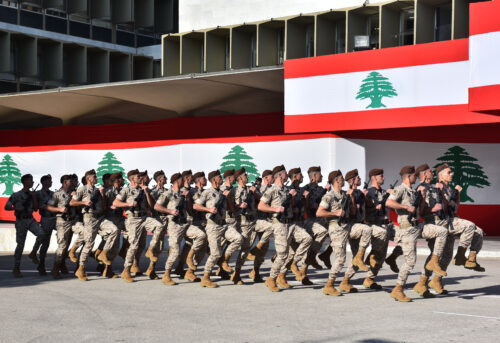
Against this large, Iran-armed adversary, the LAF can muster approximately 90,000 personnel, but few have any combat experience. The LAF has a wide range of artillery and armored vehicles, much of which is old and vulnerable to Hizballah anti-tank forces. It has a handful of military helicopters, virtually no fixed-wing aircraft, and very modest drone — and counter-drone — capabilities. The LAF does possess a number of elite combat formations with special forces training that, while small, demonstrated real capability in operations against the Islamic State (ISIS).
If the material balance is problematic, the human factors are worse. Lebanon is a famously heterogeneous society with a history of civil war. While the LAF does not reflect Lebanon’s demographics perfectly, it too is a polyglot force. Many Lebanese officers and politicians fear that if the LAF were committed to forcibly disarm Hizballah in circumstances in which the rank-and-file were not confident of victory, many of its Shi’a personnel would refuse orders and walk away from their units. Soldiers from other communities might follow suit for a wide variety of reasons, including the fear that the desertion of the Shi’a soldiery would further reduce the odds of victory against Hizballah. In 1984, the LAF was ordered to try to quell the Lebanese civil war but instead collapsed in a flood of desertions. While those circumstances were quite different from the present, the specter of that calamitous event weighs on the minds of many Lebanese leaders.
Moreover, Hizballah has a history of assassinating Lebanese leaders (and/or their families) who challenge them. The group has even gone so far as to kill foreign peacekeepers, including in recent years to bend the UN Interim Force in Lebanon (UNIFIL) to its will. The threat of such a murderous response is a very real problem for the LAF, considering the impunity with which Hizballah has been able to act across the country for decades.
Bad Outcomes
Because of these reinforcing vulnerabilities, an effort by the LAF to forcibly disarm Hizballah under current circumstances seems likely to produce one of three scenarios, all of them bad for Lebanon.
- A protracted insurgency. If Hizballah refuses to be disarmed and cannot be overcome quickly by the LAF, conventional and/or guerrilla combat could spread across the country.
- The disintegration of the LAF. Because Hizballah might prove the more capable military and/or because so many LAF personnel may choose to desert, the LAF might not just lose but collapse.
- Inaction by the LAF. Because the LAF leadership is well aware of its limitations, it may choose to violate civil-military norms and ignore orders to forcibly disarm Hizballah. There is considerable evidence that LAF operations against Hizballah since 2024 have involved complicated negotiations between the LAF leadership, the Lebanese government, and Hizballah itself to avoid triggering a large-scale fight with the militia.
Israel is Not the Answer …
With Israeli forces firmly ensconced in southern Lebanon and showing no sign of withdrawing any time soon, some have suggested that the IDF could help the LAF overcome these hurdles. This proposal is unlikely to address the fundamental problems. As unpopular as Hizballah has become across Lebanese society, Israel has not gained proportionately among most Lebanese.
It would be extremely difficult for the LAF to work closely with the IDF to forcibly disarm Hizballah. As many soldiers and officers might desert to avoid fighting alongside Israel as would desert to avoid fighting against Hizballah. Moreover, even a successful fight against Hizballah will ultimately entail unconventional military operations to prevent it from resurrecting itself as an insurgency, and that will require winning the “hearts and minds” of the Shi’a community, which any reliance on the IDF would likely undermine. Indeed, resistance to Israeli occupation was Hizballah’s original raison d’être and the source of its enduring strength — an IDF presence to assist with counterinsurgency operations could itself constitute a popular grievance that helps Hizballah avoid defeat and eventually reemerge.
It is equally important to remember that Israel will not stand by while Lebanon summons the courage to deal with Hizballah. If the LAF is not willing to disarm the militia, the IDF will continue to try to do so themselves. And because Israel is likely to have the same problem eradicating Hizballah that it has had with Hamas in Gaza, that would not be a good outcome for Lebanon, Israel, America, or the other countries of the Middle East.
… America Is
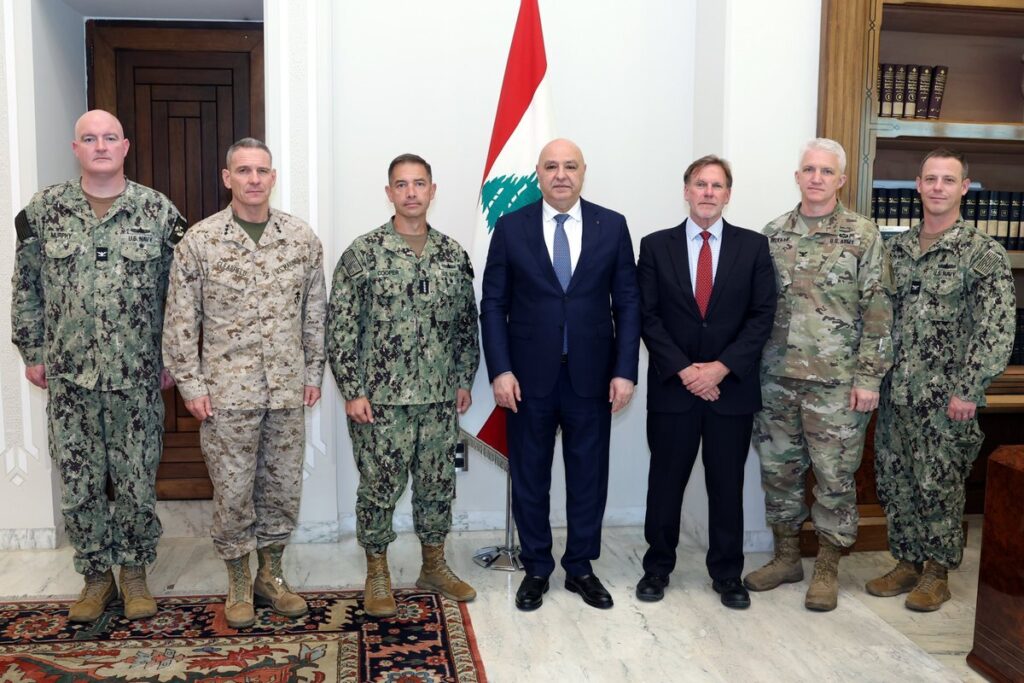
Fortunately for Lebanon, there is another country with even greater capability and the stated inclination to help the LAF overcome these problems: the United States. In recent remarks, Secretary of State Marco Rubio said the US “stands with Lebanon” and would work to achieve “security and stability” in the country by ensuring “the extension of state authority over all its territory” and by supporting Lebanon’s legitimate political, security, and military institutions, “foremost among them the army.” The US has not yet, however, demonstrated a willingness to provide Lebanon with the degree of tangible assistance it would need to do so.
- The US military has more than adequate capabilities to defeat Hizballah in a conventional battle, and extensive experience in unconventional warfare to prevent it from reemerging as an insurgency. It would take a relatively modest commitment of US military power to enable the LAF to do the job — especially compared to recent US wars in Afghanistan, Iraq, Libya, and Iran — although even then, the larger the American commitment, the more certain the outcome.
- American forces seem much less likely to engender the same kind of popular Lebanese animosity that the IDF does. Most Lebanese recognize that the US has no interest in occupying Lebanon, let alone annexing Lebanese territory as many (understandably) fear that Israel intends. The US has deployed military forces to Lebanon three times — in 1958, 1982, and 1983-84 — and has withdrawn after each one.
- Indeed, many Lebanese appear favorably disposed toward the US and recognize that because they require outside assistance to end Hizballah’s parasitic control over their country, the US is the best (or least bad) option for doing so. The best evidence of this is that America’s slow-building military presence in the country since 2024 has been met overwhelmingly with approval, not opposition.
Finally, America’s recent experiences in the Middle East offer ready models for helping the LAF disarm Hizballah. The most recent Iran war, operations against Yemen’s Houthis, US participation in the Syrian civil war, the campaign against ISIS, and even the Iraq War all provide analogues of varying utility.
In particular, it is critical that any determined effort to disarm Hizballah come with substantial political scaffolding and economic incentives to convince Lebanon’s Shi’a population that it will not reduce them to second-class citizens. This too was something that the US did extremely successfully — if only briefly — in Iraq during the Surge. By securing and expanding the “Anbar Awakening” that had begun in 2006, the United States convinced Iraq’s Sunni communities that siding with Washington would win them a seat at the political table, economic benefits, and protection from oppression.
Broadly speaking, American support for Lebanon encompasses three basic options.
Option 1. A Surge for Lebanon
The best course of action that the US could take would be to adopt a version of the Surge strategy it employed to such great success in Iraq in 2007-08. A key element of this, often overlooked, was how the US built new Iraqi security forces (ISF) — the army and police — competent and reliable enough to help crush both the Sunni and Shi’a militias that had dominated the country until then. This involved providing extensive training, building a functional security sector, and partnering Iraqi combat formations with American ones at all times.
The last was arguably the most important. American squads, platoons, and companies were married up with similar-sized Iraqi formations. They deployed to the field together, lived together, conducted patrols together, manned positions together, and assaulted militia strongholds together. For the Iraqis, this constant partnership meant that they got 24/7 on-the-job training. For the Americans, it meant the ability to watch the Iraqis at all times and in all circumstances to identify who was capable and should be promoted, and who was incompetent, corrupt, or working for the militias and needed to be removed altogether. This partnering produced more effective and reliable Iraqi forces than had been the case in the past.
March-April of 2008 furnished a perfect test of this approach when Prime Minister Nouri al-Maliki ordered the ISF to force Muqtada al-Sadr’s Jaysh al-Mahdi (JAM) militia from Basra. Initially, Maliki committed Iraqi Army formations trained by the British that lacked partnered UK (or US) units. These were stopped cold by JAM fighters and suffered massive desertions. Then, the US and Baghdad brought in two Iraqi Army brigades that had been partnered with US formations in extensive combat in Anbar, and these units smashed JAM and drove them from Iraq in less than 48 hours.
Replicating this approach in Lebanon would involve deploying several brigades of US ground troops there with accompanying command-and-control, fire support, intelligence, and logistical personnel — around 20,000-40,000 American troops in all. The squads, platoons, and companies would be paired up with LAF formations of comparable size and deployed initially to areas with little Hizballah activity so the two could train together, get to know one another, and establish workable command-and-control procedures. Once ready, probably after a period of months, they would begin to move into Hizballah-controlled areas, clearing and securing them before moving deeper into Hizballah lands. This process could happen quickly if Hizballah chose not to mount a conventional defense, more slowly if it did.
The extent of the American presence makes this option the most certain to result in an LAF victory over Hizballah. However, it represents a significant American military commitment, with not just “boots on the ground,” but US forces in combat against Hizballah. There could well be US casualties in such fights. Moreover, this option would require some level of US ground forces in Lebanon for several years. All unconventional warfare takes years to succeed, although the history of such wars is that if they are prosecuted properly — with the right forces, strategy, and tactics — the numbers of foreign troops can be drawn down fairly quickly after the insurgents or militiamen are defeated. US ground troops could probably be significantly reduced after only a year or two, although ever-smaller numbers would likely need to remain to prevent Hizballah’s resurgence for as many as 5-10 years.
Option 2. Building Inherent Resolve in Lebanon
In August 2014 the US was pulled back into conflict in Iraq. The Obama administration did not want to go, but the ISIS invasion that June had reignited the Iraqi civil war that the Surge had doused in 2008. Washington refused, nevertheless, to send American ground combat troops back. Instead, the US military had to formulate a new method, different from the Surge, to enable the ISF to defeat ISIS, which, like Hizballah, posed both a conventional and unconventional threat.
The strategy that American commanders devised for Operation Inherent Resolve (OIR), the 2014-17 campaign to defeat ISIS, eventually became known as “by, with, and through” — or what Lt. Gen. Sean MacFarland, who devised and first executed it, used to call “punching with someone else’s fists.” At its peak it required about 6,000 US personnel in Iraq.
For OIR, this centered on American trainers and combat advisors for Iraqi formations eventually down to brigade, battalion, and at times even company level. The advisors were backed by American fire support in the form of artillery, helicopters, and fixed-wing aircraft. An American division headquarters directed the mission with the support of US logistics, intelligence, and special forces personnel. It also included a sizable “train-and-equip” program to give Iraqi units both the know-how and kit to take on experienced and often fanatical ISIS units.
This approach succeeded because it enabled US forces to stiffen the spines of the ISF, make them willing to engage a daunting adversary, and modestly improve their quality — especially that of the Counterterrorism Service, which became the primary Iraqi combat force. Once again, American trainers and advisors identified the good Iraqi soldiers and got them promoted, and got the bad ones transferred out. It enabled the US to employ its considerable military power to overcome ISIS capabilities that the ISF could not on its own. As it had during the Surge as well, the US presence on the ground enabled the Americans to help the Iraqis fight back against the efforts of the militiamen to target them and their families. In short, it accomplished most of what the Surge had, and with far fewer US casualties, albeit over four years rather than one.1
In Lebanon, a corresponding version would entail the same array of American trainers, combat advisors, command-and-control, air power, artillery, helicopters, intelligence, logistics, and special forces personnel. It should incorporate both extensive drone and counter-drone capabilities. It should also include a train-and-equip program to improve the capabilities of the LAF itself, even if American firepower does most of the work of defeating Hizballah in conventional battles. Moreover, done right, such a campaign could include American allies from Europe and the Middle East, easing the burden and expanding the political support for such a mission.
Likewise, as Gen. Joseph Votel, former commander of US Central Command, has argued, it would be helpful for the US to expand and refine the capabilities of Lebanese special forces units to turn them into the kind of capable light infantry force that could act as a spearhead against Hizballah resistance. This was the role that the US trained the Iraqi Counterterrorism Service to play during OIR. An upgraded aid package to Lebanon should also include considerable direct financial support to the LAF, paying salaries exactly as the US came to do for the Kurdish Peshmerga forces during OIR. As the US military learned from these hard-won experiences, “dollars are bullets,” especially when fighting by, with, and through an allied army.
Because Lebanon is so much smaller than Iraq, a corresponding campaign there would probably require no more than 2,000-4,000 US personnel in country. While this option would not have the same certainty of success as Option 1, it would almost certainly still get the job done, with lower risk of American casualties but over a longer duration.
Option 3. OIR Light
Of course, the US could always employ a lesser version of the support provided to the Iraqis during the war against ISIS. This could involve a flexible mix of almost any of the capabilities deployed to Iraq then, with the clear recognition that the less provided, the less likely to have the desired effect and the longer it would take, creating more opportunities for spoilers or unforeseeable events to undermine the entire effort.
For instance, the aspect of the OIR package that might be most objectionable to the Trump administration would be the deployment of combat advisors, trainers, and special forces personnel to Lebanon. In that case, the US could limit its support to intelligence, logistics, and a train-and-equip program, possibly doing the training elsewhere in the region. This would still be more than the Lebanese currently receive from the US because it would envision providing full equipment suites, including armor and artillery, for entire LAF units. Moreover, it too should include the same effort to develop LAF elite formations and provide direct financial support as in Option 2.
If Washington decided to make a greater effort on Lebanon’s behalf, the US could provide counter-drone capabilities, as well as air support from fixed- and rotary-wing aircraft based in Israel, Jordan, or carriers offshore. Indeed, for most of the past two years, the US has had a carrier off the coast of Lebanon. If the Trump administration proved unwilling to deploy advisors or special forces personnel on the ground, LAF personnel would have to be trained to act as forward fire support controllers, a difficult task to learn and perform properly.
The critical point embedded in this option is that even if the Trump administration does not want any US personnel anywhere near combat operations, there is still a range of assets, actions, and capabilities that the US could commit to Lebanon to enhance both the ability and the willingness of the LAF to forcibly disarm Hizballah beyond what has been provided so far. Much of it would be low cost — particularly when compared to the benefit of disarming Hizballah to Lebanon, Iran, the Middle East, and America’s regional interests.
Don’t Just Stand There, Do Something
The US government needs to recognize that, unless something significant changes, it is unlikely that the LAF will forcibly disarm Hizballah. While Israel can do tremendous damage to the militia, it cannot eliminate it entirely. Israel lacks the standing with Lebanon’s soldiery and citizens to cooperate with the LAF to defeat Hizballah, and then to act as a legitimate partner in the unconventional campaign to prevent the group’s resurrection that would inevitably follow. Only the US armed forces can play that role, and even as the administration creeps toward a wider military role in Lebanon, these still represent baby steps that will not get us to our destination in time.
The options enumerated above represent a spectrum of choices for Washington. The more willing the US is to commit resources — first among them ground personnel to assist the LAF in combat — and accept costs, including casualties, the faster any campaign will move, and the more likely it is that the LAF will be able to forcibly disarm Hizballah and prevent it from coming back from the dead. In all of these options, American support would still fall well below a reasonable threshold to achieve those ends. Even if Washington were to turn the dial up to what for Lebanon would be an “11,” that level of effort would still be far below what the US committed to Afghanistan, Iraq, Libya, or even the most recent war against Iran. Given the tremendous benefits the United States is likely to accrue from helping free Lebanon from the twin scourges of Hizballah and Iran, these would seem to be prudent investments and prices well worth paying.
Endnotes
1. In addition, Washington forbade US forces from directly targeting the Iran-backed Hashd ash-Sha’bi militias in Iraq during OIR, insisting that they concentrate solely on ISIS. As a result, Iraqi forces prevailed in both conventional and unconventional warfare over the latter but effectively ceded the country to the former.
Kenneth M. Pollack is the Vice President for Policy of the Middle East Institute and the author, most recently, of Armies of Sand: The Past, Present, and Future of Arab Military Effectiveness. He would like to thank Nicholas Blanford, Daniel Byman, Lt. Gen. Sean MacFarland, USA (ret.), Fadi Nicholas Nassar, and Bilal Saab for their comments on earlier drafts of this chapter.
Top photo by Fadel Itani/NurPhoto via Getty Images.
The Middle East Institute (MEI) is an independent, non-partisan, not-for-profit, educational organization. It does not engage in advocacy and its scholars’ opinions are their own. MEI welcomes financial donations, but retains sole editorial control over its work and its publications reflect only the authors’ views. For a listing of MEI donors, please click here.
How Lebanon can be Trump’s first success in a troubled region

Kim Ghattas on a Murder That Explains the Middle East