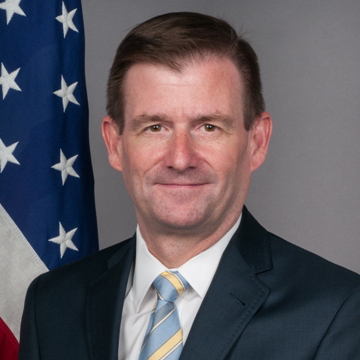
Ambassador David Hale is a Distinguished Diplomatic Fellow at the Middle East Institute, after serving as a Foreign Service officer. He writes, speaks, and consults on US foreign policy, including toward the Middle East and South Asia.
He was the Under Secretary of State for Political Affairs from August 2018 to May 2021, reporting directly to the Secretary of State. Ambassador Hale was responsible for the conduct of US foreign relations globally. He supervised the Department’s six regional bureaus and the bureau for international organizations, as well as all American embassies, consulates and missions abroad. He interacted regularly with world leaders to advance America’s foreign policy, traveled to over 50 countries in that role, and spoke to a wide variety of audiences. He testified on a global range of topics before the Senate Foreign Relations Committee. As a Global Fellow at the Wilson Center (2022-2025), he wrote and made media appearances on foreign policy, with a focus on the Middle East, Afghanistan, and South Asia. His book, American Diplomacy toward Lebanon: Lessons in Foreign Policy and the Middle East, was published by Bloomsbury/I.B. Tauris in February 2024 as part of a Middle East Institute policy series. His bi-weekly column appears on the Lebanese online news and opinion outlet, “This is Beirut.” His expertise on Lebanon developed over a 35-year span of periodic work there.
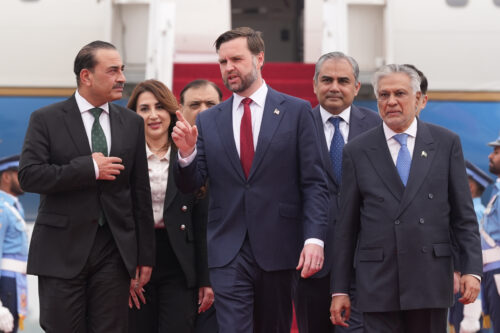
Ambassador Hale holds the lifetime rank of Career Ambassador. A Career Ambassador is Senate-confirmed, the most senior rank in the State Department, and equivalent to a four-star general. He served in the administrations of Presidents Bush, Obama, and Trump as: Ambassador to Pakistan (2015-2018), Ambassador to Lebanon (2013-2015), Special Envoy for Middle East Peace (2011-2013), Deputy Special Envoy (2009-2011), Deputy Assistant Secretary of State covering Egypt, Israel, Jordan, Syria, Lebanon, and the Palestinians (2008-2009), Ambassador to Jordan (2005-2008), and Director for Israeli-Palestinian Affairs (2001-2003). In addition to his tours in Jordan and Lebanon as ambassador, he served as a political officer and deputy chief of mission in each post. His other overseas assignments were in Israel, Tunisia, Bahrain, and Saudi Arabia. He was Secretary Albright’s Executive Assistant.
He graduated in 1983 from Georgetown University’s School of Foreign Service. He received one presidential distinguished and two meritorious rank awards; the Secretary of State’s distinguished service award; State Department superior and meritorious honor awards; the Philip C. Habib Award for Distinguished Public Service from the American Task Force for Lebanon; and, Jordan’s Order of Istiqlal.
Consolidating Sovereignty, Security and Peace: Time to Step up the Game
Although it has been a frustrating summer, Lebanon remains on the right track. My observation after a ten-day visit to Beirut and Jerusalem this month is that leaders in both capitals remain strongly committed to a shared objective.
Achieving a Permanent End to the Israel-Lebanon Conflict
As part of a report outlining an actionable US roadmap to win in Lebanon, this article posits a successful outcome will require more than just negotiations: sustained pressure on Hizballah and Iran, internal reforms in Lebanon, Arab state help, and more proactive American support — not just money, but advice — for the Lebanese army.
US President Donald Trump recently proposed that Syria intervene militarily against Hizballah in Lebanon. Is that a good idea? This episode of Middle East Focus features a recent MEI Virtual Briefing. Director of Communications Zeina Al-Shaib is joined by Ambassador David Hale, MEI Distinguished Diplomatic Fellow and Charles Lister, MEI Senior Fellow. Together they examine the prospects and implications of renewed Syrian involvement in Lebanon, the potential impact on US relations with both countries, and how evolving dynamics in Lebanon and Syria could reshape the regional balance of power and affect countries such as Turkey and Israel.
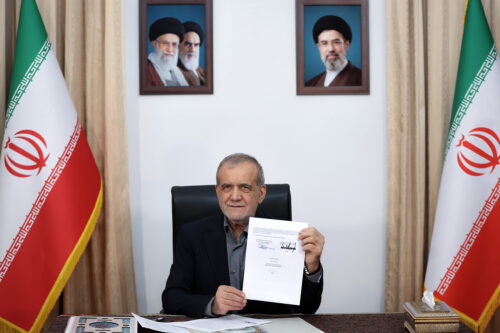
Unconditional surrender of an adversary is possible only if the victor conducts unconditional war, which the American public clearly was not prepared for in the conflict with Iran. Ending this conflict was always going to entail some compromises. The U.S.-Iran MOU is being oversold by virtually everyone. The tangible parts of it are a ceasefire, sanctions relief for Iran and the reopening of Hormuz. Everything else in the agreement is conditioned to good faith negotiations on Iran’s nuclear program.
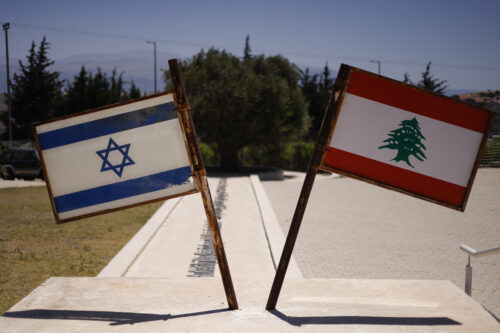
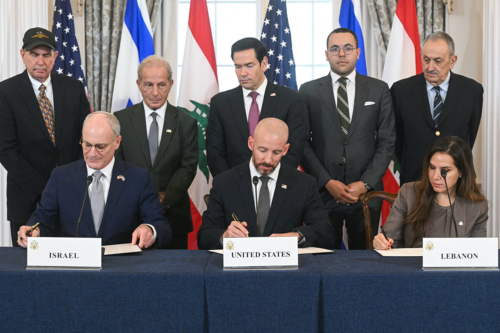
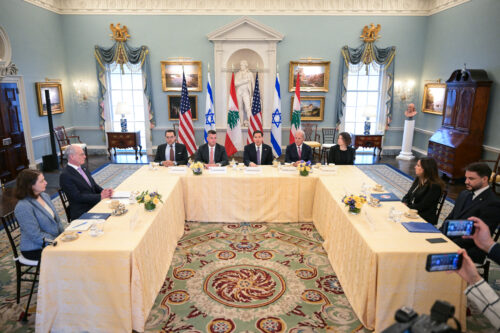
As Lebanese, Israeli, and American teams prepare for their first-ever trilateral leaders summit, it is time to reflect on this opportunity and lessons from the past.
Media and politicians on both sides of the Atlantic are hyping the idea that President Trump’s attempt to gain sovereign control of Greenland has caused unprecedented and irreparable damage to the over 75 year-old Transatlantic Alliance. This “analysis” stems from multiple sources. On both sides of the ocean, there are those who pounce on any deviation from the norm by Trump as evidence the world as we know it is ending. And in Europe, there is the human but unattractive reaction of weak, dependent states against their one powerful ally when it rejects Europe’s preferred script. Much of the US media criticism is summarized by the concept that our other NATO allies can never again “trust” the US.
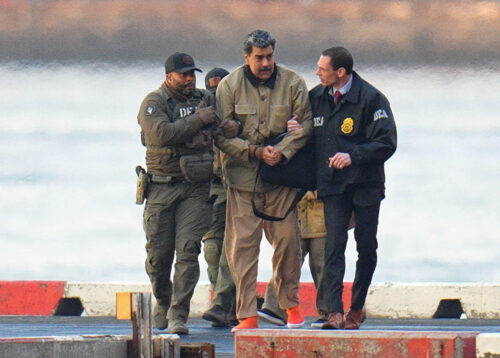
America’s dramatic capture of Venezuelan dictator Nicolas Maduro has set the stage for the conduct of America’s national security strategy in 2026. It has also raised questions.
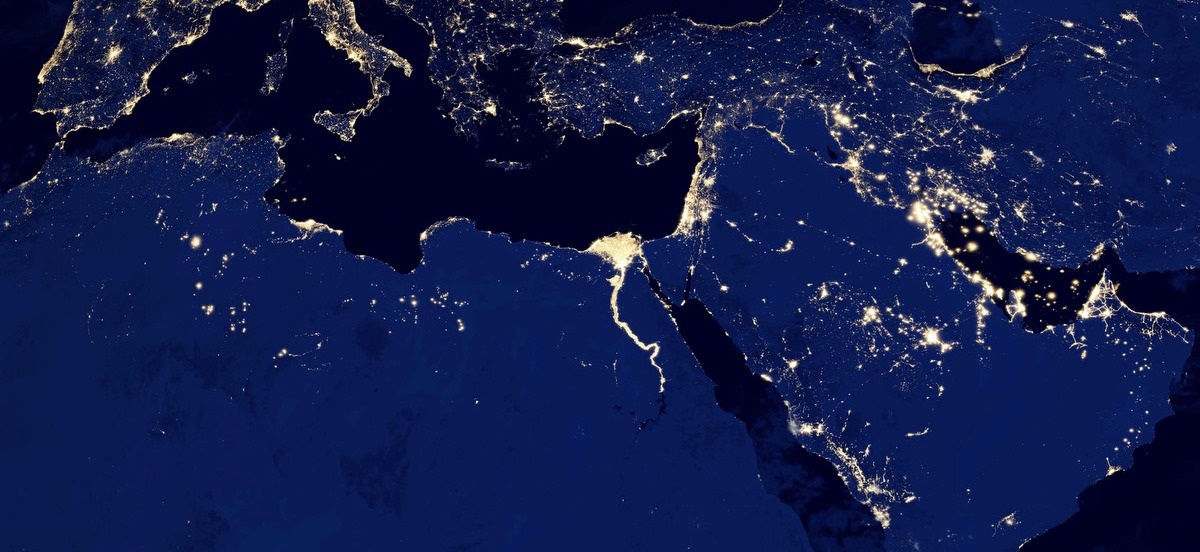
A year after Israel defanged Hezbollah, and in the wake of the annual opening of the UN General Assembly and several developments related to the Middle East, it may be a good time to take stock. In my 38-year career of diplomacy in the Middle East, anytime someone expressed optimism, I would suggest a head examination might be in order. However, today there are a few glimmerings of things that might help the region stabilize.
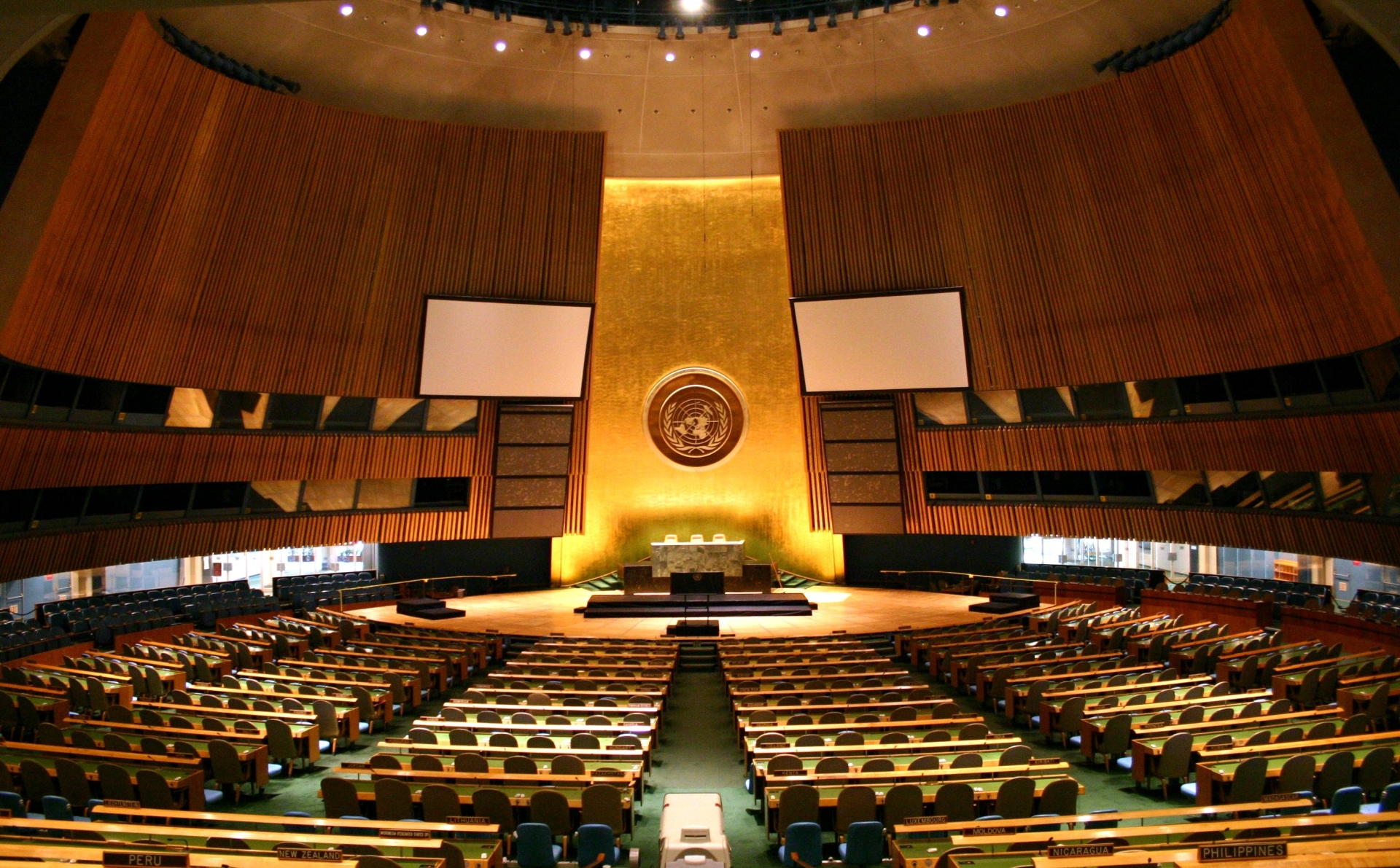
This month brings world leaders together to mark the annual opening of the United Nations General Assembly. Their formal speeches in front of the assembly vary in interest, as many contain more pious platitudes than meaty information. The real work of interest often happens behind-the-scenes, as world leaders meet bilaterally or in small groups to discuss the issues of the day away from the glare of media or the pressure for summits to deliver results. The occasion also provides opportunities for the unexpected to happen. The Middle East will figure largely in these talks. Here are some po