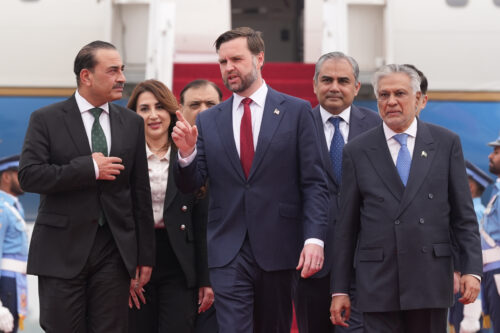
Whatever different people may think about the Trump Administration’s approach to Iran, 21 hours of talks led by the American vice president demonstrated a seriousness of diplomatic purpose. However, it was never likely that the wide gap between the goals of Washington and those of Tehran would be bridged in a day. Eight American presidents since the Iranian revolution in 1979 have tried seemingly every means of statecraft under the sun to change Iranian behavior, with each new approach sequentially abandoned every few years because of a new president, a new congress, or a change of heart. Meanwhile, until lately Iran had only two, autocratic leaders. They learned to wait out each turn of policy by Washington, knowing American administrations and their publics would likely lose interest and focus. Why submit to Washington when you know patience will bring change and openings to resume intimidation, terrorism and violence directed at home and abroad? That is no doubt what Tehran is expecting now. With three years left in his term, President Trump has an opportunity to prove them wrong and complete the shift in the region’s balance of power against Iran since 2023. Results will not be instantaneous.
Photo by Jacquelyn Martin – Pool/Getty Images
The Middle East Institute (MEI) is an independent, non-partisan, not-for-profit, educational organization. It does not engage in advocacy and its scholars’ opinions are their own. MEI welcomes financial donations, but retains sole editorial control over its work and its publications reflect only the authors’ views. For a listing of MEI donors, please click here.