The Gulf and the Iran Conflict: An Economic Model Under Pressure
External Publication
April 2, 2026
Share
Gulf energy systems face unprecedented strain as conflict disrupts transit, production, and investment flows. The economic model built on stability and connectivity is now under pressure.
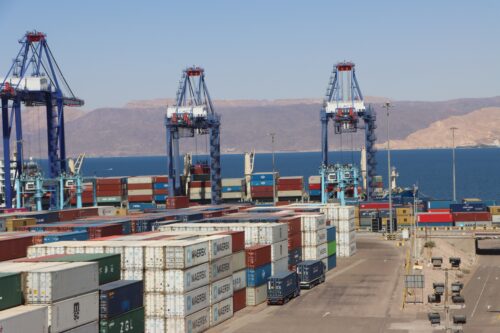
The closure of Hormuz has halted about 15 million barrels a day of crude shipments, prompting Saudi Arabia to rely more heavily on its East‑West pipeline, which has a maximum capacity of 7 million barrels a day, though around 2 million barrels are diverted for domestic refineries and power generation. Crude shipments from Saudi’s Red Sea ports at Yanbu averaged 4.4 million barrels a day in the five days to March 24, effectively doubling exports in just over two weeks, leaving Saudi exports roughly 2 million barrels a day below preconflict‑ levels. The UAE can redirect about 1.5-1.8 million barrels a day via the Habshan-Fujairah pipeline, although Fujairah has been hit by repeated drone attacks and loadings have been suspended several times.
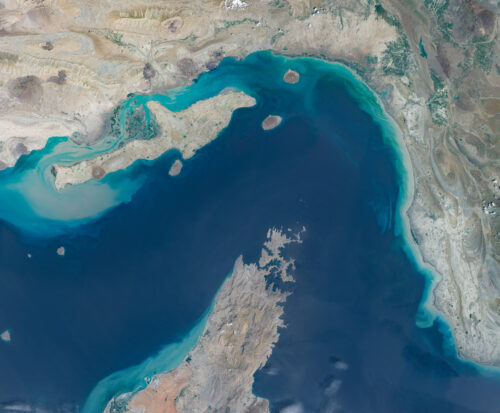
The U.S.-Israeli war against Iran has created the largest disruption to global oil and liquefied natural gas supplies in modern history. Just prior to the war, roughly 20% of global oil supply and 20% of exported global LNG flowed through the Strait of Hormuz. Since February 28, Strait traffic has dropped to about 5% of normal flows. Since Iran’s March 18 attack on Qatar’s Ras Laffan LNG facility, not only is no Qatari LNG traveling out of the Strait, but now the possibility of resumption of those flows will be at least 17% and take three to five years to recover to prior capacity.
The Middle East Institute (MEI) is an independent, non-partisan, not-for-profit, educational organization. It does not engage in advocacy and its scholars’ opinions are their own. MEI welcomes financial donations, but retains sole editorial control over its work and its publications reflect only the authors’ views. For a listing of MEI donors, please click here.