Regional Reactions to the Iran War
Latest on the Iran War
The Middle East Institute's 64th Annual Conference: Rethinking a Middle East in Transition
Electoral Politics in Iran: Rules of the Arena, Popular Participation, and the Limits of Elastic in the Islamic Republic
Originally posted November 2010
Paradise Beneath Her Feet: How Women are Transforming the Middle East
Higher Education and the Middle East: Serving the Knowledge-based Economy
This is the first of three volumes examining the internationalization of higher education and the Middle East. The 12 essays included in this volume explore some of the changes that are taking place and the challenges that lie ahead as Middle Eastern countries seek to build sustainable higher education systems and strengthen their economies. Within the dynamic global higher education landscape, is the Middle East a stagnant backwater or a center of creative initiative? What are, and should be the roles of foreign partners and providers?
Introduction to The State of the Arts in the Middle East: Volume V
This edition of MEI Viewpoints features essays that shed light on the relationship between artistic production and changing societal conditions and norms. Clayton Keir discusses “rap” music in Iran – its integration of Western and Persian cultural influences, politics, and popularity. Brigid Maher reflects on the making of Veiled Voices, her award-winning documentary film that profiles three female Muslim religious leaders from Egypt, Lebanon, and Syria.
Center for Turkish Studies First Annual Conference on Turkey
Iran’s Green Movement and the Gray Strategy of Patience
This Commentary first appeared as an op-ed on ForeignPolicy.com’s Middle East Channel, April 30, 2010.
The Kurds of Iran: A Look at their Past, Present and Future
The Middle East Institute is proud to host Carol Prunhuber, Sharif Behruz and Idris Ahmedi and for a lecture about the political, social and human rights status of Iran's Kurds, one of the country's largest ethnic groups. Iran's Kurdish population has long pushed for autonomy, and in 1979 Ayatollah Ruhollah Khomeini declared a "holy war" against the Kurds in Iran seeking self-rule. Since then the relationship between Iran's Kurds and the Islamic Republic has been characterized by frequent military crackdowns.
The Khamenei-Ahmadinejad Regime and the Challenge of the Iranian Opposition
The Middle East Institute is proud to host Iranian scholars Ali Alfoneh and Alex Vatanka for a discussion about the ongoing unrest in Iran and the implications for the stability and future of the Islamic Republic. With the Green Movement having proved its staying power, some scholars and analysts are starting to predict the beginning of the end for the regime of Supreme Leader, Ali Khamenei, while others dismiss the idea as wishful thinking and argue that the Islamic Republic is here for the long-term.
Iranian Migrants in the Arab Countries of the Persian Gulf
This essay examines migration from the Iranian coastal region of the Persian Gulf to the nearby Arab countries. At the center of this research are questions of cross-border relationships, the construction of transnational spaces in border migration, and strategies for maintaining networks in both the home and host countries.
Expert Coverage
To interview our experts please reach out to [email protected]
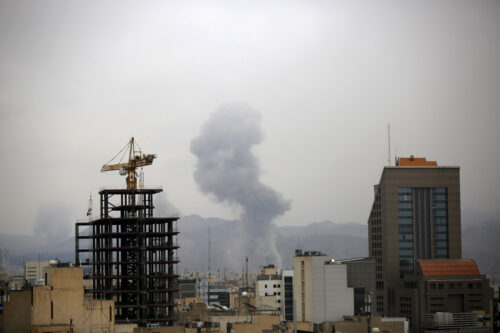
Top photo:
TEHRAN, IRAN – MARCH 10: Smoke rises among the residential buildings following an Israeli attack on Tehran, Iran on March 10, 2026. (Photo by Fatemeh Bahrami/Anadolu via Getty Images)