Skip to Content

Attiya Ahmad

Post-Doctoral Fellow

This individual is a guest contributor. MEI is not able to assist with contact requests.

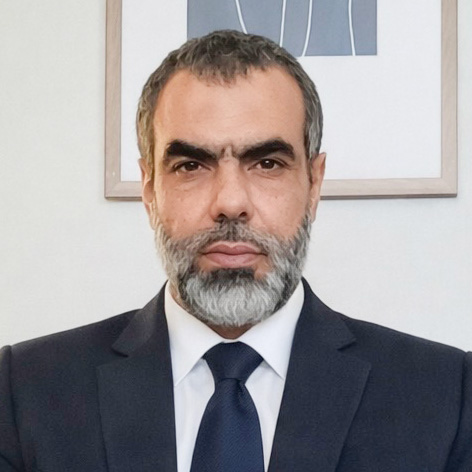
Attiya Ahmad is Georgetown University’s 2009-10 Center for International and Regional Studies Post-Doctoral Fellow. She recently completed her PhD in Cultural Anthropology at Duke University. Dr. Ahmad’s work brings together scholarship on Islamic studies, globalization, diaspora and migration studies, economic anthropology, and political economy.


The Latest from Attiya Ahmad

Filter by
9997 Results
Turkey’s westward energy shift
President of Turkey Recep Tayyip Erdogan and his Russian counterpart Vladimir Putin (not seen) attend the opening ceremony of TurkStream natural gas pipeline project, at Halic Congress Center in Istanbul, Turkey on January 08, 2020.
  • Analysis
  • Turkey’s westward energy shift

    On Jan. 8, Turkey inaugurated the TurkStream natural gas pipeline from Russia, seemingly deepening Ankara’s ties with Moscow. However, a fuller analysis of Turkey’s current energy policies and consumption trends indicate a dramatic shift westward, away from Russia and Iran.

    January 15, 2020

    China’s Green Investment in the BRI Countries: The Case of Turkey
  • Analysis
  • China’s Green Investment in the BRI Countries: The Case of Turkey

    China is engaged in the use, production, and export of green technologies. As a part of this policy, China is extending its commitment to green technologies to its Belt and Road (BRI) partners. This article looks at China’s role in Turkey’s green transformation. 

    January 15, 2020

    The Humanitarian Disaster During the Battle for Baghouz
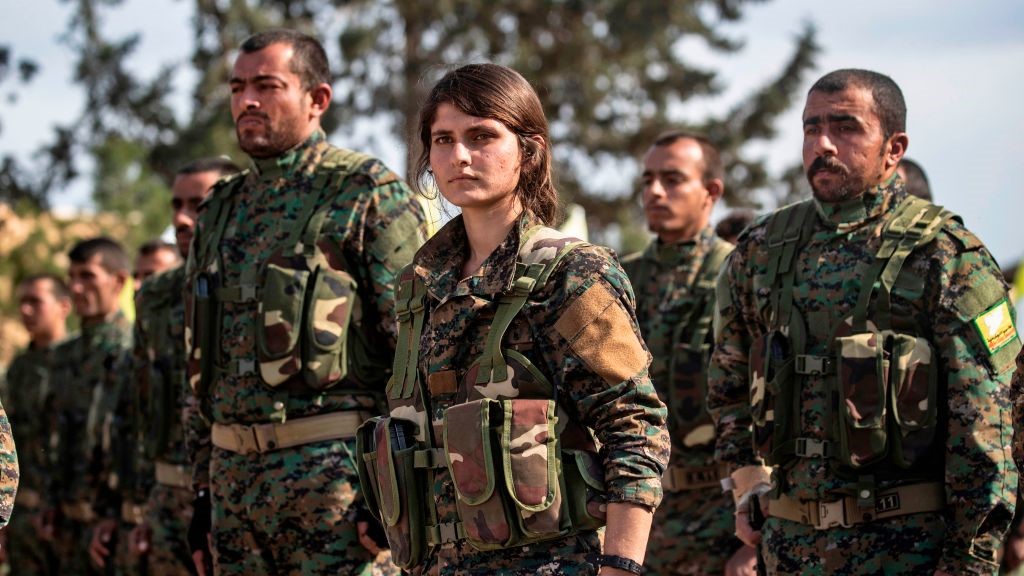
    Civilians evacuated from the Islamic State (IS) group's embattled holdout of Baghouz wait for bread and water at a screening area held by the Kurdish-led Syrian Democratic Forces (SDF), in the eastern Syrian province of Deir Ezzor, on March 5, 2019. - More than 7,000 people, mostly women and children, have fled the shrinking pocket over the past two days, as US-backed forces press ahead with an offensive to crush holdout jihadists. (Photo by Bulent KILIC / AFP) (Photo credit should read BULENT KILIC/AFP via
  • Analysis
  • The Humanitarian Disaster During the Battle for Baghouz

    It is unclear how many civilians were killed in February and March 2019, when the U.S.-led coalition and the Syrian Democratic Forces (SDF) pounded ISIS’s last enclave around the town of Baghouz. Presumably, the numbers reached into the thousands. Those who escaped found themselves in the desert, hundreds of kilometers away from lifesaving aid. The reasons for the failure of the humanitarian response were mainly political.

    January 14, 2020

    Safeguarding and celebrating Egypt’s traditional crafts
  • Analysis
  • Safeguarding and celebrating Egypt’s traditional crafts

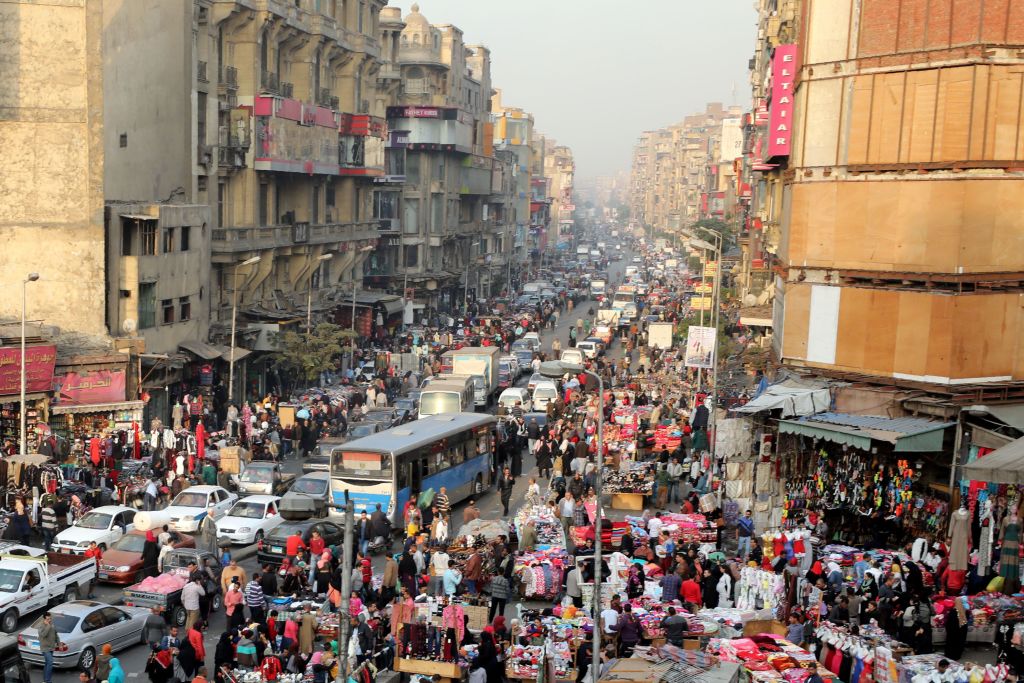
    Accomplished craftspeople are a dying breed in Cairo, but Jameel House of Traditional Arts and Atelier Cairo are working to change that by training a new generation of artisans in traditional media like ceramics, wood, brass, glass, and gypsum work (stucco), helping to replenish the stock of skilled Egyptian craftspeople and keeping rare and beautiful art forms alive.

    January 14, 2020

    The killing of Qassem Soleimani: Was there a better way?
     A file photo dated September 18, 2016 shows Iranian Revolutionary Guards' Quds Force commander Qasem Soleimani during Iranian Supreme Leader Ayatollah Ali Khamenei's meeting with Revolutionary Guards, in Tehran, Iran.
  • Analysis
  • The killing of Qassem Soleimani: Was there a better way?

    In the early hours of Jan. 3, 2020, a U.S. Military MQ-9 drone fired multiple air-to-ground missiles and killed the commander of the elite Iranian Islamic Revolutionary Guard Corps (IRGC) – Quds Force, Major General Qassem Soleimani. The targeted killing of Soleimani was carried out as he left the Baghdad International Airport under overt military authorities. Given that the strike was carried out under this authority, it was publicized globally shortly after it was completed. There were other options available to target Soleimani, however.

    Oman’s new era
    Vice President of Turkey Fuat Oktay offers his condolences to Oman's new Sultan Haitham bin Tariq Al Said over the death of longtime ruler Qaboos bin Said al Said at the Al Alam Palace in Muscat, Oman on January 12, 2020.
  • Analysis
  • Oman’s new era

    The announcement of Sultan Qaboos bin Said al-Said’s passing on Jan. 10 marked the end of an era. Now that the Arab world lost its longest-serving leader, none of the Gulf states has a ruler that was on the throne when the Gulf Cooperation Council (GCC) was established in 1981. Most Omanis have never known another leader and this transition period, marked by three days of mourning, is an emotional time for those in the sultanate.

    January 13, 2020

    Iran’s lit fuse does not necessarily favor the US
    A woman attending a candlelight vigil, in memory of the victims of Ukraine International Airlines Boeing 737, talks to a policeman following the gathering in front of the Amirkabir University in the Iranian capital Tehran on January 11, 2020.
  • Analysis
  • Iran’s lit fuse does not necessarily favor the US

    In the aftermath of the latest round of U.S. and Iranian brinksmanship, hawks and liberals are interpreting developments as validating their positions. Hawks are claiming victory for “maximum pressure,” arguing how the U.S. strike against Islamic Revolutionary Guard Corps (IRGC) Quds Force Commander Qassem Soleimani frightened the now weakened ruling clerics into submission. Liberals argue that Iran took the high road, demonstrating a willingness to respond to incentives and negotiate.

    January 13, 2020

    Cease-fires in Idlib and Libya as Turkey looks to buy time
    Russian President Vladimir Putin (L) and Turkish President Recep Tayyip Erdogan (R) attend the opening ceremony of the TurkStream on January 08, 2020 in Istanbul, Turkey.
  • Commentary
  • Cease-fires in Idlib and Libya as Turkey looks to buy time

    It is increasingly the case that the Russian-Turkish decisions on Idlib or Syria need to be understood as part of a broader Russian-Turkish partnership.

    January 13, 2020