This individual is a guest contributor. MEI is not able to assist with contact requests.
Attiya Ahmad is Georgetown University’s 2009-10 Center for International and Regional Studies Post-Doctoral Fellow. She recently completed her PhD in Cultural Anthropology at Duke University. Dr. Ahmad’s work brings together scholarship on Islamic studies, globalization, diaspora and migration studies, economic anthropology, and political economy.
Kayhan Warns: “The Mother of All Sanctions Has Arrived”
A front-page article in Kayhan newspaper, entitled “The Mother of All Sanctions Has Arrived,” warns that the implementation of the “Countering America’s Adversaries Through Sanctions Act” – a congressional bill that
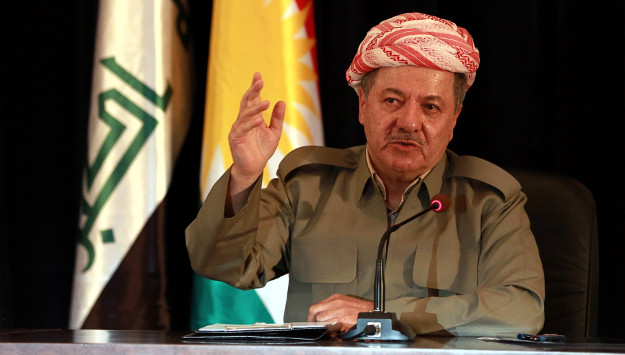
Barzani Stands Down as K.R.G. President | Monday Briefing
In this week’s Monday Briefing, MEI experts Randa Slim, Yousef Munayyer, Charles Lister, Charles Schmitz, and Alex Vatanka provide analysis on recent and upcoming events including President Barzani’s decision to step down from the KRG, the Trump administation’s silent response to Israeli settlement expansion in Jerusalem , the Armed Syrian Opposition’s attendance of the seventh round of Astana Talks, Saudi foreign minister blaming Iran for lack of progress in peace talks in Yemen, and President Rouhani’s failure to advance the reform cause in Iran.
Iran Rules out Inspection of Its Military Sites in Defiance of U.S.
Defying U.S. pressure, Iranian leaders said on Monday that they would not allow international inspectors to visit the country’s military sites. Speaking on the sidelines of a meeting with visiting chief of the International Atomic Energy Agency Yukiya Amano in Tehran, Ali Akbar Salehi, the head of the Atomic Energy Organization of Iran, claimed that there are no provisions within the 2015 nuclear agreement or in the Additional Protocol that would obligate Tehran to permit foreign inspection of its military installations.
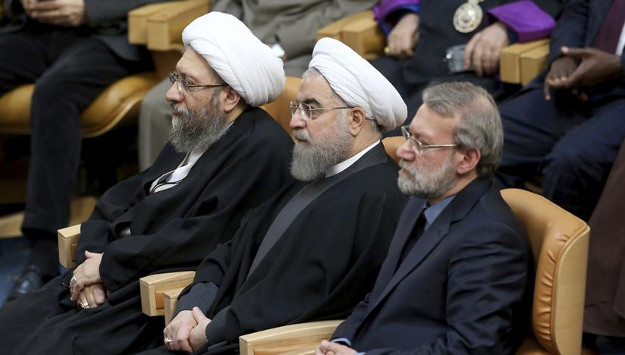
Heads of Government Branches Discuss Ways to Counteract U.S. Sanctions
The heads of Iran’s executive, legislative and judicial branches met today to discuss how Iran should respond to the Trump administration’s aggressive policy vis-à-vis the Islamic Republic. In the meeting, President Hassan Rouhani, Parliamentary Speaker Ali Larijani and Judicary Chief Sadegh Larijani focused on the latest U.S. sanctions and their impact on the country’s economy. Rouhani said the United States is “plotting” to undermine the Joint Comprehensive Plan of Action (JCPOA), the nuclear agreement Iran signed with world powers in July 2015.
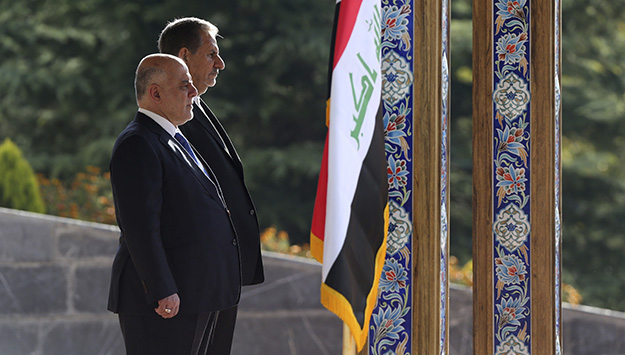
Iraqi Prime Minister Haider al-Abadi visited Turkey on Wednesday to discuss potential joint steps against northern Iraq’s Kurdistan Regional Government (K.R.G.) following last month’s independence referendum. Ankara is hoping to influence Iraqi politics by cultivating close ties to Baghdad, but the newly forged Turkish-Iraqi alliance is unlikely to hold, leaving Turkey isolated in the post-referendum Iraq.
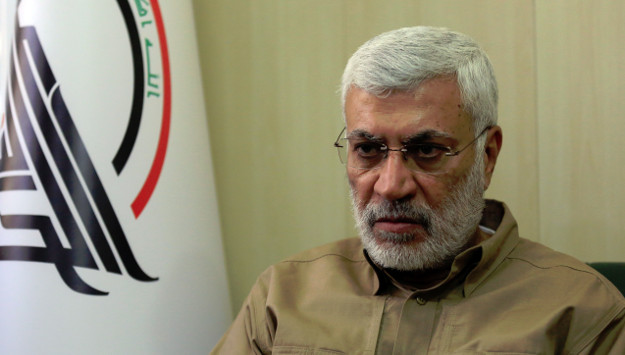
P.M.F. Spokesman: We’ll Hold U.S. Responsible for Calling Muhandis “Terrorist”
Leaders of Iraqi Popular Mobilization Forces (P.M.F.) rushed to defend Abu Mahdi al-Muhandis, the paramilitary forces’ chief operational commander, after U.S. State Department Spokesperson Heather Nauert called Muhandis a “terrorist” at a press briefing on Thursday. “These remarks indicate a direct threat to Muhandis’ life and we hold America responsible for any attempt or harm to the life of the deputy head of the Popular Mobilization Forces,” P.M.F.
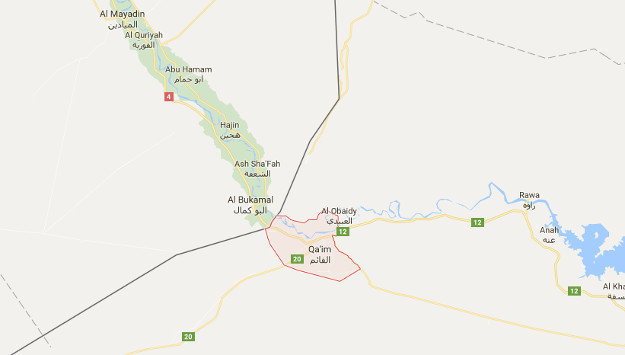
Iran-Backed Iraqi Militia Forces Advancing to Capture al-Qaim Near Syrian Border
The chief operational commander of Iraq’s Popular Mobilization Forces (P.M.F.) issued a statement yesterday outlining plans for the paramilitary forces and Iraqi troops to liberate the towns of Rawa and al-Qaim on the Euphrates River in western al-Anbar Province near the border with Syria. “We seek to lock down the entire Iraqi-Syrian border from north to south,” the statement said. In an interview with the Lebanese al-Mayadeen news outlet earlier today, P.M.F.
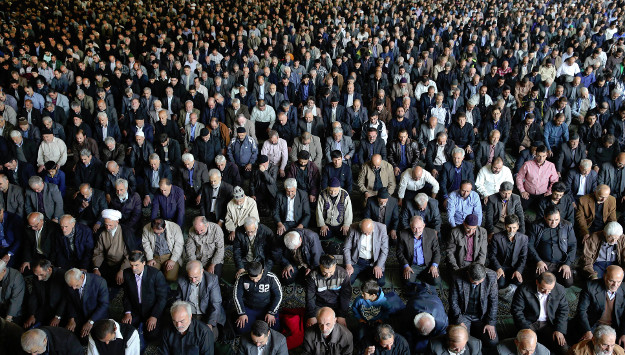
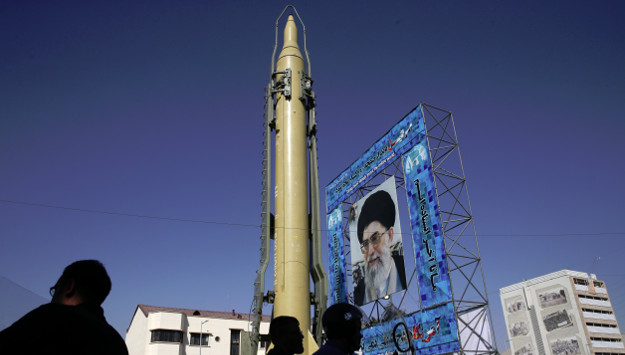
Top Clerics Back Khamenei in Rejecting Missile Talks with West
Senior Iranian clerics on Friday backed Supreme Leader Ali Khamenei’s earlier remarks that Iran’s defense capabilities, including its controversial missile program, are non-negotiable. During their Friday prayer sermons, the clerics emphasized that the Islamic Republic will defy international pressure and continue to further enhance its military assets. They also encouraged worshippers to participate in the upcoming National Day against Global Arrogance to condemn the Trump administration’s anti-Iran policies.
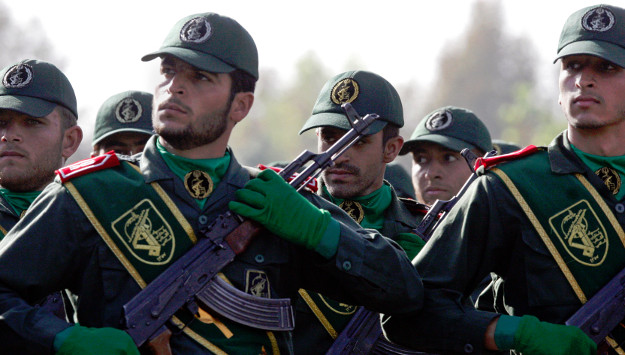
I.R.G.C. Claims It Dismantled “Terrorist Team” in Northwest Iran
Iran’s Islamic Revolution Guards Corps (I.R.G.C.) announced on Thursday that its forces “dismantled a terrorist team” in Chaldaran region of northwestern Azerbaijan Province. According to a statement released by the public relations department of I.R.G.C.’s Hamze Sayyid al-Shohada Base, four “terrorists’ were killed in armed clashes between I.R.G.C. forces and the militants.
In their new report for the Atlantic Council, “U.S. Strategy Options for Iran’s Regional Challenge,” and an essay version published in the Washington Quarterly, Bilal Saab and Kenneth M. Pollack lay out a “pushback” strategy to weaken Iran’s regional influence. The co-authors join host Paul Salem to weigh the strengths and weaknesses of this and other strategies in this week’s podcast.
Wars Distracting Middle East from Serious Climate Change Threats
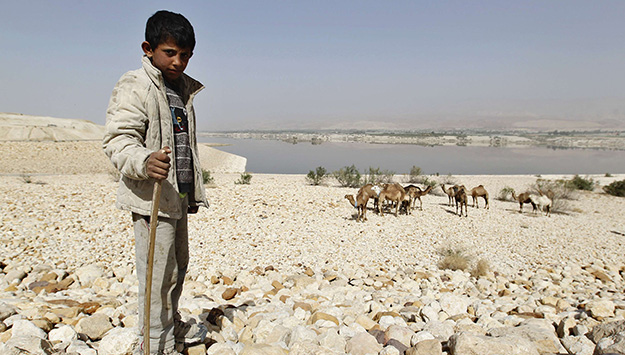
Wars in MENA are causing irreparable damage to water security and resilience to climate change in some of the region’s countries and to their viability. The continuation of this dangerous state could ultimately reinforce even deeper instability in MENA.
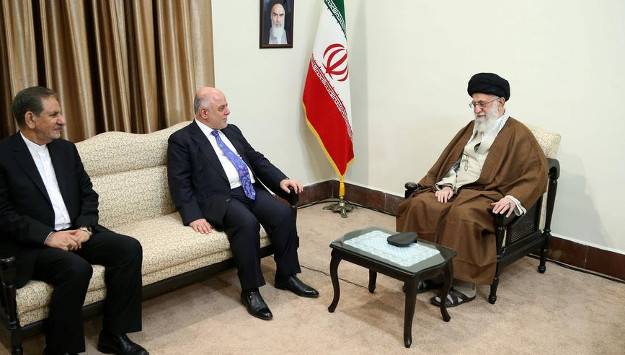
Khamenei Urges Visiting Iraqi Leader not to Rely on America
Iran’s Supreme Leader Ali Khamenei told visiting Iraqi Prime Minister Haider al-Abadi today in Tehran that he should not trust the United States as a reliable partner in the fight against terrorism, the Iranian media reported. “The Americans themselves created Daesh [Islamic State]. But now that the terrorists are defeated by the Iraqi government and people, they pretend to be supportive and helpful.
Khamenei: No Negotiations with Enemy over Iran’s Defense Capabilities
Defying U.S. pressure, Iran’s Supreme Leader Ali Khamenei reiterated on Wednesday that the country’s defense capabilities and assets are non-negotiable, Tasnim News Agency reported.
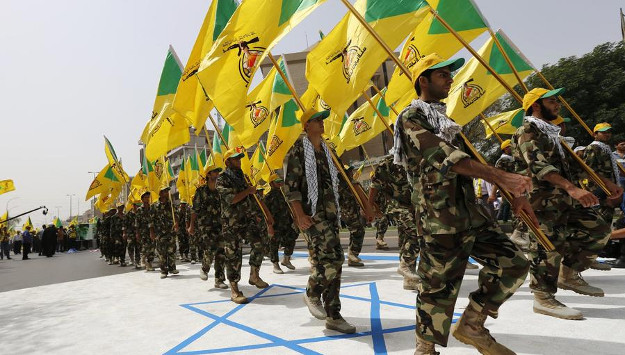
Iraqi Hezbollah: Our Heroes Fired First Shots at U.S. Soldiers, Expelled them from Iraq
Kata’ib Hezbollah, an Iranian-sponsored Iraqi militia group, said today that the United States and its regional allies created the Islamic State three years ago to destabilize Iraq and Syria. A statement released by the group claimed that “heroes of the Hezbollah Brigades had the privilege of firing the first shots at the U.S.