This individual is a guest contributor. MEI is not able to assist with contact requests.
Attiya Ahmad is Georgetown University’s 2009-10 Center for International and Regional Studies Post-Doctoral Fellow. She recently completed her PhD in Cultural Anthropology at Duke University. Dr. Ahmad’s work brings together scholarship on Islamic studies, globalization, diaspora and migration studies, economic anthropology, and political economy.
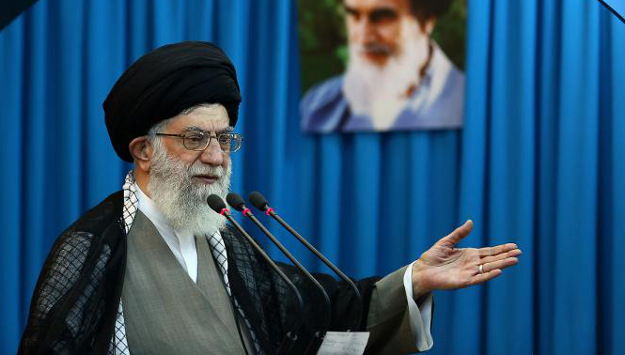
Khamenei to Abadi: Don’t Allow American Troops in Iraq and Keep Popular Forces
Iran’s Supreme Leader Ali Khamenei said Iran opposed the presence of American forces in Iraq and urged Iraqi Prime Minister Haider al-Abadi not to rely on Washington.
I.R.G.C. Contradicts Rouhani and Intelligence Minister on Syria Missile Strikes
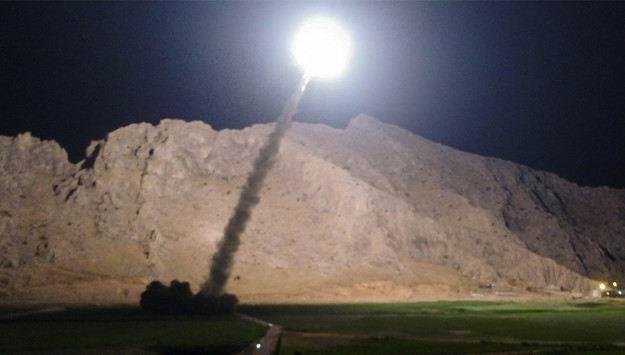
On Wednesday, the Islamic Revolution Guards Corps (I.R.G.C.) in a statement said Supreme Leader Ali Khamenei had ordered the launch of missiles into Syria over the weekend.
Iranian Parliament Speaker: Missile Strikes Sent Powerful Message to U.S., Region
Iranian Parliament Speaker Ali Larijani said today that Iran sent a powerful message to the United States and Israel by firing missiles into Syria, Fars News Agency reported.
Analyst Cautions Rouhani against Falling Prey to U.S. “Game” and Leaving Nuclear Deal
An article in state-run Islamic Republic News Agency cautions the Rouhani government against falling prey to the “new game” by the Trump administration and its Middle Eastern allies – which the author claimed are provoking Tehran to abandon the 2015 nuclear agreement.
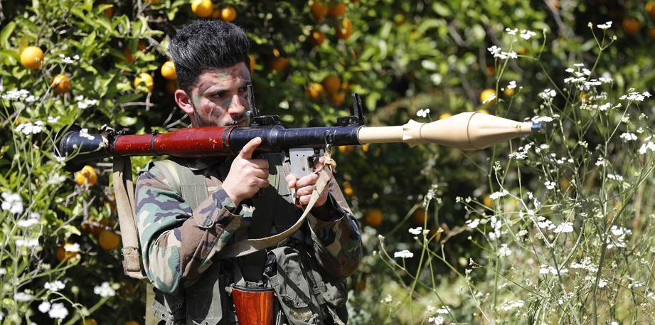
Israel and Hezbollah have recently raised the profile of their long quiescent front across the Blue Line border. Warnings have increased that a conflict will soon engulf Lebanon, and perhaps even draw in the United States. Hezbollah’s leader Hassan Nasrallah has threatened to attack Israel’s nuclear reactor at Dimona and Israeli chemical installations in Haifa.
Saudi King Salman’s appointment of his son Mohammed bin Salman to be first in line to the throne has sent shockwaves in Tehran. While the Iranian government has not officially reacted to the announcement yet, the country’s state media warn that the 31-year-old prince will pursue a more aggressive policy vis-à-vis Iran – pointing out that Prince Mohammed has made explicit threats against the Islamic Republic, has cultivated close ties with the Trump administration, and has not shied away from confronting Iran’s proxies in Yemen, Syria and the broader region.
Europe Eyes Further Cooperation with Iran under Rouhani
European leaders welcomed the re-election of Iranian President Hassan Rouhani with a sigh of relief. The European Union’s foreign affairs chief, Federica Mogherini, congratulated Rouhani and highlighted the high electoral turnout. It is worth noting that both Donald Tusk, the president of the European Council, and Mogherini had developed a good working relationship with Rouhani in face-to-face talks during the Iranian president’s first term.
Informal Networks, Formal Politics and The Politicization of Islam in Indonesia
When Basuki Tjahaja Purnama, the Christian governor of Indonesia’s capital Jakarta, was sentenced to two years in prison for “blasphemy” in May 2017 it created world headlines. The verdict was seen as emblematic of a broader “Islamization” of Indonesian politics and society that has allegedly been underway since the collapse of the New Order military dictatorship in 1998. However, as this essay shows, Indonesia is experiencing a politicization of Islam rather than an Islamization of politics.
William F. Wechsler Joins MEI as Resident Senior Fellow
William F. Wechsler has joined the Middle East Institute as a senior fellow on national security and counterterrorism. Wechsler previously served at the U.S. Department of Defense as deputy assistant secretary for special operations and combating terrorism, and before that as deputy assistant secretary for counternarcotics and global threats.
Iran Denies Saudi Claims about Arrest of I.R.G.C. Members Plotting Attacks
On Tuesday, a senior Islamic Revolution Guards Corps (I.R.G.C.) official refuted claims by Saudi Arabia that it had detained three I.R.G.C. members plotting attacks against the kingdom. “The claim lacks any value … and looks more like a joke,” General Rassoul Sanaeerad, the deputy I.R.G.C. head for political affairs, said in an interview with Tasnim News Agency. He claimed Riyadh was fabricating the allegations for psychological warfare purposes against Iran.
U.S. Shoots Down Second Iran-Made Drone in Southern Syria
An American aircraft today shot down an Iranian-made armed drone approaching U.S.-led coalition forces in southern Syria, the U.S. Central Command said in a statement.
Rouhani Administration Seeks to Expand Iran’s Relations with Africa
The Islamic Republic of Iran seeks to boost its relations with African countries, President Hassan Rouhani said on Tuesday in a meeting with Benin’s new ambassador to Tehran Naim A
Iran: Missile Strikes in Syria Carry Wider Warning to Regional States and U.S.
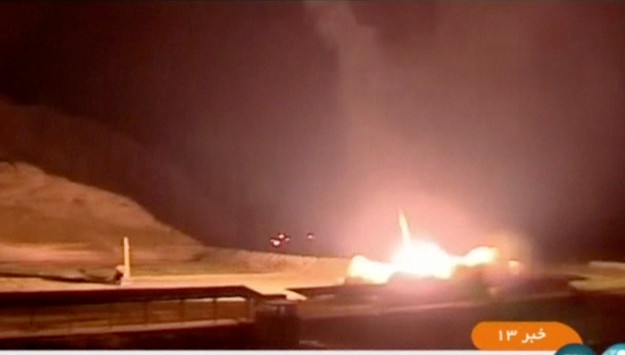
On Sunday, the Iranian military said it had launched six missiles at Islamic State positions in Syria in retaliation for the June 7 attacks in Tehran claimed by the terrorist group. A statement by the Islamic Revolution Guards Corps (I.R.G.C.) confirmed that it fired medium-range missiles from bases in the western Iranian provinces of Kermanshah and Kurdistan and killed a “large number” of Islamic State terrorists in Syria’s Deir Az Zour province.
Monday Briefing: Eastern Syria a Hotbed of Geopolitical Interests
In this week’s Monday Briefing, MEI experts Charles Lister, Alex Vatanka, Marvin G. Weinbaum, and Gerald Feierstein provide analysis on eastern Syria as a new hotbed of geopolitical competition, Iranian responses to the Islamic State attack, additional U.S. troops in Afghanistan, and renewed Saudi succession speculation.

 William F. Wechsler has joined the Middle East Institute as a senior fellow on national security and counterterrorism. Wechsler previously served at the U.S. Department of Defense as deputy assistant secretary for special operations and combating terrorism, and before that as deputy assistant secretary for counternarcotics and global threats.