This individual is a guest contributor. MEI is not able to assist with contact requests.
Attiya Ahmad is Georgetown University’s 2009-10 Center for International and Regional Studies Post-Doctoral Fellow. She recently completed her PhD in Cultural Anthropology at Duke University. Dr. Ahmad’s work brings together scholarship on Islamic studies, globalization, diaspora and migration studies, economic anthropology, and political economy.
Earlier today, double explosions near the Iranian embassy in Beirut killed at least 23, including an Iranian diplomat. The Abdullah Azzam Brigades, an Islamist group with links to al-Qa`ida, took responsibility for the attack. MEI sat down with its Vice President for Policy and Research, Paul Salem, to discuss the significance of the bombings in Lebanon as well as their regional and global implications.
Tell us about the bombing and the group that claimed responsibility for it.
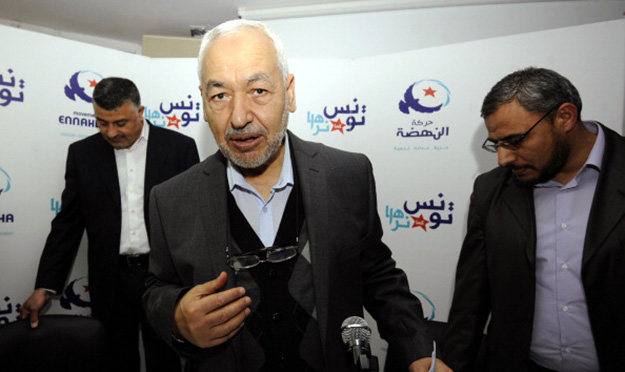
The rise of the Nidaa Tounes (Call for Tunisia) Party has lifted the hopes of many Tunisians who hold Ennahda, the ruling Islamist party, responsible for the increase in religiously-motivated violence and suspect it of trying to establish a theocracy. Yet a closer look at the platform and rhetoric defining Nidaa Tounes suggests that the self-described “modernist” alternative to the Islamists might not be as inclusive and democratic as its leaders claim, as some of the party’s senior figures advocate the exclusion of Ennahda from politics.
Malaysia and Turkey lie nearly 5,000 miles and seven time zones apart. They have different historical experiences and state structures. The role that religion plays in their public life also differs markedly. Yet Malaysia and Turkey have more in common than is widely acknowledged. Both are newly industrialized, middle-income, predominantly Muslim countries and mid-sized powers in their respective regions. Both are also expected to assume a greater regional and global role in the coming years.
Remarks by National Security Advisor Susan E. Rice
Prepared remarks by National Security Advisor Susan E. Rice at the 67th Annual Middle East Institute Awards Banquet in Washington, D.C. on Thursday, November 14, 2013. (Jump to podcast and photos)
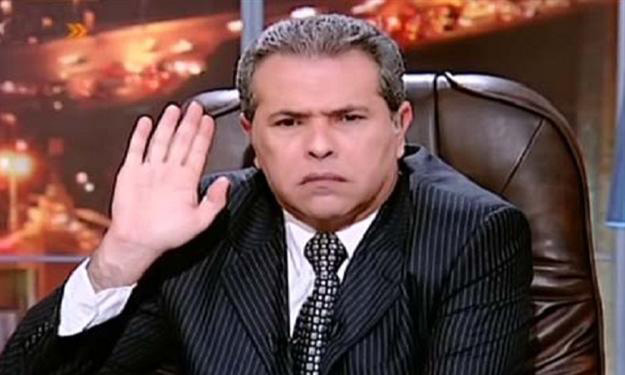
The Egyptian media landscape both before and after Hosni Mubarak’s ouster has been one in which the polemical television personality Tawfik Okasha has thrived. But Okasha, known for his conspiracy theories and strident rhetoric, particularly against the Muslim Brotherhood, has perhaps risen to greater fame and influence recently. With a convergence between anti-Brotherhood positions and Egyptian government policy and public opinion occurring since the mass protests that culminated in Mohamed Morsi’s removal by the military on July 3, Okasha’s views have become more mainstream.
Iran-India relations are far-reaching and multidimensional. However, a variety of issues, including the upheaval in the Middle East and North Africa, U.S and Israeli influence over the region, Iran-Israel belligerence, and terrorism all constrain bilateral diplomacy.
The Philippines and Turkey have not fully capitalized on their human resources and strategic assets in order to expand commercial ties and boost cultural exchanges. However, thanks largely to the efforts of a critical mass of Turkish nationals who have formed the backbone of a “constituency” for advancing Philippine-Turkey relations, the tide may be turning. Three recent developments indicate that the groundwork is being laid to pursue a more robust bilateral relationship: 1) the opening of Turkish-owned schools operating both in Manila and in Zamboanga City (southern Philippines); 2) the creation of the Pacific Dialogue Foundation in the Philippines; and 3) the establishment of the Turkish Chamber of Commerce in the Philippines.
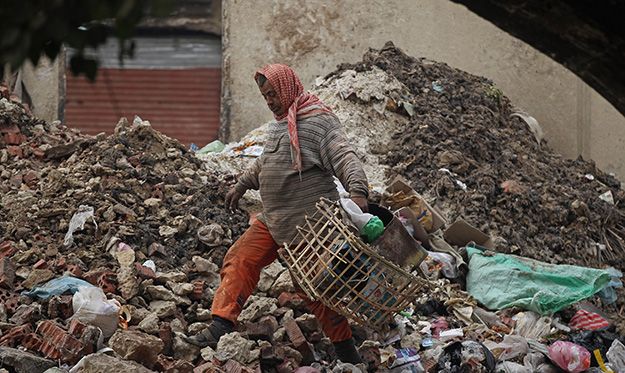
Reporting on Egypt since the July 3 ouster of former president Mohamed Morsi has focused on political dimensions and unrest. However, it is the new government’s success—or lack thereof—in meeting the country’s economic challenges that will largely determine whether Egypt returns to stability, just as surely as it was Egypt’s economic woes that underpinned the country’s repudiation of Morsi.
Senior diplomats from the United States, Russia, and the UN failed this week to agree on the details and date for a Geneva II meeting to help resolve the Syrian crisis. UN and Arab League Special Envoy Lakhdar Brahimi had hoped to hold the meeting in late November, but admitted that it might have to be put off until early 2014. Obstacles included disagreement over the participation of Iran and over the role of Syrian president Assad in the process, as well as disunity among the opposition.