This individual is a guest contributor. MEI is not able to assist with contact requests.
Attiya Ahmad is Georgetown University’s 2009-10 Center for International and Regional Studies Post-Doctoral Fellow. She recently completed her PhD in Cultural Anthropology at Duke University. Dr. Ahmad’s work brings together scholarship on Islamic studies, globalization, diaspora and migration studies, economic anthropology, and political economy.
Turkey’s growing links with the Arab world are evolving on multiple levels and reflect key shifts in the diplomacy, economy, and society of much of the Middle East. They also reflect Turkey’s desire to utilize its close links to Western nations, its neighbors, and other nations to expand its economy and to have greater influence in global politics.
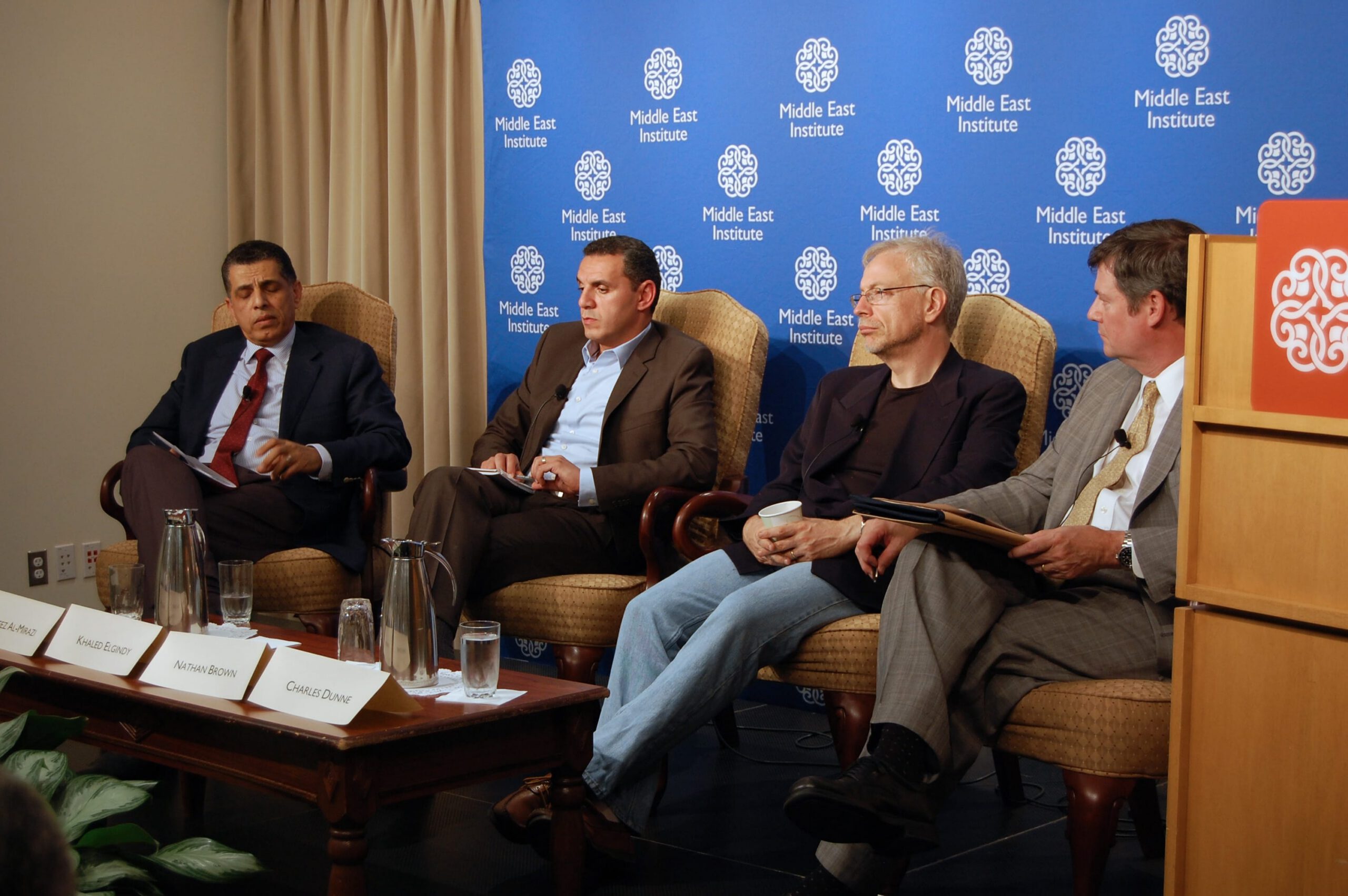
The Middle East Institute is pleased to host Nathan Brown, Khaled Elgindy, and Hafez Al Mirazi for a conversation about recent political developments in Egypt. As the first ever Muslim Brotherhood presidential candidate prepares to take office, a larger standoff looms between the SCAF and the Brotherhood over the future of the recently dissolved Parliament and the question of the constitution. Brown, Elgindy and Al Mirazi will examine these and other challenges facing Egypt on its rocky transition toward democracy.
After the Summit: Assessing Iraq's Relations with its Arab Neighbors
MEI Podcast, 12 July, 2012After the Summit: Assessing Iraq’s Relations with its Arab NeighborsJohn Desrocher, Gregory Gause, Ken Pollack, Amb. Samir Sumaida’ie, Phebe Marr
After the Summit: Assessing Iraq's Relations with its Arab Neighbors
MEI Podcast, 12 July, 2012After the Summit: Assessing Iraq’s Relations with its Arab NeighborsJohn Desrocher, Gregory Gause, Ken Pollack, Amb. Samir Sumaida’ie, Phebe Marr
After the Summit: Assessing Iraq's Relations with its Arab Neighbors
MEI Podcast, 12 July, 2012After the Summit: Assessing Iraq’s Relations with its Arab NeighborsJohn Desrocher, Gregory Gause, Ken Pollack, Amb. Samir Sumaida’ie, Phebe Marr
After the Summit: Assessing Iraq's Relations with its Arab Neighbors
MEI Podcast, 12 July, 2012After the Summit: Assessing Iraq’s Relations with its Arab NeighborsJohn Desrocher, Gregory Gause, Ken Pollack, Amb. Samir Sumaida’ie, Phebe Marr
After the Summit: Assessing Iraq's Relations with its Arab Neighbors
MEI Podcast, 12 July, 2012After the Summit: Assessing Iraq’s Relations with its Arab NeighborsJohn Desrocher, Gregory Gause, Ken Pollack, Amb. Samir Sumaida’ie, Phebe Marr
Saudi Professor Faces Charges After Fighting for Free Speech
This Opinion was first published on Al-Monitor.com on June 28, 2012
What are the limits of free speech and open dissent in the Kingdom of Saudi Arabia? They are often unclear and seemingly arbitrary, but there is no doubt that Dr. Mohammad al-Qahtani, a professor and activist, went well beyond them, and he knew it. He was hardly surprised when Saudi prosecutors, finally fed up with his vociferous denunciations of the regime, hit him with a long list of criminal charges. He had predicted it, and in the context of Saudi Arabia, he was asking for it.
The Third Annual Conference on Turkey: Regional and Domestic Challenges for an Ascendant Turkey
The Middle East Institute’s Center for Turkish Studies in collaboration with the Institute of Turkish Studies present:”Regional and Domestic Challenges for an Ascendant Turkey” June 27th, 20129:00am-5:00pmNational Press Club529 14th Street, NW 13th FloorWashington, DC 20045 Conference Schedule:8:45am – 9:00am: Registration9:00am – 9:15am: WelcomeAmb. Wendy J. Chamberlin, Middle East InstituteGönül Tol, MEI’s Center for Turkish StudiesRoss Wilson, Institute of Turkish Studies 9:15am – 10:00am: Opening KeynoteSenator John McCainUnited States Senate 10:00am – 10:30am: KeynoteAmb.
The Third Annual Conference on Turkey: Regional and Domestic Challenges for an Ascendant Turkey
The Middle East Institute’s Center for Turkish Studies in collaboration with the Institute of Turkish Studies present:”Regional and Domestic Challenges for an Ascendant Turkey” June 27th, 20129:00am-5:00pmNational Press Club529 14th Street, NW 13th FloorWashington, DC 20045 Conference Schedule:8:45am – 9:00am: Registration9:00am – 9:15am: WelcomeAmb. Wendy J. Chamberlin, Middle East InstituteGönül Tol, MEI’s Center for Turkish StudiesRoss Wilson, Institute of Turkish Studies 9:15am – 10:00am: Opening KeynoteSenator John McCainUnited States Senate 10:00am – 10:30am: KeynoteAmb.
The Third Annual Conference on Turkey: Regional and Domestic Challenges for an Ascendant Turkey
The Middle East Institute’s Center for Turkish Studies in collaboration with the Institute of Turkish Studies present:”Regional and Domestic Challenges for an Ascendant Turkey” June 27th, 20129:00am-5:00pmNational Press Club529 14th Street, NW 13th FloorWashington, DC 20045 Conference Schedule:8:45am – 9:00am: Registration9:00am – 9:15am: WelcomeAmb. Wendy J. Chamberlin, Middle East InstituteGönül Tol, MEI’s Center for Turkish StudiesRoss Wilson, Institute of Turkish Studies 9:15am – 10:00am: Opening KeynoteSenator John McCainUnited States Senate 10:00am – 10:30am: KeynoteAmb.
The Third Annual Conference on Turkey: Regional and Domestic Challenges for an Ascendant Turkey
The Middle East Institute’s Center for Turkish Studies in collaboration with the Institute of Turkish Studies present:”Regional and Domestic Challenges for an Ascendant Turkey” June 27th, 20129:00am-5:00pmNational Press Club529 14th Street, NW 13th FloorWashington, DC 20045 Conference Schedule:8:45am – 9:00am: Registration9:00am – 9:15am: WelcomeAmb. Wendy J. Chamberlin, Middle East InstituteGönül Tol, MEI’s Center for Turkish StudiesRoss Wilson, Institute of Turkish Studies 9:15am – 10:00am: Opening KeynoteSenator John McCainUnited States Senate 10:00am – 10:30am: KeynoteAmb.
The Third Annual Conference on Turkey: Regional and Domestic Challenges for an Ascendant Turkey
The Middle East Institute’s Center for Turkish Studies in collaboration with the Institute of Turkish Studies present:”Regional and Domestic Challenges for an Ascendant Turkey” June 27th, 20129:00am-5:00pmNational Press Club529 14th Street, NW 13th FloorWashington, DC 20045 Conference Schedule:8:45am – 9:00am: Registration9:00am – 9:15am: WelcomeAmb. Wendy J. Chamberlin, Middle East InstituteGönül Tol, MEI’s Center for Turkish StudiesRoss Wilson, Institute of Turkish Studies 9:15am – 10:00am: Opening KeynoteSenator John McCainUnited States Senate 10:00am – 10:30am: KeynoteAmb.