This individual is a guest contributor. MEI is not able to assist with contact requests.
Attiya Ahmad is Georgetown University’s 2009-10 Center for International and Regional Studies Post-Doctoral Fellow. She recently completed her PhD in Cultural Anthropology at Duke University. Dr. Ahmad’s work brings together scholarship on Islamic studies, globalization, diaspora and migration studies, economic anthropology, and political economy.
South Asia is a region in crisis — plagued by a set of interlocking problems that have deep and tangled roots. And Pakistan, not Afghanistan, is at the center.
Afghanistan has been plagued by war for 30 years. The conflicts that have occurred during this time have involved major world powers, Afghanistan’s neighbors, and various Afghan factions. The cumulative toll of these conflicts on the country and its people is enormous. Yet, despite three calamitous decades of death and destruction, peace and stability is achievable.
The move to hold a second round of elections in Afghanistan on November 7, 2009 has at least had one positive result: it has brought out the fundamental limitations of introducing Western democratic election processes in a deeply divided society that, moreover, is at war with itself and with external forces.
Land Grab in Sherpur: Monuments to Powerlessness, Impunity, and Inaction
Originally posted December 2009
In September 2003, armed police and bulldozers violently ejected around 250 people from land in central Kabul and demolished their homes to make way for the lavish mansions of the freshly empowered elite.[1] Sherpur, as the area is known, lies in the shadow of the diplomatic enclave and as such is some of the most valuable land in the capital.
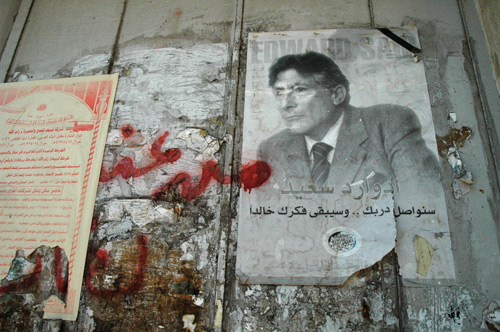
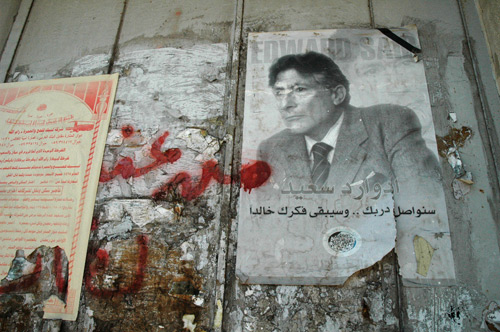
I had heard of Edward Said long before I discovered the world of theory and read Orientalism in the early 1990s, more than a decade after the book was published to great acclaim. I remember being vaguely intrigued by the public presence of a man with an English-Arab name. In a sort of fateful irony, Said’s parents seemed to have baptized their son to live across cultures, to be out of place, as Said wrote toward the end of his life. But it was the name’s hint of Arabness that first caught my attention.
There are at least two unexamined axioms in Edward Said’s Orientalism: first, the primacy of the political in Orientalist discourse, and secondly the importance in that discourse of the intellectual and the literary (using “literary” in a high cultural sense). The first will not be discussed here, though it seems doubtful. The second deserves thinking about, and it is that which is discussed here.