This individual is a guest contributor. MEI is not able to assist with contact requests.
Attiya Ahmad is Georgetown University’s 2009-10 Center for International and Regional Studies Post-Doctoral Fellow. She recently completed her PhD in Cultural Anthropology at Duke University. Dr. Ahmad’s work brings together scholarship on Islamic studies, globalization, diaspora and migration studies, economic anthropology, and political economy.
Private Contractors in Conflict Zones: The Good, the Bad and the Strategic Impact
In Iraq and Afghanistan, the United States has vastly expanded its use of contractors in conflict zones without serious consideration of their strategic impact. While the presnece of contractors is not new, the number and types of tasks they are executing is. This discussion will examine what is good about contractors, what problems they cause and then the largely unexamined strategic impact of contractors — both armed and unarmed — on current and future conflicts. It concludes with policy recommendations for the use of contractors in future conflicts.
The Israei-Syrian Conflict over the Occupied Golan Heights: Myths and Realities
Dr. Yigal Kipnis, an Israeli author, geographer, historian, and leading expert on the Israeli-Syrian conflict over the Golan Heights will discuss the current state of Israeli settlements on the Golan, and related topics.
The Middle East Institute is proud to host Ambassador Robert E. Hunter, Senior Adviser at the RAND Corporation, to present a new study that lays out the criteria and parameters for a new security structure for the Persian Gulf region. His recent study, Building Security in the Persian Gulf, makes recommendations for a new security structure for the region in order to promote long-term stability while also reducing
The Struggle for a Democratic Future in Afghanistan: The 2010 Parliamentary Elections
The Middle East Institute is proud to host Marvin Weinbaum, scholar at the Middle East Institute, and Caroline Wadhams, Director for South Asia Security Studies at the Center for American Progress, for a discussion on the outcomes and impact of the recent parliamentary elections in Afghanistan. Recently returned from Afghanistan, where
The government formation stalemate in Iraq—well into its seventh month and counting—may at last be nearing an end. The next few weeks could seal a deal between rival electoral blocs that will produce the next national government.
Two scenarios with very different outcomes appear to be jockeying for rail position in the race to produce the next Prime Minister.
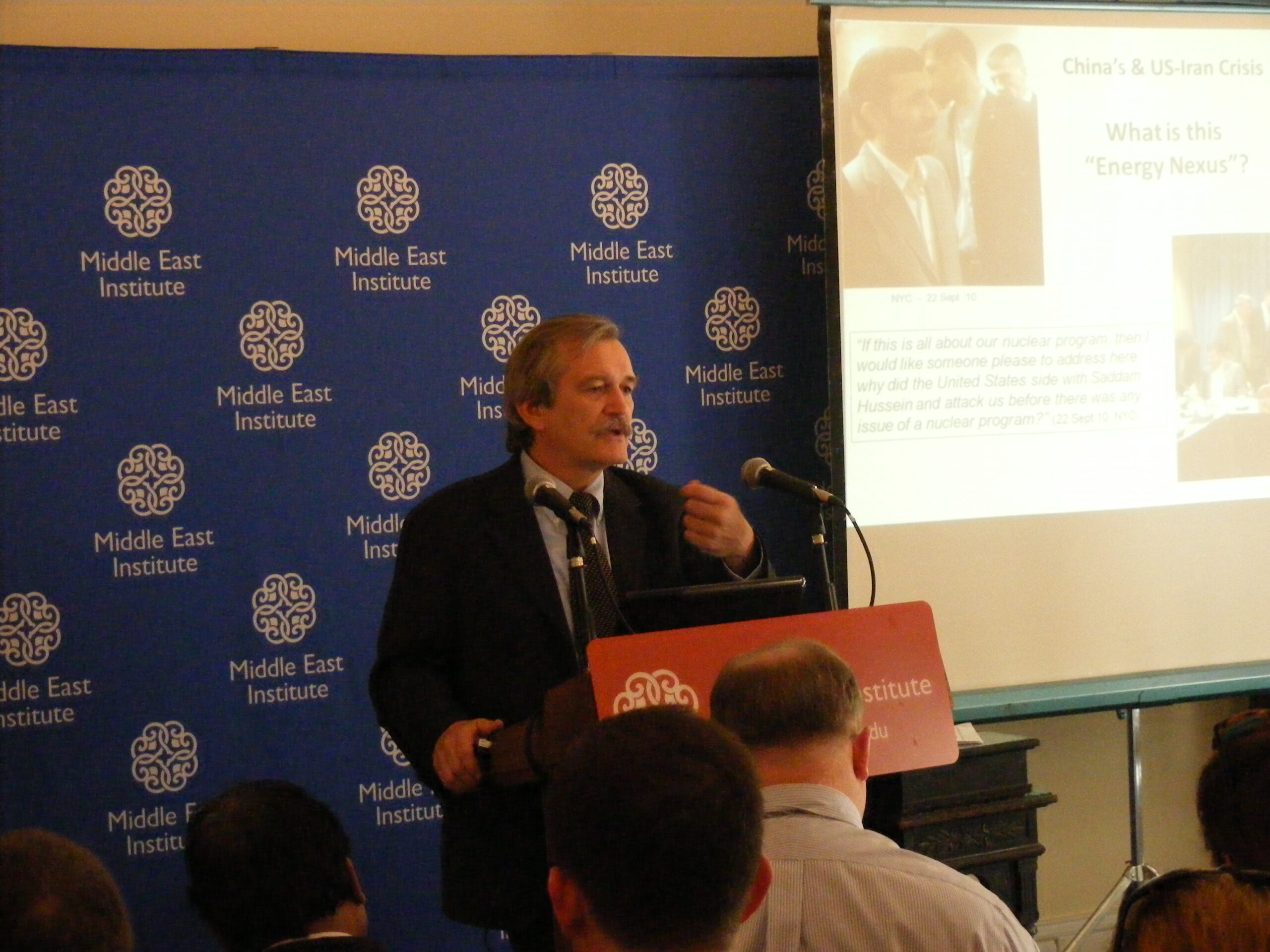
The Middle East Institute is pleased to host Dr. Thomas O'Donnell,
lecturer in Graduate International Affairs at the New School in New
York, for a discussion on China's perception of the Iranian nuclear
issue. Drawing on his expertise in the global energy system, Dr.
O'Donnell will examine why Beijing, which was initially and very
vocally opposed to UN sanctions, ended up voting in favor of them. He
will outline the energy-security nexus underlying China's interests in