This individual is a guest contributor. MEI is not able to assist with contact requests.
Dr. Charles Schmitz is a professor of geography at Towson University in Baltimore, Maryland where he has taught since 1999. Dr. Schmitz is a specialist on the Middle East and Yemen. He began his academic career as a Fulbright Scholar and American Institute for Yemeni Studies fellow in Yemen in the early 1990s. Dr. Schmitz’s current research interests include the political economy of development in Yemen, international law and the counter terror policy, international governance and failing states, and the sociology of contemporary Yemeni society.
Monday Briefing: This Week's OPEC Meeting, and the Latest on Aleppo and Yemen
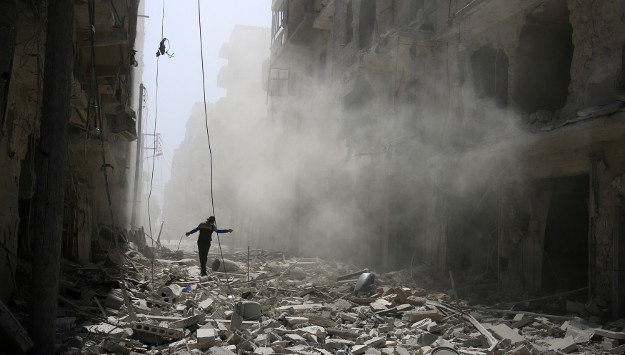
In this week’s Monday Briefing, MEI experts Ruba Husari, Charles Lister, and Charles Schmitz provide analysis on events including OPEC’s upcoming meeting to discuss production rates and a potentil freeze, Russia’s bombardment of Aleppo following the collapse of the latest cease-fire, and the worsening humanitarian disaster in Yemen.
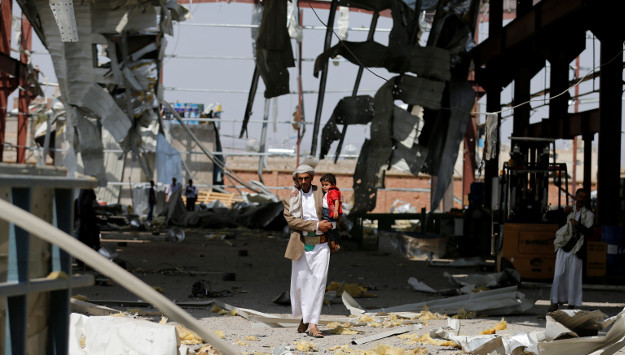
The War in Yemen: Political Impasse and Humanitarian Crisis
September 14, 2016 – Charles Schmitz, MEI scholar and professor of geography at Towson University, sits with Paul Salem to discuss the state of play in Yemen, where more than a year of war has led to thousands of civilian casualties and compounded a long-standing humanitarian crisis.
Monday Briefing: Turkey's Iran Outreach and Regional Diplomatic Strategy
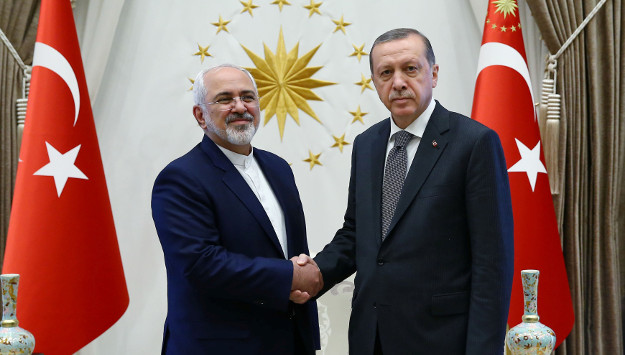
In this week’s Monday Briefing, MEI experts Gonul Tol, Alex Vatanka, Charles Schmitz, and Robert S. Ford provide analysis on current issues including Turkey’s regional diplomacy as President Erdogan is set to visit Tehran, the Iranian perspective on Turkey’s role in the region, Secretary Kerry’s visit to Saudi Arabia amid renewed fighting in Yemen, and ongoing attempts to broker a cease-fire deal in Syria.
Monday Briefing: Syria Cease-fire, Yemen Talks, and Iran Elections
In this week’s Monday Briefing, MEI experts Charles Lister, Charles Schmitz, and Alex Vatanka provide analysis on recent events including the Syrian cease-fire, Al-Qaeda losses in Yemen, and Iran’s parliamentary elections.
Monday Briefing: Syrian Peace Talks, Yemen's Cease-fire, and Saudi Regional Diplomacy
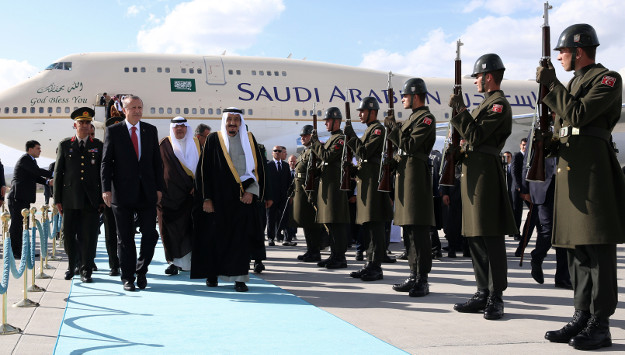
In this week’s Monday Briefing, MEI experts Randa Slim, Charles Schmitz, and Paul Salem provide analysis on recent and upcoming events including the next round of Syrian peace talks, the cease-fire in Yemen and the negotiations ahead, and Saudi King Salman’s visits to Egypt and Turkey.
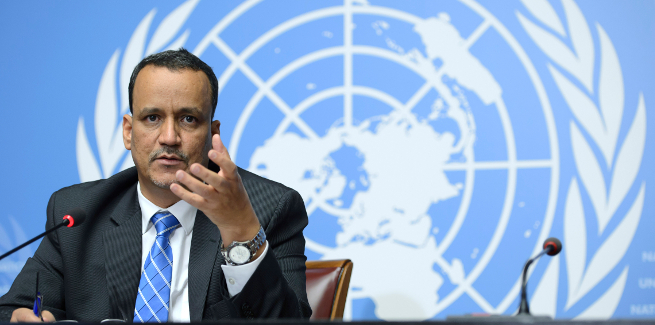
Just days before the first anniversary of the Saudi air campaign in Yemen on March 26, the U.N. special rapporteur to Yemen, Ould Cheikh, announced a cease-fire to begin April 10 followed by a third round of talks between the warring Yemeni factions on April 18. These talks have a better chance of success than previous attempts. The Houthi-Saleh alliance has long insisted that a complete and final cease-fire proceed any talks, and in previous attempts at negotiation, announced cease-fires never took hold and talks went nowhere.
Monday Briefing: Latest Analysis on Yemen, Turkey, and Syria
In this week’s Monday Briefing, MEI experts Charles Schmitz, Gonul Tol, Randa Slim, and Charles Lister provide analysis on recent events including the announced cease-fire between the Saudi’s and Yemen’s Houthis, the consequences of the recent terrorist attacks in Turkey and the P.Y.D’s move to declare an autonomous Kurdish zone in northeastern Syria, expectations for Secretary Kerry’s visit to Moscow this week to discuss the Syrian conflict, and the impact of the cease-fire on conditions on the ground in Syria.
U.N. mediator to Yemen, Walid Sheikh, recently succeeded in negotiating the release of a number of political prisoners held by Houthi rebels, including a government minister, as a confidence-building measure. Despite this small success, the third round of negotiations in the Yemeni conflict appear to be floundering without a start date.
Hadi flip-flopped again. On Thursday, September 10, Yemeni President Abdu Rabbu Mansour Hadi announced that the government would meet with the Houthi rebels directly and without any conditions at the UN-sponsored negotiating table. As the military buildup for the assault on Sana reaches its final stages, Hadi’s announcement came with a sense of relief that Sana, having endured six months of bombardment from the Saudi Air Force, would be spared a ground assault. But two days later, Hadi reversed and
Negotiating Yemeni Peace: Deep Divisions and Hard Realities
After initially rejecting the UN call for talks, the Saudi-backed Abdu Rabbu Mansour Hadi faction reversed its position and agreed to meetings in Geneva on June 14.
Misadventures in Violence in Yemen: Operation Resolute Storm
Saudi Arabia’s military intervention in Yemen is a risky move motivated by various Saudi objectives in Yemen and in the region. The immediate objective is to save President Abdu Rabbu Mansour Hadi from Ansar Allah’s advance on Aden and reinstall him as head of state by forcing Ansar Allah to make major political concessions. But the operation also marks the increasing willingness of the Saudis to use their own military rather than rely on the United States.
Yemen’s Ansar Allah: Causes and Effects of Its Pursuit of Power
Observers can be excused for confusion over events in Yemen. In late January, Ansar Allah—the group often referred to as Houthis—kidnapped President Abdu Rabbu Mansour Hadi’s chief of staff, sacked the presidential palace, and effectively placed the president and government ministers under house arrest. Ansar Allah’s demands, strangely, were that the president and government stay in power rather than leave.
This paper is part of an MEI scholar series, titled “Obama’s Legacy in the Middle East: Passing the Baton in 2017.” Click here to view the full project, or navigate using the table of contents to the right.
A month after the Houthi conquest of Sana, Yemen’s new political landscape remains uncharted. In Sana, the Houthi leadership is trying to coax Yemen’s political elite into a coalition government, while south of Sana, Houthi forces are pressing to consolidate their military power on the ground. Both efforts are encountering considerable resistance, but the Houthis may prevail still.