This individual is a guest contributor. MEI is not able to assist with contact requests.
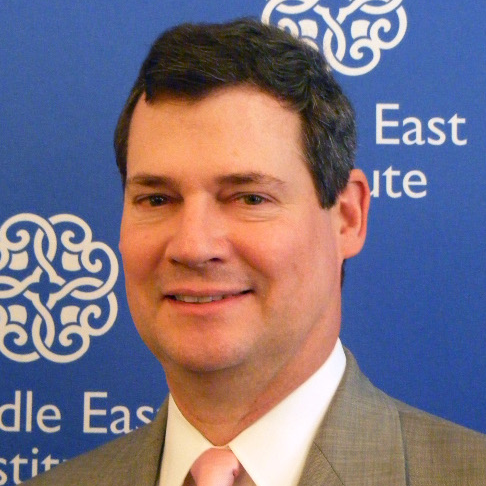
Charles W. Dunne spent 24 years as a diplomat in the U.S. Foreign Service, serving overseas in Cairo, Jerusalem, and Madras, India. He was Foreign Policy Adviser to the Director for Strategic Plans and Policy at the Joint Staff in the Pentagon (2007-2008). He was director of Middle East and North Africa programs from 2011 to 2015 at Freedom House, where he focused on human rights and democracy promotion in the region. Prior to joining Freedom House, he was Director for Iraq at the National Security Council from 2005-2007. He served as a member of the Secretary of State’s Policy Planning Staff, where he contributed to the development of presidential initiatives to advance political reform and democracy in the Broader Middle East and North Africa. He is currently a Visiting Distinguished Research Fellow of the Institute for National Strategic Studies at the National Defense University. He is a frequent media guest on outlets such as BBC, al-Jazeera, and al-Hurra, and has appeared on CBS, Fox, and NPR. He has written for numerous publications, including the Washington Post, US News and World Report, the American Interest, and The National in Dubai. He has often spoken in public on Middle East issues on panels and major conferences.
The shock waves of Hosni Mubarak’s resignation have just started to roll across the Middle East, but in Egypt the upheaval has barely begun. The country now embarks on what the protesters in Tahrir square hope will be a transition to a true, civilian-led democracy. In the meantime, Egypt is headed for a period of military rule in some form, with the ultimate intentions of the armed forces leadership still in doubt. Will the military act to effect the “genuine transition” now demanded by the Obama Administration and the protesters themselves?
This Commentary first appeared in the American Interest's Middle East Blog on January 31, 2011.
The end is now at hand for the government of Hosni Mubarak, ruler of Egypt for the last thirty years. Two outstanding questions face us now: What will the army do? And how should the United States react?
Iraq's Nobel No Show Suggests Democracy in the Balance
An earlier version of this Commentary first appeared in the American Interest on December 10, 2010
Iraq, the newest democracy in the Middle East, turned down an invitation to attend the December 10 investiture ceremony for the Chinese Nobel Peace Prize laureate Liu Xiaobo. It thus kept company with a litany of repressive governments that declined invitations to the ceremony, including Afghanistan, Cuba, Egypt, Iran, Kazakhstan, Morocco, Pakistan, Russia, Sudan, Saudi Arabia, Serbia, Tunisia and Venezuela.
The government formation stalemate in Iraq—well into its seventh month and counting—may at last be nearing an end. The next few weeks could seal a deal between rival electoral blocs that will produce the next national government.
Two scenarios with very different outcomes appear to be jockeying for rail position in the race to produce the next Prime Minister.
Where Does the US Stand After Its Retreat from Iraq?
This piece first appeared as a op-ed in The National on August 30, 2010
The last American combat troops rolled across the Kuwaiti border from Iraq on August 19, nearly two weeks ahead of schedule. The Obama administration has spoken of this milestone as a promise fulfilled and the first major step toward bringing a “responsible” end to the war in Iraq, setting the stage for the final withdrawal of American troops at the end of next year.
US Interest Wanes in the Mission that Remains in Iraq
This Commentary first appeared as an op-ed in The National, July 25, 2010.
After the March 2003 invasion of Iraq by United States and coalition forces, a short but sharp war, and the declaration of “Mission Accomplished” aboard an American aircraft carrier, Iran felt isolated and encircled on all sides by US might. Not so today.
Tehran has closely observed US travails in Iraq over the years, and watched with satisfaction as the US began withdrawing its forces in anticipation of a full withdrawal by the end of 2011.
As the US Plans Its Exit, the Iraqis Find Reason to Worry
This Commentary was originally published as an op-ed in The National May 31, 2010.
‘What does the US want from Iraq?” This was the question of a university educator during a large gathering of Iraqi politicians, students, journalists and activists we met during a 10-day trip to Baghdad and Kurdistan sponsored by Washington’s Stimson Center earlier this month.
Terrorist Rehabilitation and Succession Politics in Libya: Opportunities for the United States?
While Washington’s attention was focused on the aftermath of Iraq’s election and a growing confrontation between the Obama Administration and Israel’s Binyamin Netanyahu, another remarkable event was taking place in Libya: the release of hundreds of security prisoners, many with terrorist ties, under the auspices of a rehabilitation program which some in Libya hope could be a model for the rest of the region.
This Commentary first appeared as an op-ed in the The National, March 14, 2010.
Iraq’s parliamentary elections have just concluded, but the major political battles are about to begin. At stake is what kind of country Iraq will become. Will Iraq’s progress toward greater stability continue? Will it look east towards Tehran for support and encouragement, or to the United States and its fellow Arabs? The stakes are high, and no one can afford to remain uninterested while Iraq continues its dramatic political evolution.
Beyond Iraq’s National Elections: Planning a New Phase in American Policy
This Commentary is an adaptation of a longer piece published by the Institute for the Theory and Practice of International Relations at the College of William and Mary on February 25, 2010.