The Latest from Fatima Sadiqi


Media Activism Amid Civil War: The Role of Syrian Women Journalists
An “All-Hazards” Approach to Resilience: Benefits and Building Blocks
What could be done to guard against the possibility of a multi-disaster incident? Drawing upon the experience of the Great East Japan Earthquake of 2011, this essay discusses the need for, value of, and prerequisites for instituting an “All-Hazards” emergency management strategy.
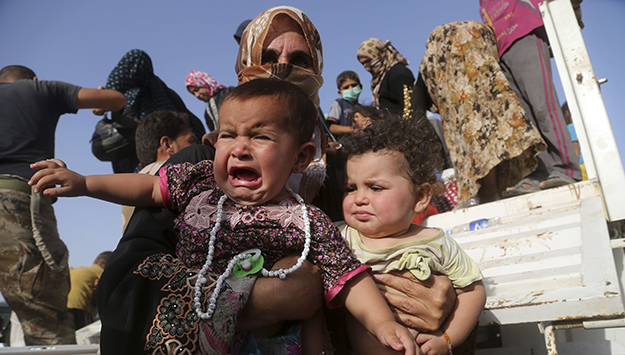
The Next Challenge: Governing Liberated Cities after ISIS
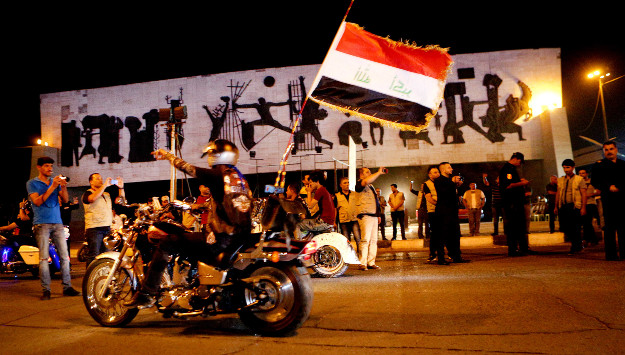
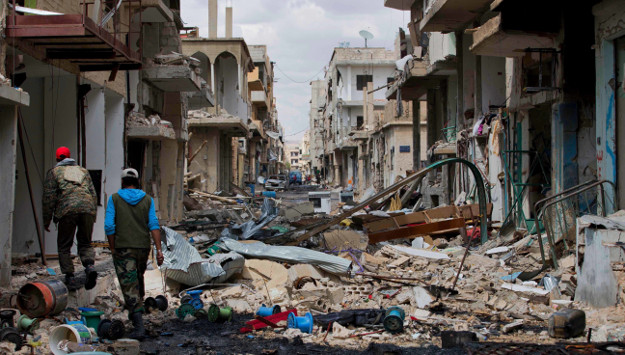
Lieutenant General Abdulwahab al-Saadi, the Iraqi commander of the Iraqi forces fighting to retake Fallujah, said June 23 that his units held 80 percent of the city. This contrasts with the estimate from the U.S. military spokesman in Iraq on June 22, who said that Iraqi forces held only a third of the city. Whatever the exact figure, after heavy fighting, often street-by-street, the Islamic State will lose the city.
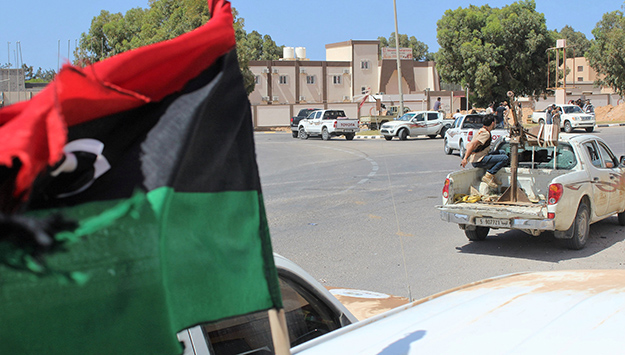
Libya Security Still Fragile Despite Gains
The Libyan Presidential Council (P.C.), representing a rough consensus of Libyan political forces, is making slow but promising gains in several key areas. There will probably be setbacks on the road to the kind of progress that will generate wider support from both key Libyan factions and the general populace. Signs are encouraging, however, in areas such as security and legitimacy. It is too early to say that the Government of National Accord (G.N.A.) appointed by the P.C. is truly governing, but it is taking steps that provide more confidence to the international community.
Monday Briefing: Brexit’s Impact on the Middle East; Syria File Changes Hands in Iran
In this week’s Monday Briefing, MEI experts Daniel Serwer, Paul Scham, and Alex Vatanka provide analysis on recent and upcoming events including Brexit’s impact on the Middle East, how Brexit is distracting the E.U. from Israel-Palestine issues, and Iran’s more moderate reshuffling of officials focusing on Syria.
Brexit’s Impact on the Middle East
Daniel Serwer, MEI Scholar
Information Filtering in Social Media During Disasters
Disaster relief systems are built upon the assumption that information provided by volunteers is accurate. In recent years, social media have become widely used tools to assist in disaster relief. This essay brings to light the various types of unwanted data and their characteristics. Drawing on the case of the 2011 earthquake and tsunami in Japan, the essay shows how social media can support as well as impede relief efforts. The essay concludes with suggestions regarding how to ‘filter’ information so as to help make social media a more effective disaster relief tool.

London Play Tackles Middle East Mayhem with Humor
A small, darkened theater in Hackney was transformed this month into a portal for Palestine, Bradford, New York City, and a London suburb. But the quartet of monologues by Hassan Abdulrazzak—performed admirably by Asif Khan—traversed these disparate landscapes using humor as subversion, providing a unique window into otherwise humorless subjects.
Blanket Approaches in Humanitarian Response: Reflections from the 2015 Nepal Earthquake
In April and May 2015, two large-scale earthquakes struck Nepal, killing almost 9,000 people, damaging over half a million houses and displacing hundreds of thousands of people from their homes. This essay focuses on a particular aspect of the response to this disaster—namely, the use of the ‘blanket’ approach as a basis for the distribution of relief. It suggests that while blanket approaches are commonly used in the immediate aftermath of rapid onset disasters, unless replaced as soon as feasible with approaches that target vulnerability, they can very easily result in the exclusion of those most desperately in need.
Israel Doubles Down on Settlement Policy
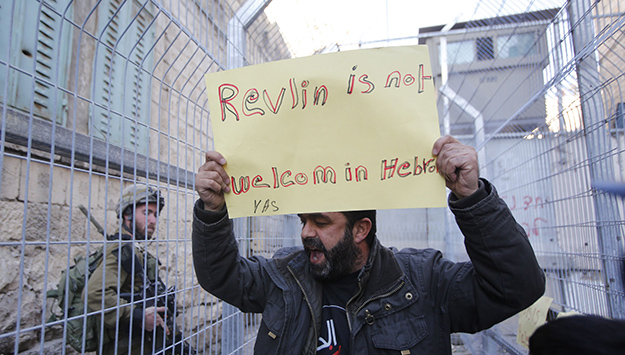
Israeli President Reuven “Ruby” Rivlin was recently asked about the prospects for a two-state solution to Israel’s long conflict with the Palestinians. He described this concept for building a future between Israel and its neighbor as “irrelevant.” Indeed, he claims to have said as much to President Barack Obama when they last met.
What does “irrelevant” mean in this context? The dictionary lists as its synonyms “immaterial” or “beside the point.”
Monday Briefing: ISIS to Lose Fallujah; Pakistan to Join S.C.O.
In this week’s Monday Briefing, MEI experts Robert S. Ford, Paul Scham, and Marvin G. Weinbaum provide analysis on recent events including the battle against ISIS for Fallujah, Israel’s upcoming address to the EU Parliament, and Pakistan’s upcoming accession to the Shanghai Cooperation Organization.
ISIS to Lose Fallujah
Robert S. Ford, Senior Fellow
Time to Reconsider Jordan’s Nuclear Program
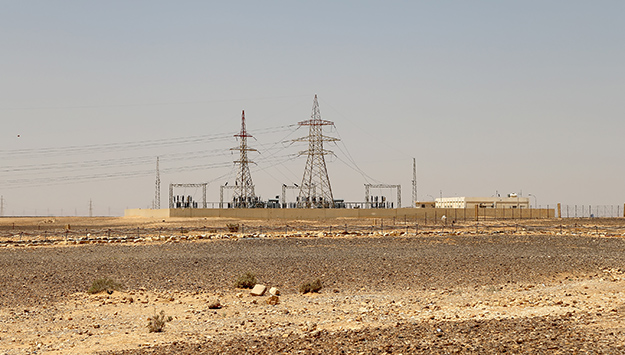
Amidst great excitement, Jordan signed a $10 billion agreement with Russia to construct the country’s first nuclear power plant in March 2015. Chairman of Jordan’s Atomic Energy Commission (JAEC) Khalid Toukan confidently asserted, “We aim to build a state of the art nuclear power plant that will be a showcase for the region.” Promising cheap energy, Toukan assured that nuclear power is the optimal way forward.
Disaster Diplomacy for Asia and the Middle East
This essay provides a brief look at the Philippines experience as a means of highlighting the interplay between disaster risk reduction and politics with regard to disaster diplomacy across the Asia-Pacific and Middle East and North Africa (MENA) regions and beyond.