America vs. ISIS: Be Careful What You Wish For
This article was first published on LobeLog.
This individual is a guest contributor. MEI is not able to assist with contact requests.
This article was first published on LobeLog.
This article was co-written by Sarkawt Shamsulddin, co-founder of the Kurdish Policy Foundation. It was first published on CNN.
This article first appeared in The National Interest.
After a year of hesitation, Iranian president Hassan Rouhani is signaling his readiness to reach out to Tehran’s chief regional rival—Saudi Arabia. Last week, a top official was sent to Riyadh; he was the most senior Iranian visitor to the country since Rouhani’s election in June 2013.
This op-ed was first published in the New York Daily News.
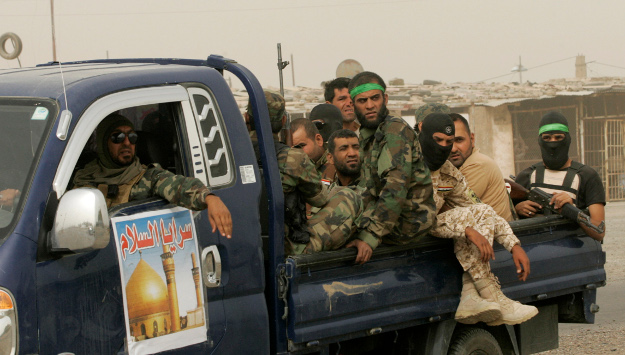
The United States might not have had a strategy for battling ISIS last week, but it does now. The NATO summit in Wales produced one. It reflects President Obama’s instincts and his ability to corral fractious allies.
It also says nothing about the use of force by the United States.
In the last three years, Egypt’s economic position has deteriorated dramatically. Domestic and external deficits have increased, causing public debt to grow sharply, external reserves to fall, investment to shrink, and inflation to increase. In the process, growth decelerated, unemployment rose, income distribution worsened, and the medium term economic outlook became clouded.
Three and a half years into the Syrian civil war, it is clear that any hopes that the overall insurgency against the Assad regime might develop in a more “mainstream” and “moderate” direction have dissipated.[1]
China, “a quarter of mankind,” can no longer be ignored.[1] Economic reform is not the essence of Deng Xiaoping’s revolution; opening China to the outside world is. Israel is part of this phenomenon. After thirty years of no relations (and even mutual hostility); ten years of unofficial relations; and more than twenty years of official relations, both countries have managed to overcome their earlier illusions and to come to terms with the limits of their bilateral relations.
The crisis in Pakistan is coming to a head. Of course it’s been building since the 15th of August, but now we’re faced with a situation in which this government is either going to survive or, very likely, were going to see a military takeover.
The big question is where does the military stand, because everybody realizes that ultimately the outcome will depend on what the military is willing to accept or, indeed, what the military wants.
Despite the fact that Japan was one of the first countries in the world to recognize Israel as an independent nation, and despite the fact that relations between the two peoples have been generally amicable, the business linkages that would have been mutually beneficial have been very slow to develop. Only quite recently has there been a change in the wind that promises much more positive economic interaction between Israel and Japan as we enter the second half of this second decade of the new millennium.
Although power cuts are hardly new in Egypt, no Egyptian government has tackled the problem seriously and transparently. After the January 25, 2011 uprising, Egyptians had less patience with the failures of state services and demanded change.
On August 9, 2014, the Muslim Brotherhood in Egypt began another chapter in its besieged political life. The highest administrative court in Egypt, the Supreme Administrative Court, dissolved the Freedom and Justice Party (FJP), the political arm of the Muslim Brotherhood. The Court also liquidated all of the FJP’s assets in an effort to quash any further political ambitions and activities that the Brotherhood might have in Egypt. The ruling—a calculated move conducted prior to upcoming parliamentary elections, scheduled for later this year—was an attempt
Within four months of the military’s ouster of Mohamed Morsi, one of the icons of liberalism serving in the new cabinet, Ziad Bahaa-Eldin, admitted to CNN that those who called for political reconciliation, like himself, were alienated by the political mood, where the very concept of reconciliation has become “a dirty word” in Egypt.
Last week, President Obama said that he has no strategy yet to confront the Islamic State (IS) in Syria. He was attempting to counter speculation about American bombing of IS targets there. It had been rumored that the President wanted to decide on a war plan by the end of the week.[1]
As the United States struggles to mobilize a coalition of allies including Turkey behind potential military action against the Islamic State (formerly known as ISIS) in Syria, Turkey’s Iraq and Syria policies remain captive to ISIS and the 49 Turkish hostages it holds. Turkey might be key to the U.S. effort to confront ISIS, and it is in a very tough spot.