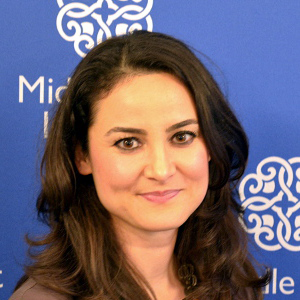
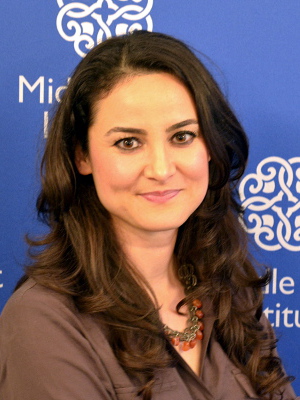
Gönül Tol is a senior fellow at the Middle East Institute (MEI), where she focuses on Turkish politics, US-Turkey relations and regional dynamics in the Middle East.
A frequent commentator, Dr. Tol has written extensively on Turkish domestic and foreign policy for publications such as Foreign Affairs, The New York Times, Foreign Policy, and TheFinancial Times. Her articles include “Turkey Is Now a Full-Blown Autocracy” in Foreign Affairs (March 2025), “The Indispensable Erdogan” in The New York Times and “Erdogan Sees Nothing But Opportunity in Syria” in TheFinancial Times (December 2024).
Rethinking Democracy Ep. 4: China's Growing Presence in the Middle East with F. Gregory Gause and Jon Alterman
China has made significant inroads in the Middle East through diplomacy, trade, investment, and infrastructure projects. Beijing advertises the benefits of its authoritarian development model and presents itself as a responsible alternative to the United States. What does this mean for MENA autocracies? Gregory Gause and Jon Alterman join Gonul Tol to discuss China’s growing presence in the Middle East.
Nato must wake up to Russia’s nuclear power deal with Turkey
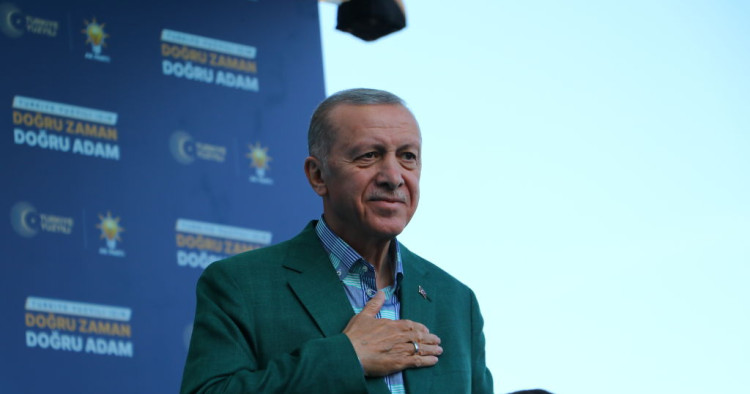
Ask Nato’s secretary-general to name the decision of Turkish President Recep Tayyip Erdoğan that irks him the most and he’d probably say purchasing Russia’s S-400 missile defence system. But Nato has an even bigger problem when it comes to Turkey-Russia ties: the Akkuyu nuclear power plant.
Rethinking Democracy Ep. 3: Economic Conditions and Support for Democracy with Daron Acemoglu and Tamara Cofman Wittes
Authoritarian populism is on the rise around the world. Political scientists and policymakers are debating what’s driving this trend. Is it economic inequality, or a cultural backlash against social change that erodes trust in democratic institutions? Dr. Daron Acemoglu and Dr. Tamara Cofman Wittes join Gonul Tol to discuss the relationship between changing economic conditions and support for democracy.
What Comes Next for Turkey? Prospects for Change on the Political, Economic, and Foreign Policy Fronts
After two decades in power and following the Justice and Development Party’s historic defeat in the 2024 local elections, Turkish President Recep Tayyip Erdoğan is now at his most vulnerable. What comes next is not only important for the future prospects of Turkish democracy but also holds important lessons for autocrats across the world. Scholars Evren Balta, Seda Demiralp, Edgar Şar, and M. Murat Kubilay seek to answer key questions about the country’s political, economic, and foreign policy trajectory in a new report from the Middle East Institute.
Rethinking Democracy Ep. 2: What is the Rule of Law? With Thomas Carothers and Vali Nasr
According to the World Justice Project, 2023 was the sixth year in a row in which the rule of law has declined in most countries. The rule of law is a cornerstone of democratic societies – promoting fairness and ensuring accountability. Thomas Carothers and Vali Nasr join Gonul Tol to answer the questions: What is the relationship between the rule of law and democracy? Why is the rule of law challenged in places like the Middle East, and can the West help advance it?
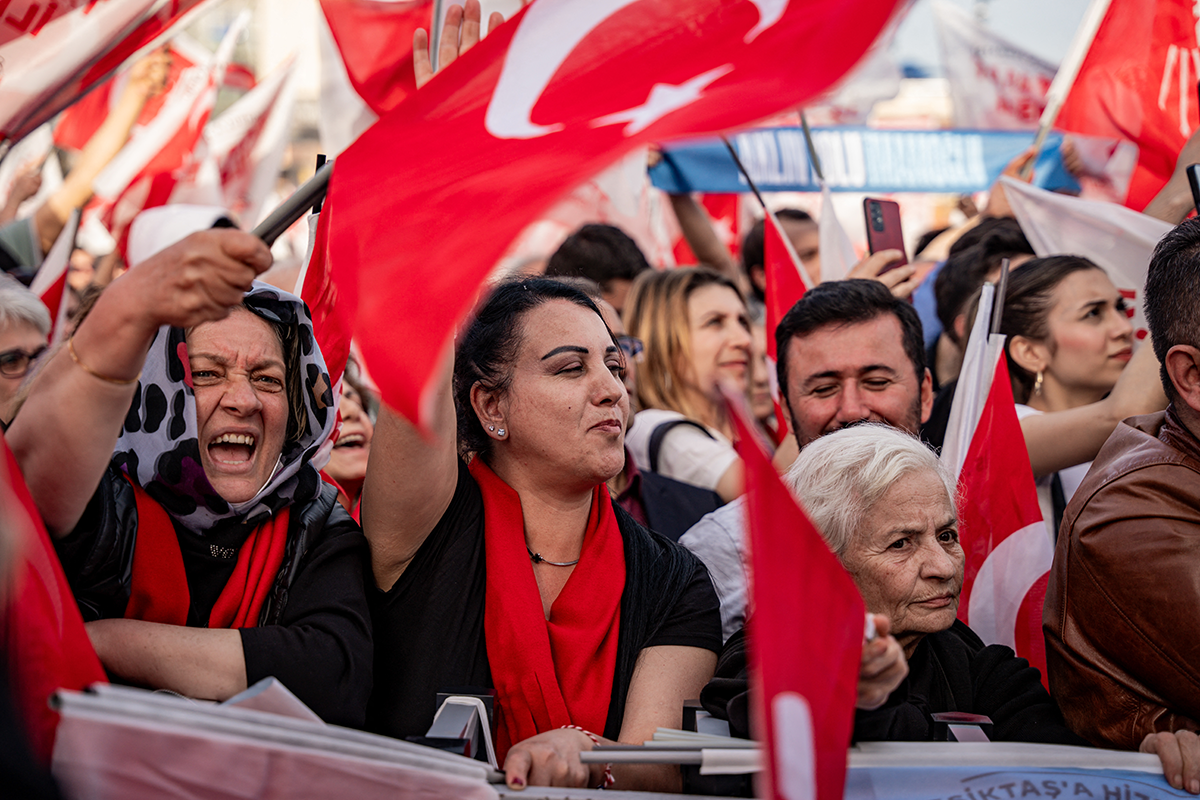
Even as more and more countries move toward authoritarianism, big cities across the world are becoming strongholds for pro-democracy forces, a fact underlined by the recent local elections in Israel and Turkey. So the question is, can cities lead a democratic revival in countries that have experienced a democratic recession?
Rethinking Democracy, Ep. 1: Why Does Democracy Flourish? With Francis Fukuyama and Paul Salem
The world’s oldest democracy is in trouble. According to a study by the Public Religion Research Institute and the Brookings Institution, 75% of Americans believe that “the future of American democracy is at risk in the 2024 presidential election.” We often debate why democracies die because we assume that authoritarian power is the exception and democracy is the norm. But history says otherwise. Francis Fukuyama and Paul Salem join Gonul Tol to answer the question: Why has democracy flourished in certain countries and regions and not in others?
Autocracy not reform remains Erdoğan’s recipe for Turkey
Since Turkey’s presidential election in May, western analysts have held out hope that Recep Tayyip Erdoğan will moderate his strongman style of rule. Feeding their optimism are several steps Erdoğan has taken, including appointing market-friendly technocrats to his economic team, replacing the hardline interior minister, dialling down anti-western rhetoric and voicing support for Sweden’s Nato membership. All these moves, however, are aimed at strengthening Erdoğan’s one-man rule, and the west is helping him.