Skip to Content

Jean-Pierre Cassarino

Professor

Expertise

North Africa

This individual is a guest contributor. MEI is not able to assist with contact requests.

Jean-Pierre Cassarino holds a professorship at the Robert Schuman Center for Advanced Studies (RSCAS/European University Institute, Florence) where he directs the Return migration and Development Platform (http://rsc.eui.eu/RDP/). He is also research associate at the Tunis-based Institut de Recherche sur le Maghreb Contemporain (IRMC). Since the mid-1990s, he has published extensively on international migration, particularly on return migration and has carried out numerous field surveys investigating returnees’ manifold patterns of reintegration. Selected publications include: (ed.) Unbalanced Reciprocities: Cooperation on Readmission in the Euro-Mediterranean Area, The Middle East Institute Press, Washington, 2010; (ed.) “Conditions of Modern Return Migrants”, International Journal on Multicultural Societies, Vol. 10, Issue 2, UNESCO, Paris, 2008; (ed.) Return Migrants to the Maghreb Countries: Reintegration and development challenges, RSCAS, European University Institute, Florence, 2008; Tunisian New Entrepreneurs and their Past Experiences of Migration in Europe: Networks, Resource Mobilisation, and Hidden Disaffection. Ashgate Publishers, Aldershot, 2000. Email: [email protected]

The Latest from Jean-Pierre Cassarino

Filter by
9989 Results
How tech is cementing the UAE-Israel alliance
  • Analysis
  • How tech is cementing the UAE-Israel alliance

    Since the normalization of UAE-Israel relations was first announced, much of the international commentary only focused on the deal’s political and diplomatic significance. However, the deal will create a new digital order in the Middle East, one in which Israel and the UAE will partner more closely than ever in developing emerging technologies and cyber capabilities. This cooperation will be at the forefront of this UAE-Israel tech order.

    Iranian sanctions evasion and the Gulf’s complex oil trade
    Photo by Ali Mohammadi/Bloomberg via Getty Images
  • Analysis
  • Iranian sanctions evasion and the Gulf’s complex oil trade

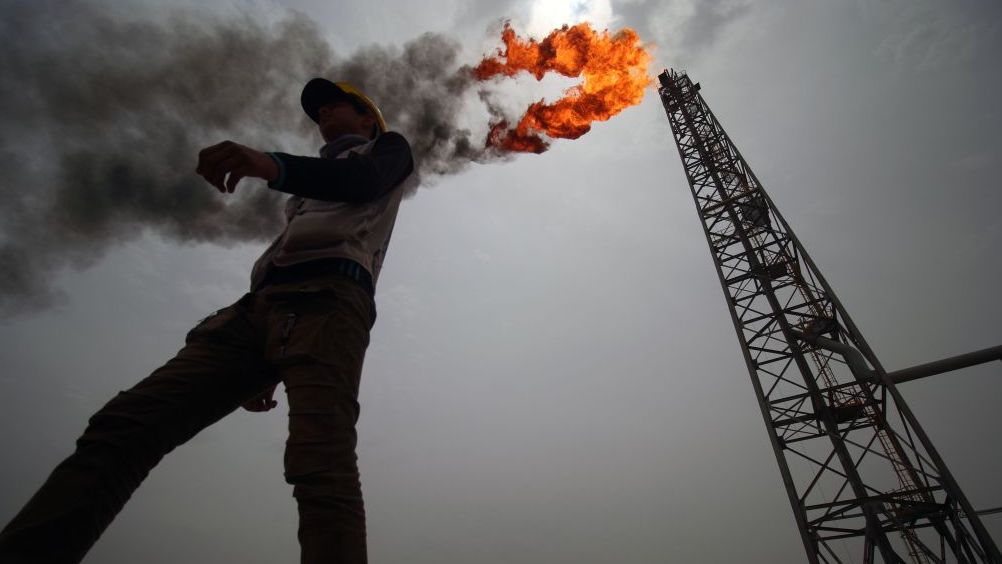
    Sanctions have had a devastating impact on Iran’s oil production and exports, preventing much-needed investment in the country’s ageing fields and barring it from legally exporting crude oil to global customers. Using a range of evasion tactics, however, Iran has succeeded in circumventing sanctions and maintaining a steady — albeit much lower — level of crude exports. The Gulf’s complex regional oil market has facilitated these tactics, providing the perfect environment for trade in oil that U.S. sanctions designate as illicit.

    May 11, 2021

    How Facebook’s Oversight Board Can Do More for Syria
    Photo by Muhammed Abdullah/Anadolu Agency via Getty Images
  • Analysis
  • How Facebook’s Oversight Board Can Do More for Syria

    Around the world, there is ongoing debate over the extent to which speech should be regulated for the common good. Facebook has been a key battleground in this debate. Indeed, since nearly its founding day, the company has struggled with the degree to which it bears responsibility for the content that its users post on the platform, including but not limited to, the glorification of violence, incitement to terrorism, and false and misleading political content. In 2020, the company officially launched the Facebook Oversight Board, a trust-based body composed of 40 members and tasked with passing final, binding rulings upon Facebook’s content moderation decisions.

    May 11, 2021

    Reframing Art Dubai
  • Analysis
  • Reframing Art Dubai

    In 2020, the 14th edition of Art Dubai went completely online due to the coronavirus outbreak, with programming focused on performance art and healing curated by Marina Fokidis, a live broadcast of the Global Art Forum, and a digital catalogue. “We didn’t have a model to follow,” Pablo del Val, Art Dubai’s Artistic Director explained. “The online viewing rooms came later and the art industry has shifted to make these platforms meaningful. The future was unknown so we worked blindly.”

    May 7, 2021

    The Biden administration’s first 100 days
    Middle East Institute
  • Podcast
  • The Biden administration’s first 100 days

    Paul Salem and Randa Slim join host Alistair Taylor to discuss the Biden administration’s first 100 days in office and what it’s meant for U.S. Middle East policy, from Afghanistan to Iran.

    May 6, 2021

    The Houthis and the limits of diplomacy in Yemen
    Photo by Stringer/Getty Images
  • Analysis
  • The Houthis and the limits of diplomacy in Yemen

    President Joe Biden’s commitment to “stepping up” diplomacy to end the war in Yemen generated hope among peace practitioners and policy shapers. In February, the president appointed Tim Lenderking, a seasoned diplomat with solid experience in the region, as the U.S. special envoy to Yemen.

    بوادر واعدة للانخراط في اليمن، ولكن هناك المزيد الذي يتعين القيام به
  • Commentary
  • بوادر واعدة للانخراط في اليمن، ولكن هناك المزيد الذي يتعين القيام به

    أكثر من أي دولة أخرى في المنطقة، تلقى اليمن اهتمامًا خاصًا من إدارة بايدن. خلال أول 100 يوم من تولي جو بايدن منصبه، أُبلِغَ عن الحاجة إلى إنهاء الدعم العسكري للسعودية (مع ترك الباب مفتوحًا للدفاع عن المملكة) ودفع من أجل تحقيق السلام في اليمن، وكذلك شطب الحوثيين من قوائم الإرهاب، وهو التصنيف الذي فرضته إدارة ترامب. كما عيَّن تيم ليندركينغ مبعوثًا خاصًا لليمن، مما أعطى الزخم لأهمية عملية صنع السلام لهذا البلد.

    May 6, 2021

    CAATSA sanctions are hurting Turkey’s military readiness at a time when NATO can’t afford it
    Photo by Aytac Unal/Anadolu Agency/Getty Images
  • Analysis
  • CAATSA sanctions are hurting Turkey’s military readiness at a time when NATO can’t afford it

    On Dec. 14, 2020, the Trump administration sanctioned Turkey’s Presidency of Defense Industries (SSB), along with key individuals involved in the purchase of the Russian–made S-400 surface-to-air missile system. The sanctions were issued under the 2017 Countering America’s Adversaries Through Sanctions Act (CAATSA), a law intended to punish Russia for a wide range of malign activities.

    May 6, 2021