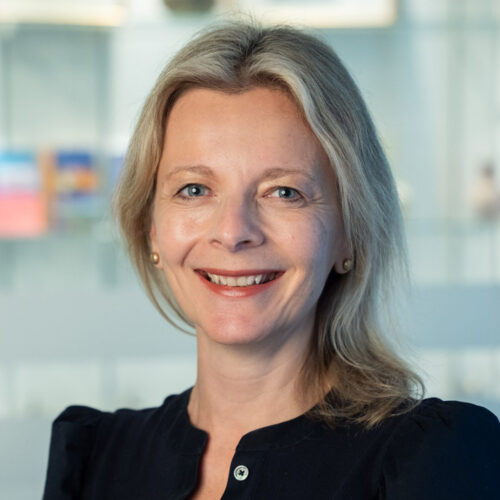
This individual is a guest contributor. MEI is not able to assist with contact requests.
Jean-Pierre Cassarino holds a professorship at the Robert Schuman Center for Advanced Studies (RSCAS/European University Institute, Florence) where he directs the Return migration and Development Platform (http://rsc.eui.eu/RDP/). He is also research associate at the Tunis-based Institut de Recherche sur le Maghreb Contemporain (IRMC). Since the mid-1990s, he has published extensively on international migration, particularly on return migration and has carried out numerous field surveys investigating returnees’ manifold patterns of reintegration. Selected publications include: (ed.) Unbalanced Reciprocities: Cooperation on Readmission in the Euro-Mediterranean Area, The Middle East Institute Press, Washington, 2010; (ed.) “Conditions of Modern Return Migrants”, International Journal on Multicultural Societies, Vol. 10, Issue 2, UNESCO, Paris, 2008; (ed.) Return Migrants to the Maghreb Countries: Reintegration and development challenges, RSCAS, European University Institute, Florence, 2008; Tunisian New Entrepreneurs and their Past Experiences of Migration in Europe: Networks, Resource Mobilisation, and Hidden Disaffection. Ashgate Publishers, Aldershot, 2000. Email: [email protected]
This article was originally published on Salon.com on May 10, 2013
Watching Syria is like looking through a kaleidoscope. The picture seems to change dramatically in response to the slightest jolt, but the components remain the same. The past week has seen lots of jolts, but no real change in the elements that make up the sad picture.
Iraq's Oil Sector Open for Business: The Asia Connection
Post-occupation Iraq’s oil production ― buoyed by the existence of vast unexploited reserves ― is resurgent. Asian national oil companies (NOCs), which tend to be less risk averse than many of their Western counterparts, are increasingly making their presence felt.
What Pakistan’s Democratic Future Holds for the United States
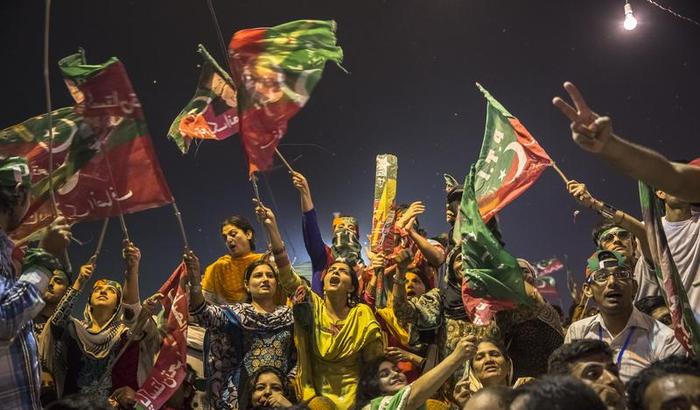
With elections set to take place on May 11, Pakistan stands at an important juncture of its history. The Election Commission of Pakistan, arguably the most independent and impartial that the country has had, is working diligently to ensure that the electoral process is free and fair. A democratically elected government could, for the first time in Pakistan’s history, relinquish power to another civilian government. Such a development, which marks a new phase in the Pakistan’s democratic struggle, indicates the need for a reassessment of U.S.
The International Response to Syria's Humanitarian Catastrophe
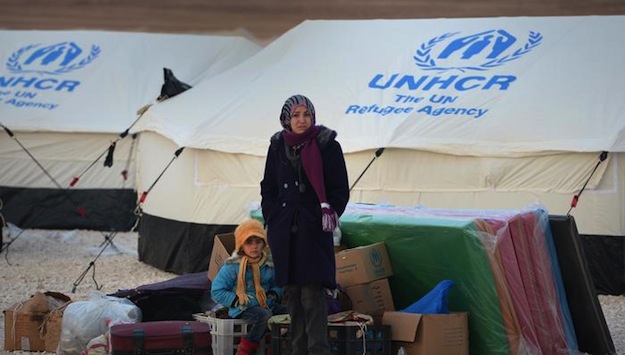
Tue, 5/7/2013 12:15 pm to 1:15 pmLocation: Carnegie Endowment – Root Room1779 Massachusetts Ave NWWashingtonDistrict of Columbia20036 The Middle East Institute is pleased to welcome Valerie Amos, the UN under-secretary-general for Humanitarian Affairs, for a discussion about the humanitarian crisis inside Syria. Now in its second year, the Syrian conflict has generated more than 1.3 million refugees and left 4.25 million internally displaced. According to the UN, some 6.8 million people are in desperate need of assistance.
The International Response to Syria's Humanitarian Catastrophe
Tue, 5/7/2013 12:15 pm to 1:15 pmLocation: Carnegie Endowment – Root Room1779 Massachusetts Ave NWWashingtonDistrict of Columbia20036 The Middle East Institute is pleased to welcome Valerie Amos, the UN under-secretary-general for Humanitarian Affairs, for a discussion about the humanitarian crisis inside Syria. Now in its second year, the Syrian conflict has generated more than 1.3 million refugees and left 4.25 million internally displaced. According to the UN, some 6.8 million people are in desperate need of assistance.
The International Response to Syria's Humanitarian Catastrophe
Tue, 5/7/2013 12:15 pm to 1:15 pmLocation: Carnegie Endowment – Root Room1779 Massachusetts Ave NWWashingtonDistrict of Columbia20036 The Middle East Institute is pleased to welcome Valerie Amos, the UN under-secretary-general for Humanitarian Affairs, for a discussion about the humanitarian crisis inside Syria. Now in its second year, the Syrian conflict has generated more than 1.3 million refugees and left 4.25 million internally displaced. According to the UN, some 6.8 million people are in desperate need of assistance.
The International Response to Syria's Humanitarian Catastrophe
Tue, 5/7/2013 12:15 pm to 1:15 pmLocation: Carnegie Endowment – Root Room1779 Massachusetts Ave NWWashingtonDistrict of Columbia20036 The Middle East Institute is pleased to welcome Valerie Amos, the UN under-secretary-general for Humanitarian Affairs, for a discussion about the humanitarian crisis inside Syria. Now in its second year, the Syrian conflict has generated more than 1.3 million refugees and left 4.25 million internally displaced. According to the UN, some 6.8 million people are in desperate need of assistance.
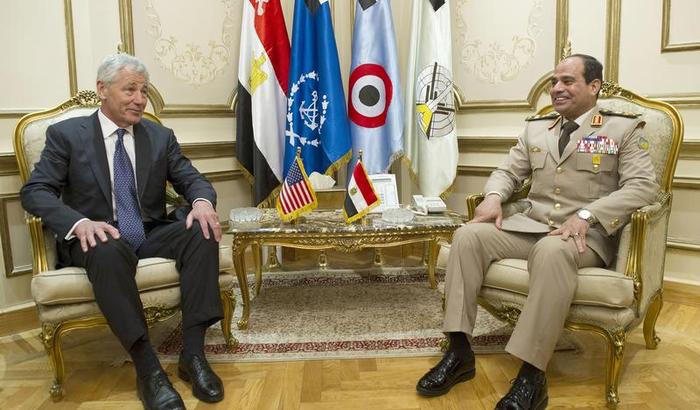
Debunking Five Myths of Washington’s Leverage in Egypt
This article was first published by Al-Monitor on April 28, 2013
Assertions and opinions in this publication are solely those of the above-mentioned author(s) and do not necessarily reflect the views of the Middle East Institute, which expressly does not take positions on Middle East policy.
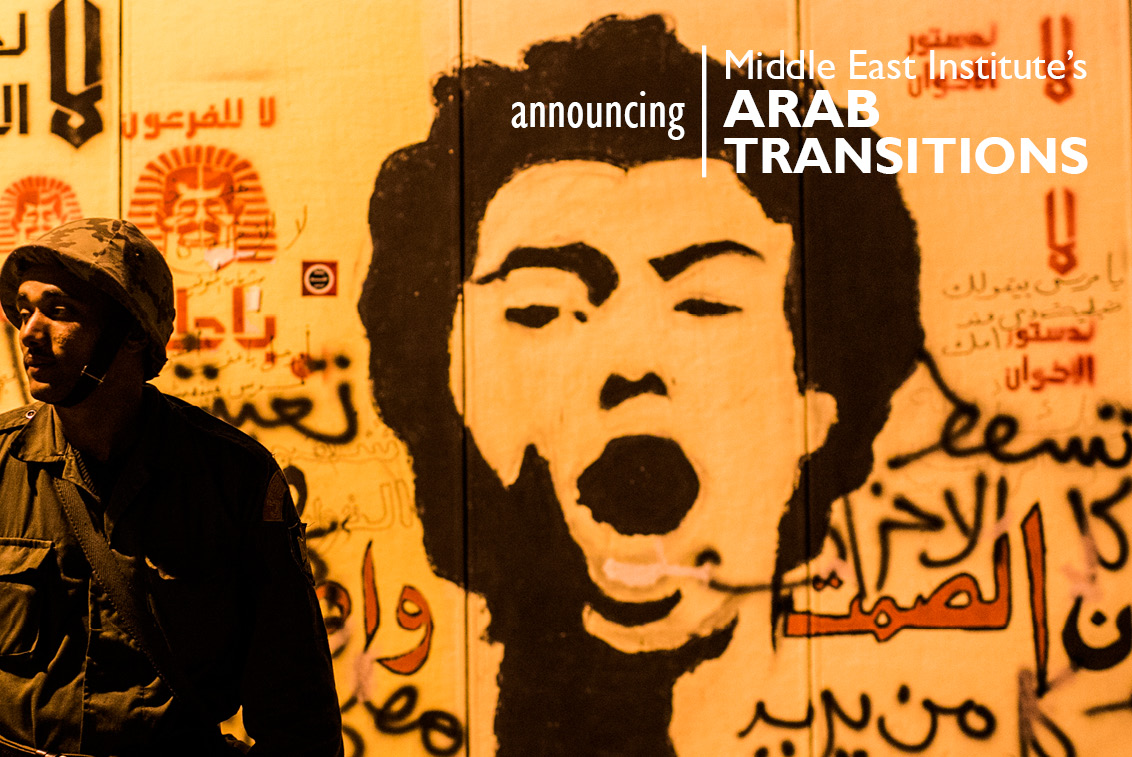
The Middle East Institute is pleased to announce the launch of the Arab Transitions program, an initiative to provide in-depth analysis of the historic changes taking place in the Arab world in the wake of the 2011 uprisings.