This individual is a guest contributor. MEI is not able to assist with contact requests.
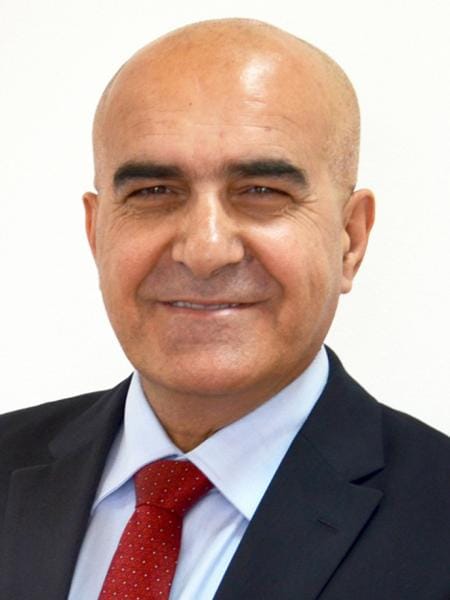
Jean-Pierre Cassarino holds a professorship at the Robert Schuman Center for Advanced Studies (RSCAS/European University Institute, Florence) where he directs the Return migration and Development Platform (http://rsc.eui.eu/RDP/). He is also research associate at the Tunis-based Institut de Recherche sur le Maghreb Contemporain (IRMC). Since the mid-1990s, he has published extensively on international migration, particularly on return migration and has carried out numerous field surveys investigating returnees’ manifold patterns of reintegration. Selected publications include: (ed.) Unbalanced Reciprocities: Cooperation on Readmission in the Euro-Mediterranean Area, The Middle East Institute Press, Washington, 2010; (ed.) “Conditions of Modern Return Migrants”, International Journal on Multicultural Societies, Vol. 10, Issue 2, UNESCO, Paris, 2008; (ed.) Return Migrants to the Maghreb Countries: Reintegration and development challenges, RSCAS, European University Institute, Florence, 2008; Tunisian New Entrepreneurs and their Past Experiences of Migration in Europe: Networks, Resource Mobilisation, and Hidden Disaffection. Ashgate Publishers, Aldershot, 2000. Email: [email protected]
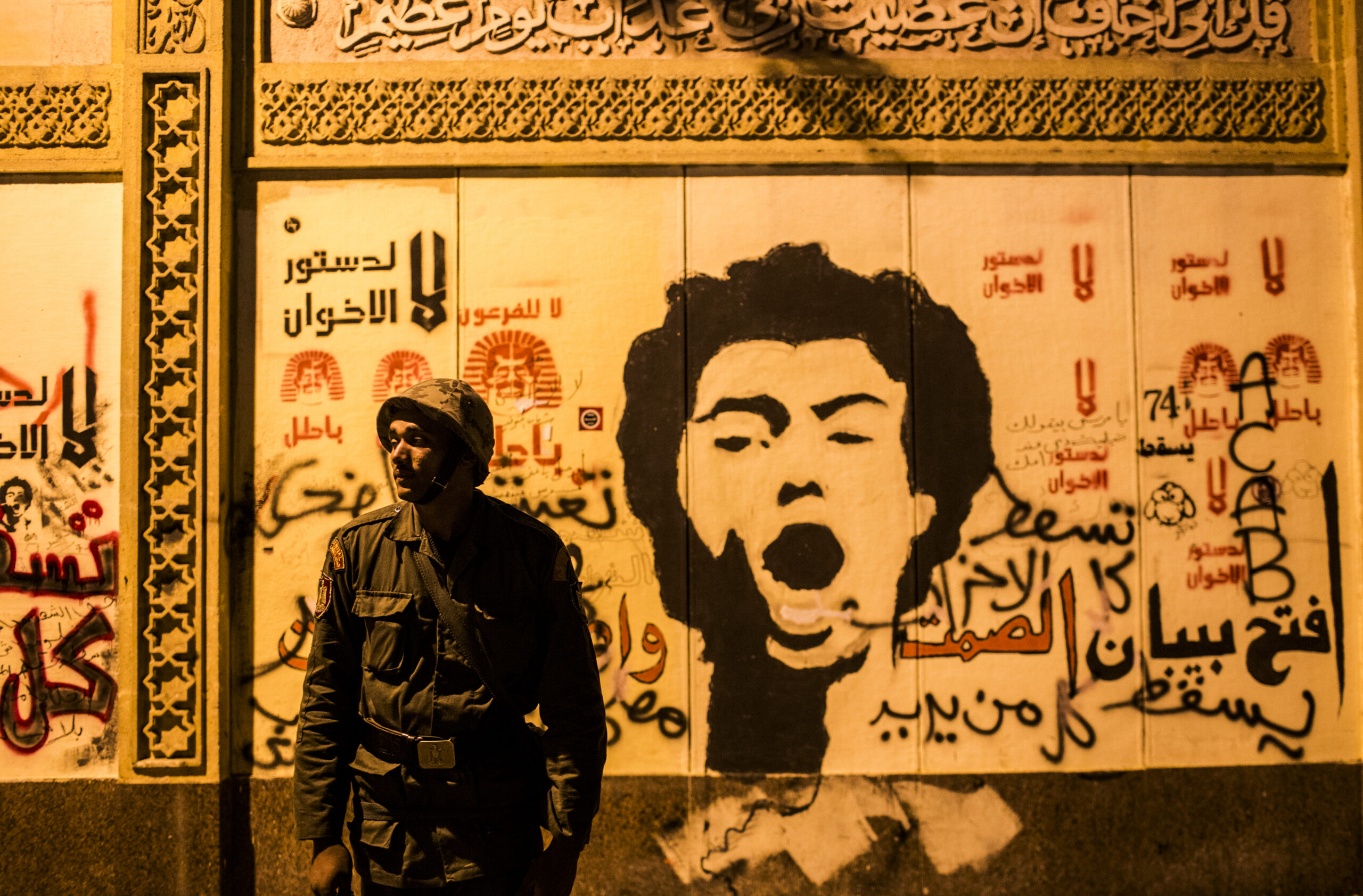
When President Mohamed Morsi granted himself sweeping new powers last November, he unwittingly accomplished something no one had yet achieved. He managed to bring Egypt’s fractious and disparate political factions together around a single cause: bitterly opposing him and his Muslim Brotherhood.
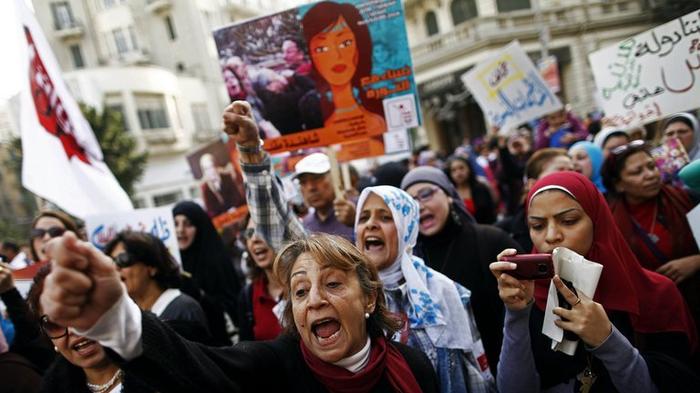
When I moved to Cairo in 1981 I discovered a courtly and safe city. The streets were alive with playful banter, expressions of the renowned Egyptian joie de vivre. Men who wished to attract the attention of lady passers-by sang bits of love songs or called them things like “minaret” and “gazelle.”
A Conversation with al-Gama`a al-Islamiya’s Hani Nour Eldin
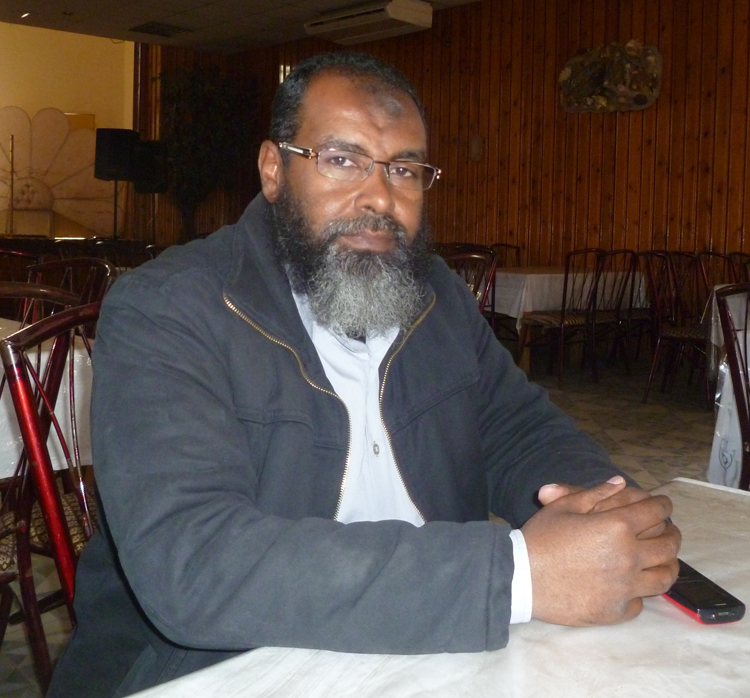
Hani Nour Eldin is a member of the Egyptian Islamist group al-Gama`a al-Islamiya and an administrative employee of the Suez Canal Authority. In 2011 he was elected to parliament as part of the group’s political arm, the Building and Development Party. In June 2012 he caused considerable controversy when he traveled to Washington, D.C. as part of a parliamentary delegation.
Ten months have passed since the election of the Muslim Brotherhood’s Mohamed Morsi as Egypt’s first post-uprising president. During his election campaign, Morsi repeatedly promised “change.” So far, however, it appears that Egypt’s bureaucracy has been more successful at changing Morsi’s plans and discourse than he has been at changing the state’s structures.
Along with countries such as Syria and Iraq, Pakistan has become a theater of doctrinal differences between Shia and Sunni Muslims, signifying that rifts between local groups have become linked to the wider violent sectarianism in the Middle East.
The Asia-Pacific in the "Golden Age of Gas": Implications for Middle East LNG Exporters
Qatar, as the world’s largest single LNG exporter, will be at the forefront of competition with key players in both the European and Asian markets. As an infra-marginal producer with all major capital investments already in place and in the process of being amortized, Qatar occupies a privileged though by no means entrenched competitive position.
Japan’s Unfinished Democracy: Lessons for Democratic Transformation in the Middle East
Stability in the Middle East is essential for Japanese prosperity. Japanese investment and aid has already made significant contributions to the region’s socio-economic stability. The next step is for Japan to contribute its lessons learned as a successful case of democratic transformation.
Interview with Dr. Yiyi Chen on Hebrew/Jewish Studies in China and Sino-Israel Relations
Some might find it surprising to learn that China was never hostile or belligerent towards Israel. China never rejected or even questioned the State of Israel’s right to exist. Premier Zhou En Lai criticized Palestinian terrorism and categorically rejected the idea of ‘throwing the Israelis into the sea.’
The Middle East Institute, The Foundation for Middle East Peace and Just World Books Present:A cookbook and more than a cookbook, The Gaza Kitchen: A Palestinian Culinary Journey brings together traditional recipes from the Gaza Strip based on extensive interviews with home cooks, and uses profiles of these cooks as well as beautiful documentary photography to explore the history, economy and daily life of the territory.
The Middle East Institute, The Foundation for Middle East Peace and Just World Books Present:A cookbook and more than a cookbook, The Gaza Kitchen: A Palestinian Culinary Journey brings together traditional recipes from the Gaza Strip based on extensive interviews with home cooks, and uses profiles of these cooks as well as beautiful documentary photography to explore the history, economy and daily life of the territory.