This individual is a guest contributor. MEI is not able to assist with contact requests.
Jean-Pierre Cassarino holds a professorship at the Robert Schuman Center for Advanced Studies (RSCAS/European University Institute, Florence) where he directs the Return migration and Development Platform (http://rsc.eui.eu/RDP/). He is also research associate at the Tunis-based Institut de Recherche sur le Maghreb Contemporain (IRMC). Since the mid-1990s, he has published extensively on international migration, particularly on return migration and has carried out numerous field surveys investigating returnees’ manifold patterns of reintegration. Selected publications include: (ed.) Unbalanced Reciprocities: Cooperation on Readmission in the Euro-Mediterranean Area, The Middle East Institute Press, Washington, 2010; (ed.) “Conditions of Modern Return Migrants”, International Journal on Multicultural Societies, Vol. 10, Issue 2, UNESCO, Paris, 2008; (ed.) Return Migrants to the Maghreb Countries: Reintegration and development challenges, RSCAS, European University Institute, Florence, 2008; Tunisian New Entrepreneurs and their Past Experiences of Migration in Europe: Networks, Resource Mobilisation, and Hidden Disaffection. Ashgate Publishers, Aldershot, 2000. Email: [email protected]
Palestinian Authority-Hamas Unity Agreement: An overdue step towards peace or another stone in the road?
Dr. Matti Steinberg, Israel's premier expert on Islamist politics and Hamas, has spent his career as a public intellectual and analyst of Israel's relations with the modern Arab and Islamic world. He has taught at the Hebrew University and the Herzliya Interdisciplinary Center. Dr. Steinberg has just completed a semester teaching a seminar to graduate students on Islamic Fundamentalism as a Gruss-Lipper lecturer and scholar at the Woodrow Wilson School at Princeton University.
*Co-written by James P. Farwell. This article originally appeared in the National Interest online on June 9, 2011
Informed observers are increasingly raising the fear that new elections will put the Muslim Brotherhood in control of Egypt’s parliament and the presidency. Of course it will try. Senior Brotherhood leader Sobhi Saleh, who helped write Egypt’s interim constitution, said in a recent video that he expects the new government to be Islamist.
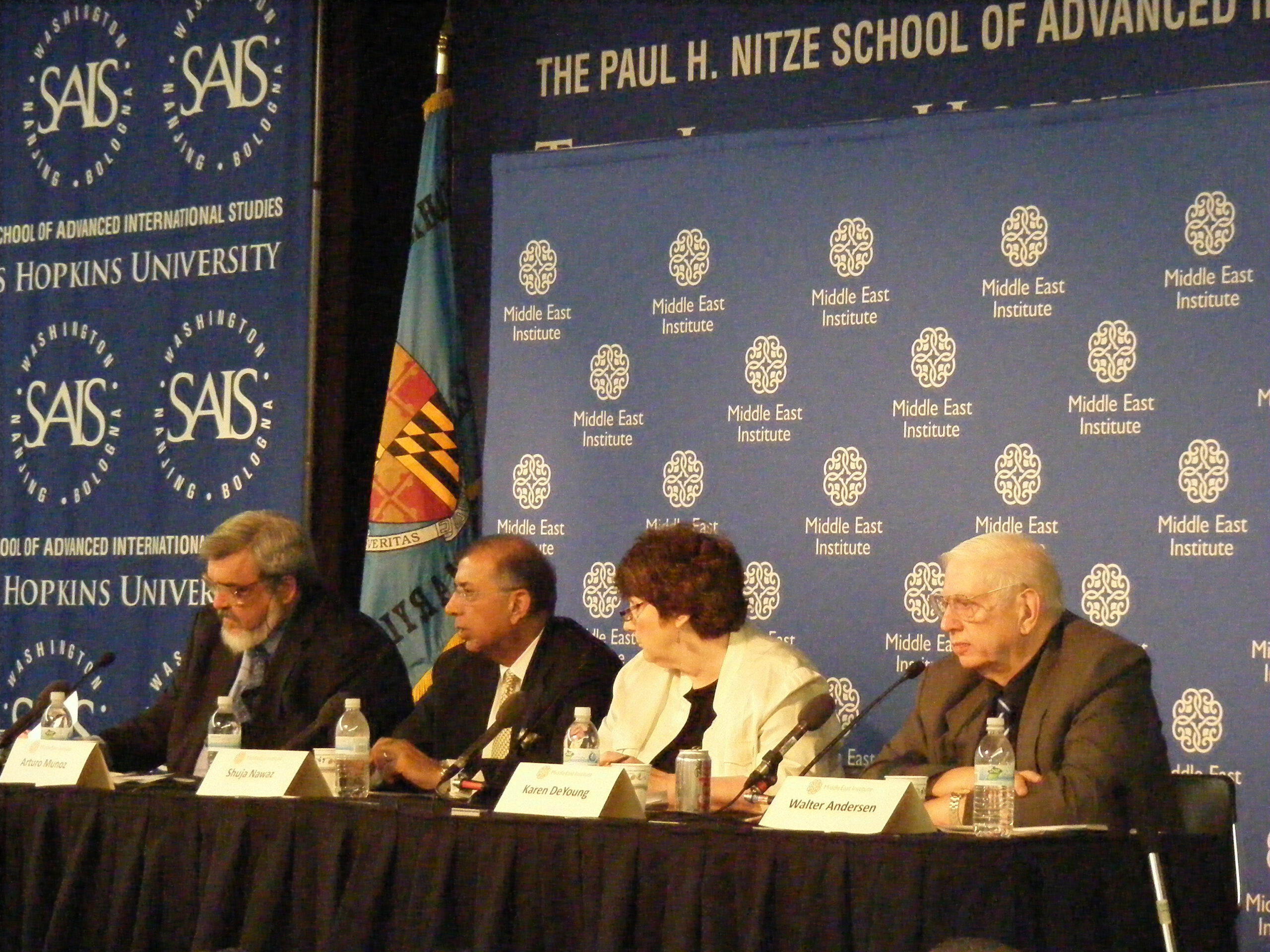
Critical attention is increasingly directed toward Pakistan's Inter-Service Intelligence (ISI) for its alleged involvement in a series of recent high profile terrorist attacks inside Pakistan as well as earlier in India and Afghanistan. The panelists will examine the scope of the ISI's activities and its composition. They will discuss its place within the military establishment and whether it ever operates as a rogue organization. Panelists will also consider to what extent the ISI's relationship with US intelligence is cooperative or competitive.
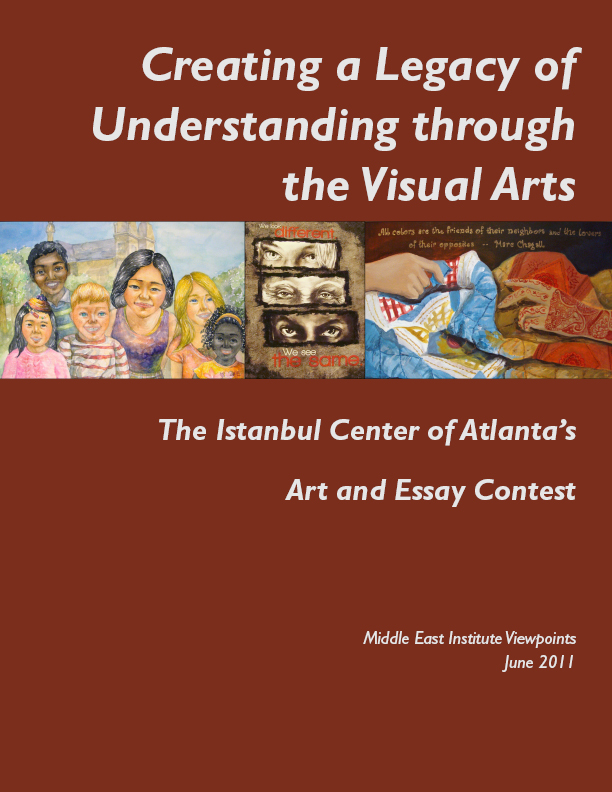
Creating a Legacy of Understanding through the Visual Arts: The Istanbul Center of Atlanta's Art and Essay Contest
This volume has been prepared for the Middle East Institute’s Viewpoints collection. Several stakeholders in the Istanbul Center of Atlanta’s Annual Art and Essay Contest have been involved in the composition of this text. Our goal is to provide a history of this successful program, as well as to define a model for the recreation of such an outreach project for other regions.
In the early 1970s, I taught art classes in three elementary schools in Phoenix, New York. After enduring long snowy and cold winters for ten years, I moved to the Atlanta, Georgia area where the sun shines almost every day. There, I re-entered the field of education, teaching art for Cobb County Schools for 17. During this time, I shared original programs and curriculum in workshops and lectures held at international, national, and state conferences.
Cooperation over Nile Waters: Needed More under Climate Change, More Attainable after the "Arab Spring"?
2011 marks the beginning of a new era for both Egypt and Sudan, opening new possibilities to overcome the decade-old Nile water conflict. After the revolution in Egypt, many hope for a reorientation of the country’s foreign policy towards Africa and a potential new approach to negotiations on allocation of the Nile waters.
Environment and Sustainable Development in the Maghreb
The Maghreb extends about 2,000 kilometers on either side of the Greenwich meridian (-13° West from Cabo Jubi and 11.08° East to Kelibia) and is located on the same longitude as Europe. Although the Maghreb forms a single climatologic and geographical unit, it is a diverse landscape of mountains, fertile areas, and steppes. Nevertheless, the similarity of climate, geography, and culture in the Maghreb provides a solid foundation for developing a common environmental strategy.