The Latest from Priyanka Debnath

Introduction to The State of the Arts in the Middle East Vol II
This special edition of MEI Viewpoints is the second volume in a continuing series which explores the State of the Arts in the Middle East. The essays comprising this volume examine the art and influence of the distinguished Palestinian artist and educator Samia Zaru, representations of female communities in Algiers in three of renowned filmmaker Nadir Moknèche’s cinematic works, and the cultural production and societal roles of female Turkish Cypriot artists.
Introduction to The Legacy of Camp David: 1979-2009
Since the “Six Day War” in June 1967, countless American and other diplomats have sought almost continuously to broker peace between Israel and its surrounding Arab enemies. From that tangled history, one achievement stands tallest in a forest of scrub: the Egypt-Israel Treaty signed on March 26, 1979 on the White House front lawn by President Anwar Sadat, Prime Minister Menachem Begin, and President Jimmy Carter.
The Islamization of Pakistan, 1979-2009
Since 2007, Pakistan, though not on the verge of becoming a failed state, nonetheless has been gripped by a series of interrelated crises. As the contributors to this volume demonstrate, Pakistan’s current travails have deep and tangled historical roots. They also demonstrate that Pakistan’s domestic situation historically has been influenced by, and has affected developments in neighboring countries as well as those farther afield.
Against Erasures: Memory and Loss in the Art of Emily Jacir and Eman Haram
Originally posted July 2009
Orientalism and Sexual Identity in the Works of Abdellah Taïa
Originally posted July 2009
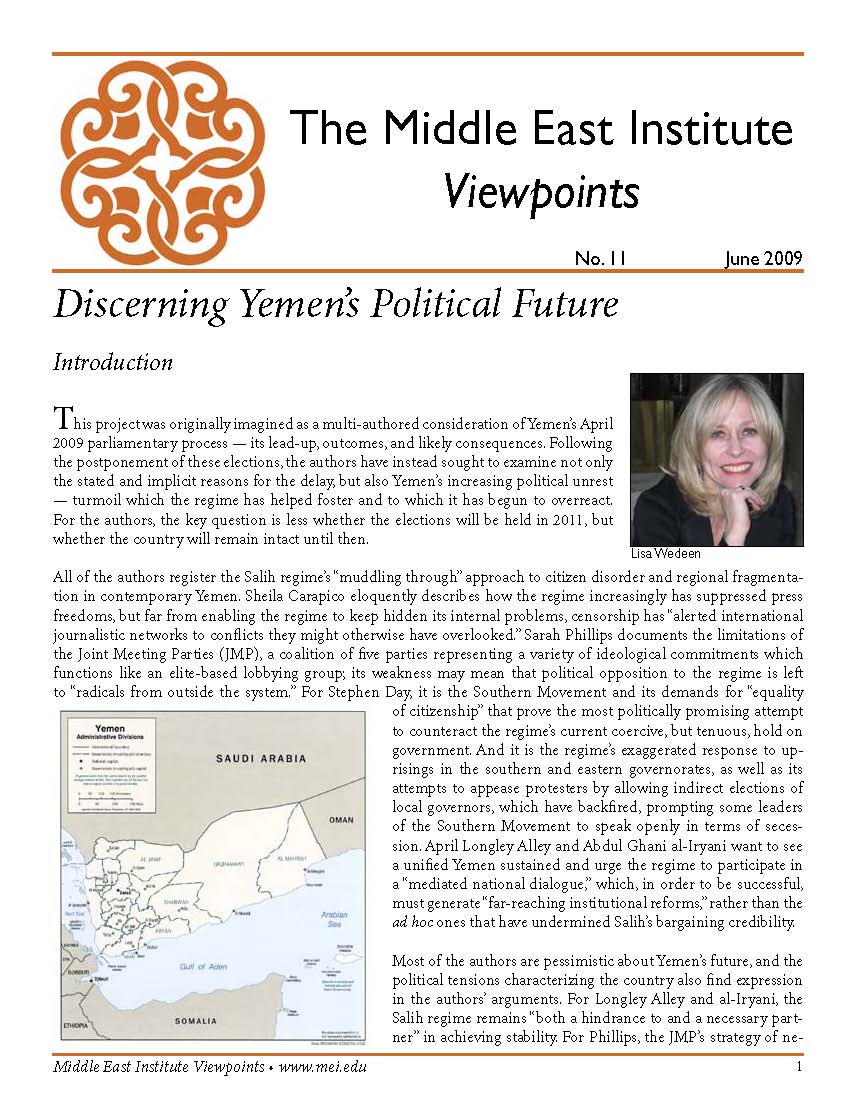
Discerning Yemen's Political Future
This project was originally imagined as a multi-authored consideration of Yemen’s April 2009 parliamentary process — its lead-up, outcomes, and likely consequences. Following the postponement of these elections, the authors have instead sought to examine not only the stated and implicit reasons for the delay, but also Yemen’s increasing political unrest — turmoil which the regime has helped foster and to which it has begun to overreact. For the authors, the key question is less whether the elections will be held in 2011, but whether the country will remain intact until then.
The Nightmare Scenario in Afghanistan
This Commentary first appeared as an op-ed in ForeignPolicy.com, September 18, 2009
Obama reaches out to Muslim world
This Commentary was originally published as an op-ed in The Nation June 10, 2009.
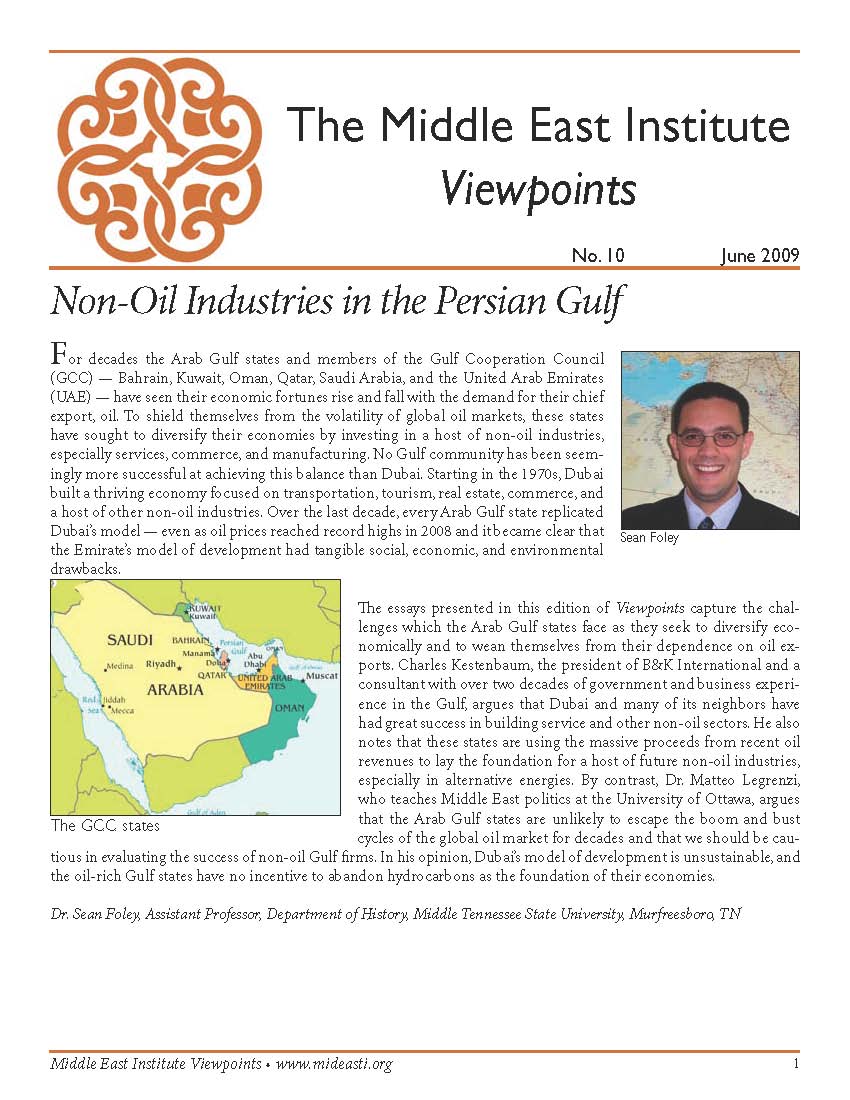
Non-Oil Industries in the Persian Gulf
For decades the Arab Gulf states and members of the Gulf Cooperation Council (GCC) — Bahrain, Kuwait, Oman, Qatar, Saudi Arabia, and the United Arab Emirates (UAE) — have seen their economic fortunes rise and fall with the demand for their chief export, oil. To shield themselves from the volatility of global oil markets, these states have sought to diversify their economies by investing in a host of non-oil industries, especially services, commerce, and manufacturing.
Southern Aspirations and Salih's Exasperation: The Looming Threat of Secession in South Yemen
Originally posted June 2009
Non-Oil Industries in the Persian Gulf Part 1
Originally posted on June 2009
Kill the Messengers: Yemen's 2009 Clampdown on the Press
Originally posted June 2009
Yemen Postpones Its April 2009 Parliamentary Elections
Originally posted June 2009
Politics in a Vacuum: The Yemeni Opposition's Dilemma
Originally published June 2009



