Skip to Content

Rebecca Anne Proctor

This individual is a guest contributor. MEI is not able to assist with contact requests.

Rebecca Anne Proctor is an independent journalist, editor, author, and broadcaster based in Dubai and Rome, from where she covers the Middle East and North Africa. She is the former editor-in-chief of Harper’s Bazaar Art and Harper’s Bazaar Interiors.

The Latest from Rebecca Anne Proctor

Filter by
9991 Results
As Tehran looks East, can it forge stronger ties with Moscow?
  • Analysis
  • As Tehran looks East, can it forge stronger ties with Moscow?

    Iran’s high leadership has come to a consensus on an eastward shift in its foreign policy, and Russia is a salient part of that. Recent indications suggest that, at least for now, the Russians do not want to enlarge their footprint in Iran. Yet Iran wants a more proactive Russia.

    August 18, 2020

    Jordan’s apparent neutrality conceals deeper discomfort with UAE-Israel deal
  • Analysis
  • Jordan’s apparent neutrality conceals deeper discomfort with UAE-Israel deal

    The leaders of the Hashemite Kingdom of Jordan have traditionally been known as masters at staying as neutral as possible, especially when it comes to inter-Arab relations. This was on clear display in Amman’s response to the recent UAE-Israel rapprochement.

    August 18, 2020

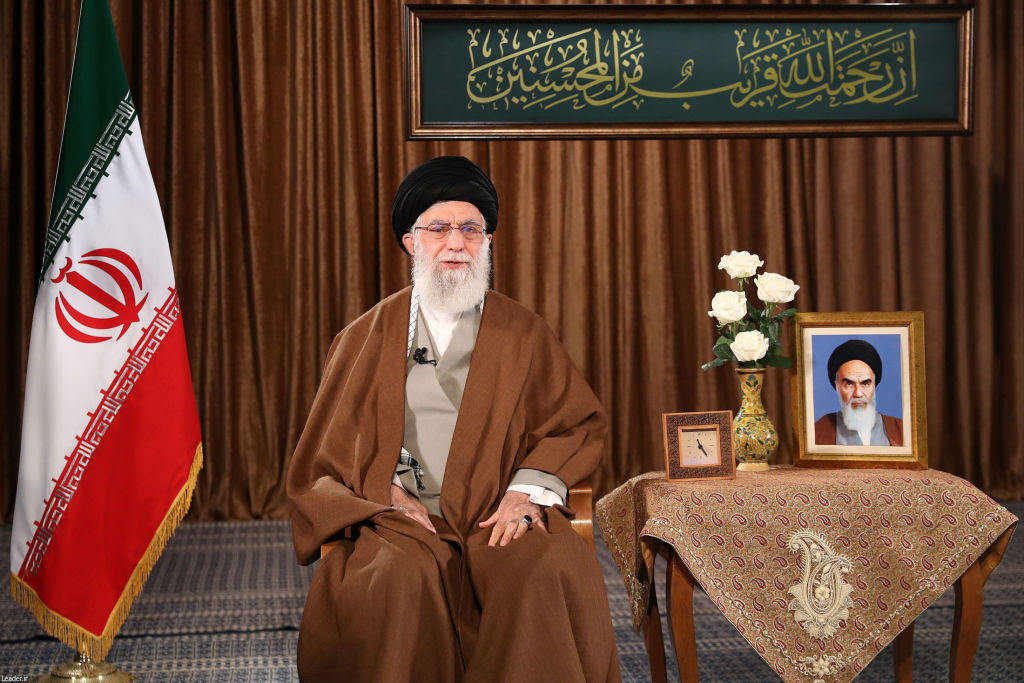
    Russia, Iran, and economic integration on the Caspian
    Photo by Iranian Presidency / Handout/Anadolu Agency via Getty Images
  • Analysis
  • Russia, Iran, and economic integration on the Caspian

    In recent weeks, reports of a potential 25-year, $400-billion deal between Iran and China have dominated the conversation about Tehran’s options for freeing itself from the punishing U.S.-imposed sanctions regime on the country. But China is not alone in seeing an embattled Iran as a major geopolitical and commercial opportunity — Russia too has ambitions of strengthening ties with Iran.

    Special briefing: Regional reactions to the Israel-UAE deal
    Photo by JACK GUEZ / AFP) (Photo by JACK GUEZ/AFP via Getty Images
  • Analysis
  • Special briefing: Regional reactions to the Israel-UAE deal

    On Aug. 13, Israel and the United Arab Emirates (UAE) reached an agreement for “full normalization of relations,” ostensibly in return for an Israeli suspension of formal annexation of parts of the occupied West Bank. U.S. President Donald Trump announced the deal, which he called “a significant step towards building a more peaceful, secure, and prosperous Middle East.” To better understand the agreement and how it is being perceived across the region, we asked seven MEI experts to weigh in with their thoughts.

    August 17, 2020

    Turkey’s democratic resilience under populist authoritarian rule
    Photo by Chris McGrath/Getty Images
  • Analysis
  • Turkey’s democratic resilience under populist authoritarian rule

    After almost two decades of rule by the AKP and its leader President Recep Tayyip Erdogan, Turkey has experienced major institutional, political, and social transformations, including a dramatic autocratization in recent years. There is another side to the story, however, one that still gives us hope for the re-establishment of democracy and the rule of law in the near future.

    August 17, 2020

    عندما يتعلق الأمر ببغداد، على واشنطن أن تنظر إلى ما هو أبعد من الأمن والدينامية الإقليمية
    Middle East Institute
  • Commentary
  • عندما يتعلق الأمر ببغداد، على واشنطن أن تنظر إلى ما هو أبعد من الأمن والدينامية الإقليمية

    نجحت حكومة رئيس الوزراء العراقي مصطفى الكاظمي بحذر في اجتياز اختبارها الذي دام 100 يوم، وهو تقليد عمره عشر سنوات للقادة العراقيين، إذ يُتوقع منهم تحسين الخدمات في إطار زمني قصير للغاية.

    فقد تم دفع الكاظمي إلى القيادة في أعقاب ما أصبح فعليًا أول انتفاضة شعبية كبيرة في العراق بعد التحول الديمقراطي عام 2003، وهي الانتفاضة التي أطاحت بسلفه عادل عبد المهدي.

    August 17, 2020

    Abraham abandoning the Palestinians
    Photo by Issam Rimawi/Anadolu Agency via Getty Images
  • Analysis
  • Abraham abandoning the Palestinians

    The agreement signed yesterday by Israel and the United Arab Emirates (UAE), in which the two countries agreed to a “full normalization of relations” in return for Israel suspending moves to formally annex parts of the West Bank, has reminded the Palestinians that they cannot count on the Arab states to deliver their freedom or safeguard their rights.

    August 14, 2020

    In historic deal with the UAE, Israel is the biggest winner
  • Commentary
  • In historic deal with the UAE, Israel is the biggest winner

    No matter how one reads the diplomatic deal announced Thursday between Israel and the United Arab Emirates­—and there will surely be many supporters and detractors given its historic nature—there is one conclusion that seems irrefutable: Israel was the biggest victor.

    August 14, 2020

    Looking to repair ties, Pakistan’s Gen. Bajwa heads to Saudi Arabia
    Photo by FAROOQ NAEEM/AFP via Getty Images
  • Commentary
  • Looking to repair ties, Pakistan’s Gen. Bajwa heads to Saudi Arabia

    All is not well in Pakistan-Saudi relations, which seem to have gone into a tailspin. In order to repair the fractured ties with one of the country’s strongest allies, Pakistan’s army has swung into action and its chief, Gen. Qamar Javed Bajwa, will travel to Saudi Arabia for talks this weekend.

    August 14, 2020

    US policy and the limits of diplomacy with Iran
    Middle East Institute
  • Podcast
  • US policy and the limits of diplomacy with Iran

    MEI’s Paul Salem and Ross Harrison join host Alistair Taylor to discuss the complexity and limitations of US diplomacy with Iran, and how the upcoming US presidential election impacts the state of play. Salem and Harrison examine the issue in depth in their recent article for The National Interest, “The Layers and Limits of Diplomacy With Iran.”

    August 13, 2020

    Kuwait’s Yemen foreign policy
    Photo by YASSER AL-ZAYYAT/AFP via Getty Images
  • Analysis
  • Kuwait’s Yemen foreign policy

    When the Saudi-led coalition launched military operations against the Houthi insurgents on March 26, 2015, all of the Gulf Cooperation Council (GCC) states, except for Oman, joined the multinational force. As has become clear, each of the Arab Gulf sheikdoms has its own national interests and unique history of relations with Yemen and Yemeni factions, and these have shaped their changing perceptions of the war over the past five and a half years. Kuwait’s role in Yemen’s multidimensional conflict is a case in point.

    August 12, 2020

    5G adoption and its implications in the Gulf states
    Photo by Asad/Xinhua via Getty Images
  • Analysis
  • 5G adoption and its implications in the Gulf states

    As many of the Gulf states pivot away from oil and gas, they have turned to digital development as a way to attract foreign investment and spur domestic growth. A critical part of these digital transformations is the widespread adoption of 5th generation mobile communication networks (5G). Large-scale investment in 5G rollouts in Saudi Arabia, Qatar, the United Arab Emirates (UAE), and Bahrain reflect this reality.

    August 11, 2020

    Iraqi Kurdistan in the US-Iraq strategic dialogue: Re-evaluating security sector reform
    Photo by JIM WATSON/AFP via Getty Images
  • Analysis
  • Iraqi Kurdistan in the US-Iraq strategic dialogue: Re-evaluating security sector reform

    The United States’ primary focus on maintaining stability in the Kurdistan Region of Iraq (KRI) has been detrimental to the region. Channeling military aid to partisan militias has entrenched the duopoly rule of the Kurdistan Democratic Party (KDP) and the Patriotic Union of Kurdistan (PUK) while preventing meaningful democratic reforms that could bring long-term stability.

    August 11, 2020

    Censorship, streamlined: Turkey’s social media law and the future of free speech online in the Middle East
    Photo by Chris McGrath/Getty Images
  • Analysis
  • Censorship, streamlined: Turkey’s social media law and the future of free speech online in the Middle East

    In an unexpected and disappointing turn of events, Turkey’s ruling Justice and Development Party and its parliamentary ally, the Nationalist Action Party, rushed through a stifling social media amendment to Turkey’s Internet Act.

    August 11, 2020