This individual is a guest contributor. MEI is not able to assist with contact requests.
Rebecca Anne Proctor is an independent journalist, editor, author, and broadcaster based in Dubai and Rome, from where she covers the Middle East and North Africa. She is the former editor-in-chief of Harper’s Bazaar Art and Harper’s Bazaar Interiors.
Fate of the Dragon in the Year of the Red Fire Monkey: China and the Middle East 2016
February 2016 marks the beginning of a new phase in the Chinese lunar calendar, drawing to a close a year marked by heightened risks and fortuitous gains in China’s efforts to secure its interests in the Middle East and North Africa (MENA) region. This essay addresses three questions: How well has China adapted to the conflict and instability that have swept the region? And as we enter the Year of the Red Fire Monkey, what are the concerns that are likely to preoccupy Chinese leaders? What, if any, policy adjustments by Beijing, can realistically be expected in light of the current circumstances and uncertain prospects for the region and for China itself?
Geneva Talks Format Should be an Inclusive Roundtable
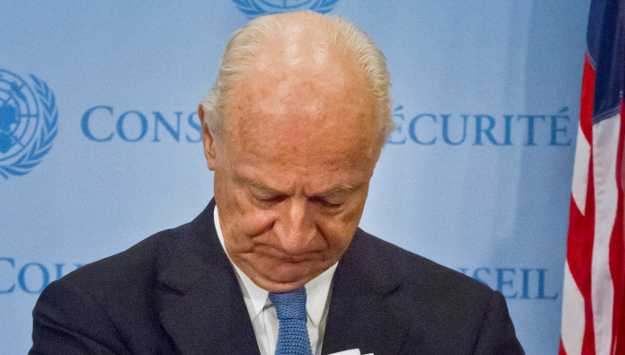
That the Syrian opposition took weeks to agree on a representative delegation hits at an essential problem with the Geneva process: its format. The Russian, American and U.N. architects of the process have retained a regime/opposition binary model that is no longer reflective of the multi-player conflict on the ground.
Outside Views on the U.S. Strategy for Iraq and Syria and the Evolution of Islamic Extremism
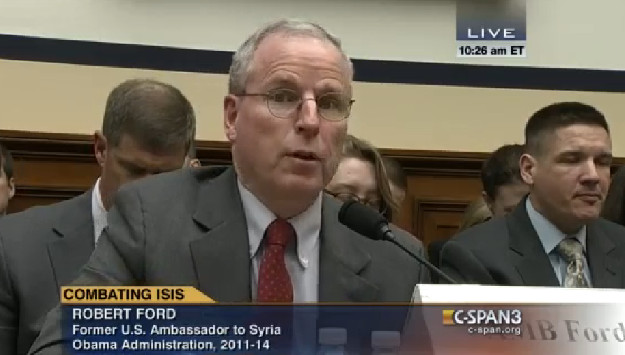
Amb. Robert Ford delivered the following prepared remarks at a hearing of the U.S. House Armed Services Committee on January 12, 2016. Click here to watch C-SPAN’s coverage of the hearing.
Mr. Chairman and members of the Committee,
It is an honor to be on this distinguished panel. Thank you for inviting me.
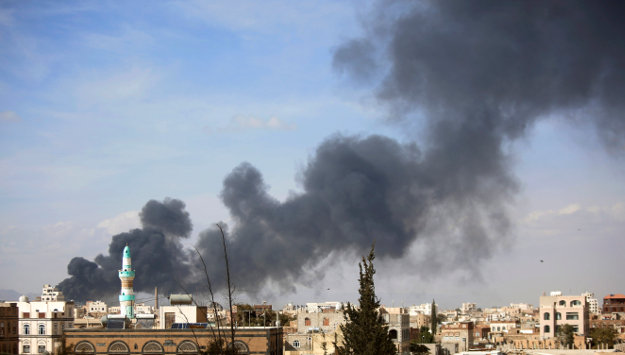
U.N. mediator to Yemen, Walid Sheikh, recently succeeded in negotiating the release of a number of political prisoners held by Houthi rebels, including a government minister, as a confidence-building measure. Despite this small success, the third round of negotiations in the Yemeni conflict appear to be floundering without a start date.
Why Pakistan Is the Biggest Winner in the Iranian-Saudi Dispute
Saudi Arabia is back, knocking on Pakistan’s door. Saudi Foreign Minister Adel al-Jubeir and King Salman bin Abdulaziz al-Saud’s son and deputy crown prince, Mohammad bin Salman, arrived separately in the early days of the new year to persuade Islamabad to join hands with Riyadh in confronting regional security threats. That is, the Saudis want Pakistan’s support against Iran.
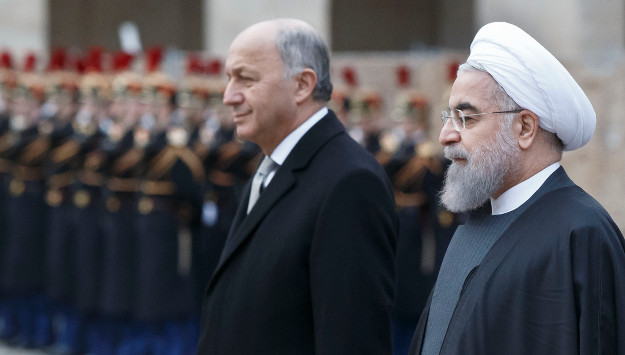
Less than two weeks after international sanctions were lifted, Iran is already cutting megadeals with Europe. The French automaker Peugeot-Citroen said Thursday it will return to Iran, while Iran appeared poised to buy at least 100 planes from Airbus.
Russia’s Military Campaign in Syria Contradicts Push for Geneva Compromise
On the eve of the third round of Syrian peace talks, it is becoming clear that the political track is far removed from the military trajectories on the ground. While diplomats scurry to draw up agendas for Geneva III, and opposition delegates argue over representation, the war in Syria continues on its own course seemingly oblivious to the murmurs around it.
Myanmar: The Transition from Social Control to Social Contract
This essay explores the complexity of the change process to civilianize Myanmar. It demonstrates that the new Myanmar leadership’s intent to enter into a social contract with its citizens requires an analysis of the mechanisms of social control, which is the evolution of the means of power rather than its nature. The essay shows how the model of totalitarian normality has functioned in practice in Myanmar for over five decades marked by ongoing ethnic conflicts, sectarian violence and ruthless repression of civil society.
Gulf Decisionmakers' Perceptions of Security Ties with China
The essays featured here are the products of a workshop series analyzing China’s position in the context of Gulf security, organized by the Department of International Affairs and the Center for Humanities and Social Sciences of Qatar University under the direction of Dr. Imad Mansour.
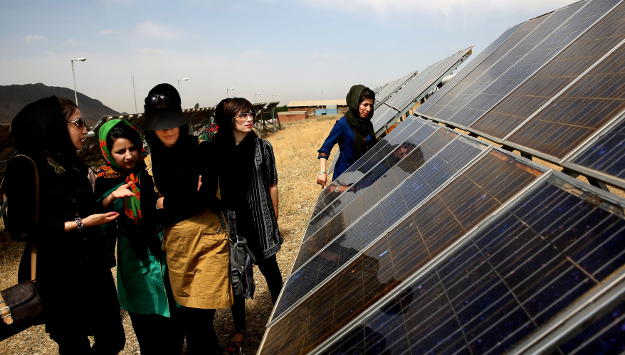
Boasting the fourth largest oil reserve and the second largest supply of natural gas in the world, Iran is a global hydrocarbons behemoth. Nevertheless, Iranian policymakers have shown great interest in renewable energy (R.E.) sources to improve energy security, reduce internal dependence on hydrocarbons, and meet its projected growth in electricity demand. The fulfillment of these objectives is not only realistic and desirable, but also probable for the Iranian government as it has an advantageous topography for renewables.
The Rise and Growth of Hezbollah and the Militarization of the Sunni-Shiite Divide in Lebanon
This essay tracks the origins of the Sunni-Shiite divide which, in the case of Lebanon, lay dormant until the creation of its modern day political structure. It argues that the country’s sectarian tensions mounted as a result of the installation of an Islamic republic in Iran, and the establishment of Hezbollah as an instrument in the pursuit of leading power status in the Middle East.
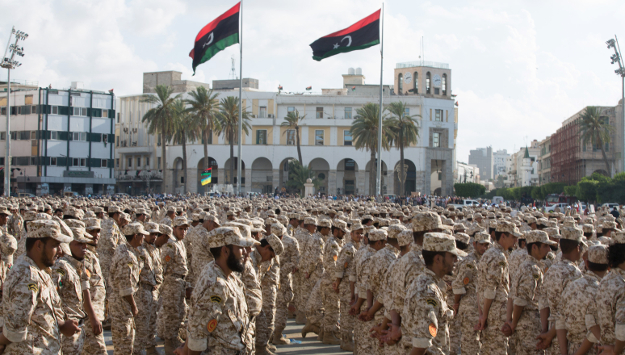
Libyan Unity Government Efforts Need International Support
The international community is getting ready to put major assets behind Libyan efforts to restore their country’s official unity under a Government of National Accord (GNA). During recent weeks, statements from the United Nations, major European governments and the United States suggest that planning and coordination are underway to shore up the unity government. Key Arab governments are also showing awareness that their own national security is under threat due to the prolonged stalemate in Libyan politics.