This individual is a guest contributor. MEI is not able to assist with contact requests.
Rebecca Anne Proctor is an independent journalist, editor, author, and broadcaster based in Dubai and Rome, from where she covers the Middle East and North Africa. She is the former editor-in-chief of Harper’s Bazaar Art and Harper’s Bazaar Interiors.
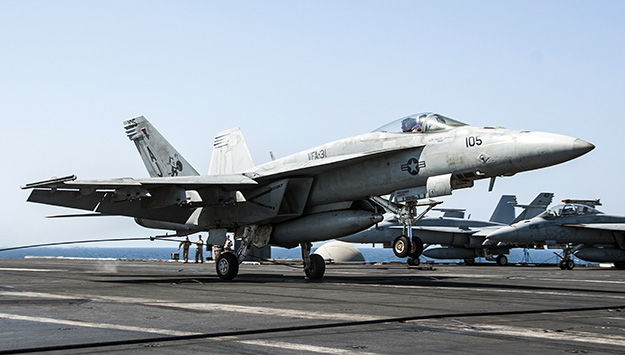
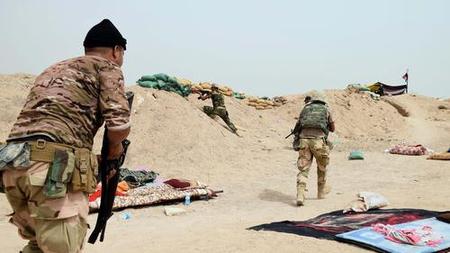
October 2015 marks the fourteenth month of formal U.S. military engagement in the struggle against the Islamic State (ISIS). The Obama administration was at first reluctant to engage U.S. military power in this struggle but then became more deliberate in its approach. U.S. involvement in the battlegrounds of Iraq and Syria has been evolving especially over the past year. This evolution has been defined and is in many ways limited by a strategy that emphasizes political change in Iraq and a broad coalition of states taking action against ISIS.
The Exploitation of Moral Controversies and the Marginalization of Morocco’s Justice and Charity Association
When a moral controversy arises in Morocco, the two main actors of the official political stage carefully play their specific role. On one side, the Party of Justice and Development (PJD), the party that leads the Moroccan government and as such is accountable to the electorate, reliably endorses the Moroccan majority’s socially conservative attitudes in order to fulfill its electoral mandate. On the other side, the king fully exploits his wider room for maneuver by adopting, according to circumstances, either a progressive stance or a conservative one. While the rhythm of moral controversies sets the tempo of the official political game and shows that Moroccan society is still very much conservative, the largest Islamist opposition group, the Justice and Charity Association, seeks to escape its marginalization within the civil society sphere.
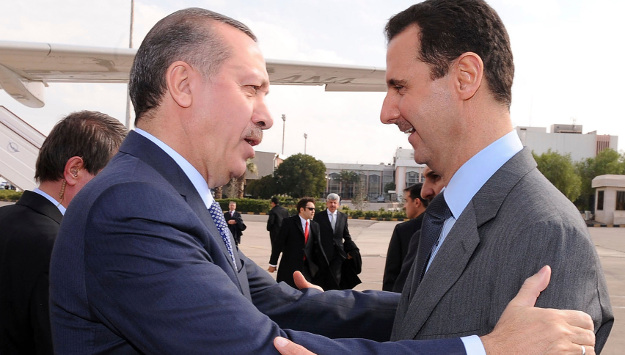
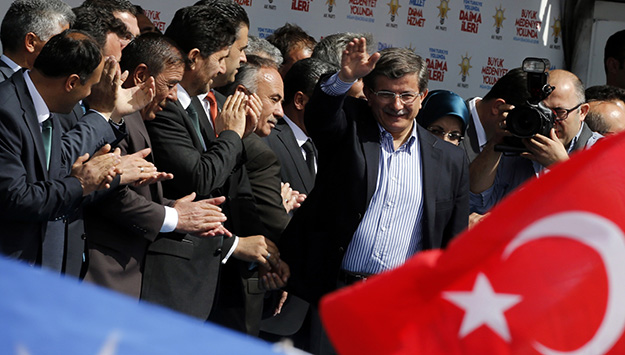
Turkish Prime Minister Ahmet Davutoglu is at the United Nations in New York, making another push for Turkey’s long-standing demand for a safe zone in northern Syria, while President Recep Tayyip Erdogan seems to have realized that it might be a long shot given recent developments.
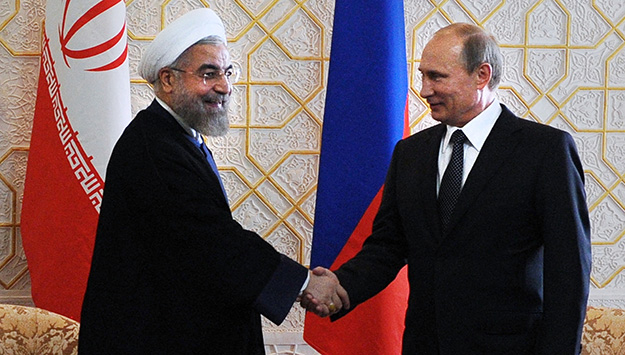
Russian President Vladimir Putin made waves leading into the UN General Assembly with new military deployments to Syria and an accord with Iran and the Iraqi government, signaling the formation of something like an alternate coalition combating ISIS. The sudden moves serve as a wakeup call not only for the United States and its allies, but also for Iran. The Russian actions are not enough to lead the Iranians to openly second-guess their support for Syria’s President Bashar al-Assad, but they are bound to raise tough questions among officials in Tehran.
A recent public opinion poll conducted by Ipsos suggests that the Turkish public is supportive of foreign aid, with around 45 percent of those surveyed indicating that Turkey should spend 3 to 10 percent of its national budget on such assistance. Material and ideological factors rather than moral imperatives play a role in this opinion.
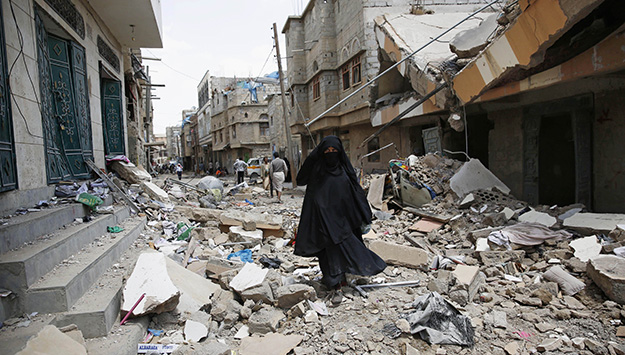
The Sectarian Crisis in Yemen: Damage from a Divisive Storm
The military campaign called Operation Decisive Storm pits Saudi Arabia and most of the GCC states, along with the United States, Britain, Egypt, Jordan, Pakistan, and several other minor players, against the Houthis in Yemen, which possess only moral support from the real target in this proxy war, Shi‘i Iran. How did such a lopsided war come about? Why has Yemen become the new battleground in a Sunni-Shi‘i fault line emerging as an ideological rival to the Cold War mentality that saw Soviet communism versus Western capitalism? What precisely is this sectarian crisis all about?
Hadi flip-flopped again. On Thursday, September 10, Yemeni President Abdu Rabbu Mansour Hadi announced that the government would meet with the Houthi rebels directly and without any conditions at the UN-sponsored negotiating table. As the military buildup for the assault on Sana reaches its final stages, Hadi’s announcement came with a sense of relief that Sana, having endured six months of bombardment from the Saudi Air Force, would be spared a ground assault. But two days later, Hadi reversed and
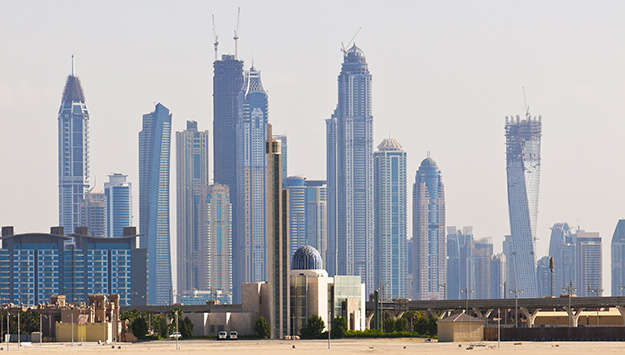
The UAE and Foreign Aid: Supportive Government, Supportive Citizenry
A recent Ipsos poll asked citizens of the world’s 17 countries that give the most foreign aid their opinion regarding this assistance. The UAE, a small state, has for some time used its petroleum wealth to exert large-state influence in multiple arenas. Its generous foreign aid program is part of that effort.
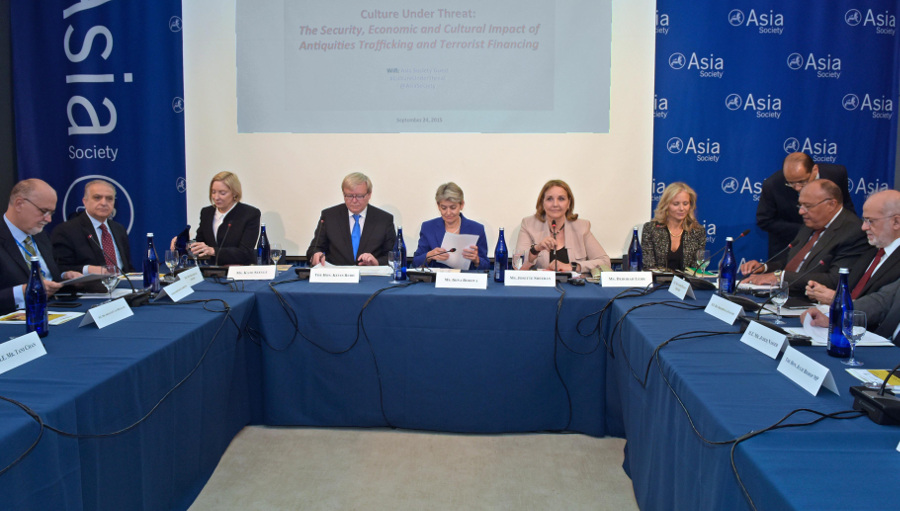
Global Leaders and Antiquities Community Join to Fight Trafficking and Terror Financing
(NEW YORK) – At the Culture Under Threat forum held at the Asia Society headquarters in New York on Sept. 24, foreign ministers and senior government officials from around the world joined leaders of arts institutions, archaeological associations, and experts in terrorism to stop the looting and trafficking of antiquities, and halt a major source of funding for terrorism.
The Gender Gap in Political Participation in North Africa
Women’s marginalization from transitional elections, as illustrated in the Arab Spring revolutions in North Africa, is not without consequences. It can impact representation of women’s issues, service provision to women, and electability of female candidates, only further exacerbating the structural marginalization of women.
Addressing Mental Health Needs among Syrian Refugees
Sana managed to escape the violence in Syria by making her way to Lebanon, but now she is alone and suffering from mood swings. She is battling eviction threats from her landlord due to her disruptive and erratic behavior. Mahmoud, another Syrian refugee in Jordan, is experiencing increasing feelings of depression, worried that he can no longer provide for his wife and three children, two of whom have learning disabilities.
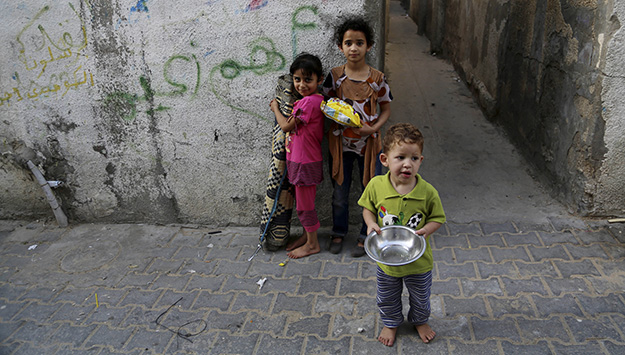
While the international community focuses on the latest refugee crisis fomented by the cascading calamities now engulfing the Middle East, Gaza—home to the region’s first permanent refugees—offers a cautionary lesson about the costs of man-made hardship and instability.
The UN recently reported that the infant mortality rate in the Gaza Strip has increased for the first time since Israel occupied the area in June 1967, in part because of the draconian restrictions on Gaza trade imposed by Israel and Egypt during the last decade.