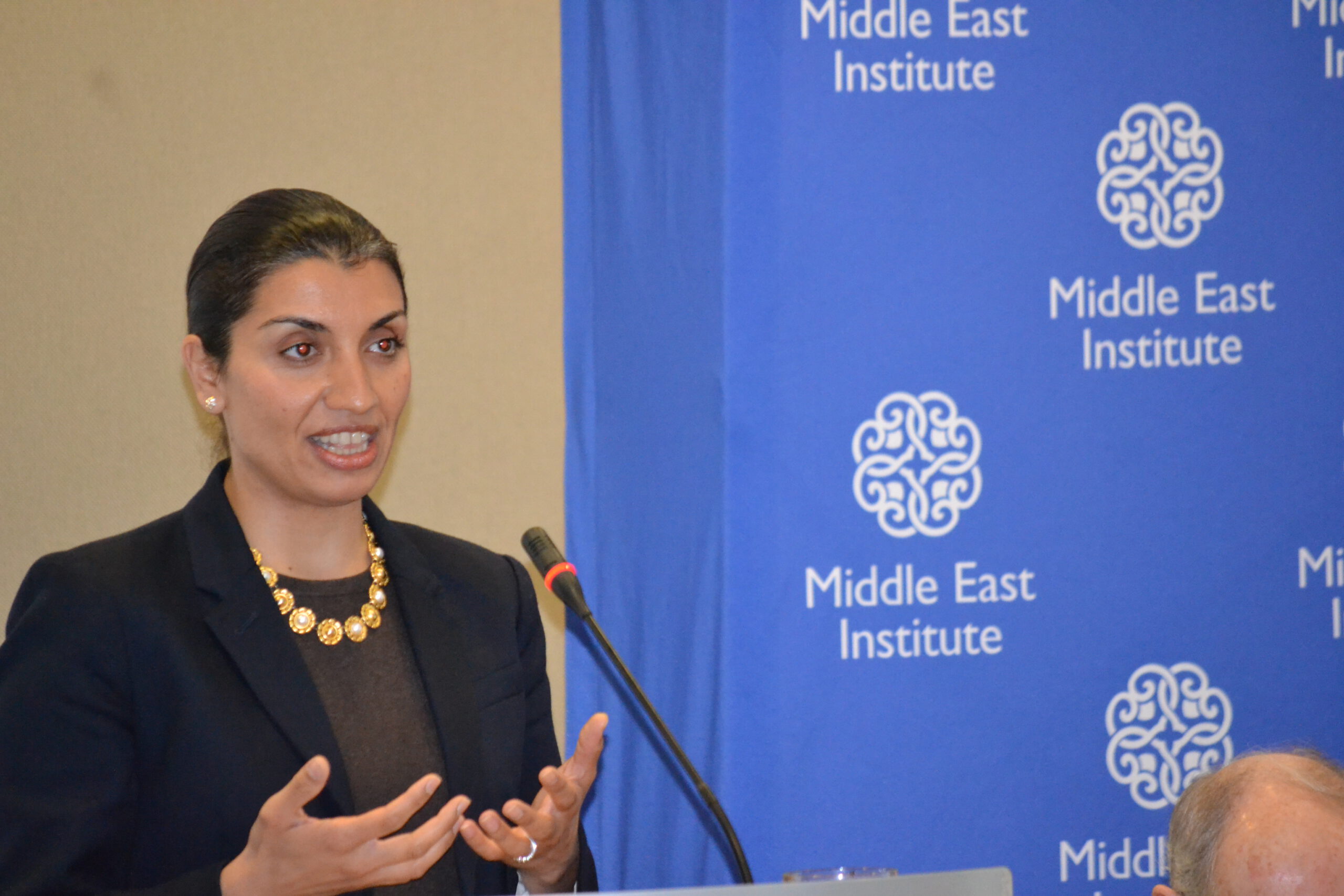
This individual is a guest contributor. MEI is not able to assist with contact requests.
Rebecca Anne Proctor is an independent journalist, editor, author, and broadcaster based in Dubai and Rome, from where she covers the Middle East and North Africa. She is the former editor-in-chief of Harper’s Bazaar Art and Harper’s Bazaar Interiors.
After Benghazi: Diplomacy With a State; War Within
This article was first published by The Huffington Post on October 2, 2012
Assertions and opinions in this publication are solely those of the above-mentioned author(s) and do not necessarily reflect the views of the Middle East Institute, which expressly does not take positions on Middle East policy.
Turkey and the Regional Dynamics of the Syrian Crisis
Turkey and the Regional Dynamics of the Syrian Crisis Denise Natali, Omer Taspinar, Mona Yacoubian, Gonul Tol 27 September, 2012 Podcast 31This is the second of four events in a joint lecture series by Middle East Institute’s Center for Turkish Studies and the Institute of Turkish Studies at Georgetown University.
Turkey and the Regional Dynamics of the Syrian Crisis
Turkey and the Regional Dynamics of the Syrian Crisis Denise Natali, Omer Taspinar, Mona Yacoubian, Gonul Tol 27 September, 2012 Podcast 31This is the second of four events in a joint lecture series by Middle East Institute’s Center for Turkish Studies and the Institute of Turkish Studies at Georgetown University.
Turkey and the Regional Dynamics of the Syrian Crisis
Turkey and the Regional Dynamics of the Syrian Crisis Denise Natali, Omer Taspinar, Mona Yacoubian, Gonul Tol 27 September, 2012 Podcast 31This is the second of four events in a joint lecture series by Middle East Institute’s Center for Turkish Studies and the Institute of Turkish Studies at Georgetown University.
Turkey and the Regional Dynamics of the Syrian Crisis
Turkey and the Regional Dynamics of the Syrian Crisis Denise Natali, Omer Taspinar, Mona Yacoubian, Gonul Tol 27 September, 2012 Podcast 31This is the second of four events in a joint lecture series by Middle East Institute’s Center for Turkish Studies and the Institute of Turkish Studies at Georgetown University.
Turkey and the Regional Dynamics of the Syrian Crisis
Turkey and the Regional Dynamics of the Syrian Crisis Denise Natali, Omer Taspinar, Mona Yacoubian, Gonul Tol 27 September, 2012 Podcast 31This is the second of four events in a joint lecture series by Middle East Institute’s Center for Turkish Studies and the Institute of Turkish Studies at Georgetown University.
This article was first published by The National Interest. on September 26, 2012
Assertions and opinions in this publication are solely those of the above-mentioned author(s) and do not necessarily reflect the views of the Middle East Institute, which expressly does not take positions on Middle East policy.
Afghanistan's Cultural Institutions & Private Sector in the Shadow of 2014
MEI Podcast, 20120925 Afghanistan’s Cultural Institutions & Private Sector in the Shadow of 2014 Shaharzad Akbar; Joanie Meharry, Jahid Mohseni, Laura Tedesco, George Gavrilis , Wendy ChamberlinPresented by The Middle East Institute and the Hollings Center
Afghanistan's Cultural Institutions & Private Sector in the Shadow of 2014
MEI Podcast, 20120925 Afghanistan’s Cultural Institutions & Private Sector in the Shadow of 2014 Shaharzad Akbar; Joanie Meharry, Jahid Mohseni, Laura Tedesco, George Gavrilis , Wendy ChamberlinPresented by The Middle East Institute and the Hollings Center