The Role of Women of the Islamic State in the Dynamics of Terrorism in Indonesia
Drawing upon the work of Mia Bloom, this essay challenges the assumption that women are seldom involved, or are at any rate marginal actors in violent extremist groups. The author argues, with reference to the case of Indonesia, that women are strategic actors, and not hapless victims or bystanders in terrorist movements and counter-terrorism efforts.
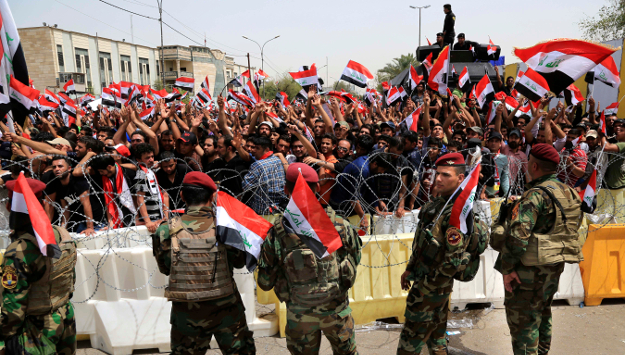
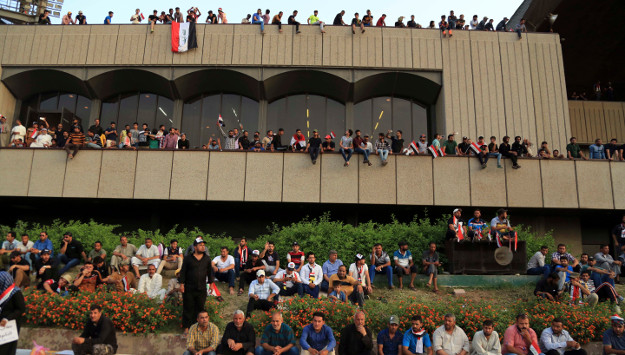
Iraq is enduring a dangerous political crisis. Its substance, however, is under dispute. For many, it is a valiant attempt at reform, and at fulfilling the long overdue promise of sound governance, against a system brought to a halt by corruption and dysfunction. For others, it is a questionable maneuver to restore autocracy, and to unravel the checks and balances that have been instituted over more than a decade. The truth, however, is not somewhere in between, irrespective of the many smokescreens that the opponents of reform may raise.
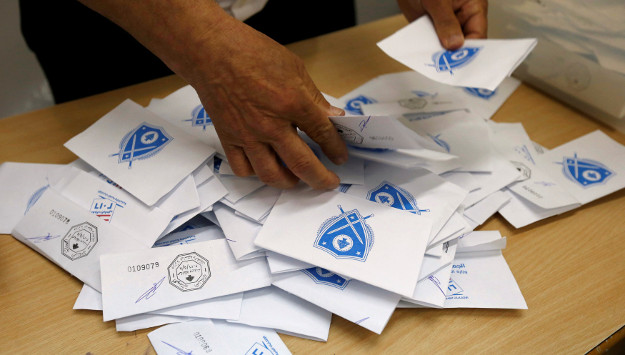
Monday Briefing: Lebanon's Elections, Gaza Unrest, Syria Talks, and Saudi's New Oil Minister
In this week’s Monday Briefing, MEI experts Paul Salem, Paul Scham, Charles Lister, and Jean-François Seznec provide analysis on recent events including Lebanon’s elections, unrest in Gaza, the ongoing Syria talks, and Saudi Arabia’s new oil minister.
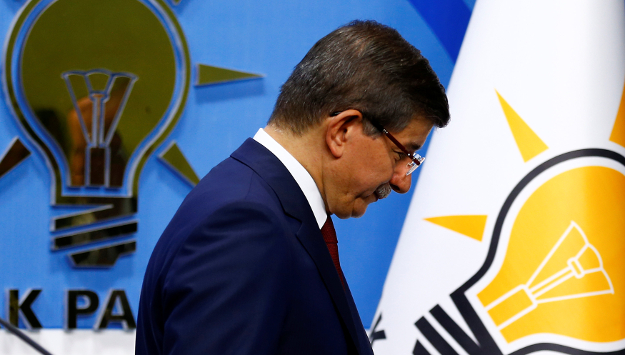
Turkish Prime Minister Ahmet Davutoglu has announced his resignation after 20 months in office. The decision has exposed a rift with Turkish President Recep Tayyip Erdogan, with whom tension has been building for some time. Erdogan handpicked Davutoglu as the country’s next prime minister after he became the president in August 2014, expecting that he would play a backseat role as Erdogan pushed ahead with plans to make the largely ceremonial presidency into an all-powerful executive position.
Positions of Responsibility: The Search for Solutions to Irregular Migration in Southeast Asia
The initial reaction by Southeast Asian governments to the flow of migrants through the Bay of Bengal and Andaman Sea reflected the dominant perceptions of migrants as posing a threat to state security and stability. The reaction also highlighted their reliance on bilateral or mini-lateral attempts to address the situation, rather than system-wide responses that engage all important stakeholders. The policies initiated by governments in the region were in many ways strikingly similar to those put into effect in the late 1970s in response to the so-called Indochinese exodus. Revisiting the circumstances under which this solution was attained could provide valuable lessons regarding how to develop a humane and sustainable solution to the root causes of irregular migration that recently dominated the news.
Syrian Civil Society on the Front Lines Against Extremism
Syrian civil society groups have faced seemingly insurmountable challenges in the five-year war, and can count few friends among the violent actors on the ground. Nevertheless, their work and determination continues unabated, with little external attention, recognition or support. Syrian civil society will have an important role to play in any post-war settlement.
The Arab World’s Jewish Heritage Showcased in Berlin
The exodus of Jews from the Arab world is one of the most under-recorded stories of the region’s recent history. As many as 800,000 Jews lived in Egypt, North Africa, Yemen, and the Levant prior to the creation of the state of Israel in 1948. Their stories have largely been deliberately forgotten, buried in the cellars of history for more than half a century.
Climate Challenges in the Middle East: Rethinking Environmental Cooperation
Regional Cooperation Series
This Policy Paper is part of The Middle East Institute’s Regional Cooperation Series. Throughout 2016, MEI will be releasing several policy papers by renowned scholars and experts exploring possibilities to foster regional cooperation across an array of sectors. The purpose is to highlight the myriad benefits and opportunities associated with regional cooperation, and the high costs of the continued business-as-usual model of competition and intense rivalry.
ISIS Recruitment of Malaysian Youth: Challenge and Response
This essay discusses ISIS recruitment methods that target Malaysian youth and critically examines the measures that the authorities have thus far put in place to counter them.
Monday Briefing: Iraq's Political Storm and U.S. Efforts to Salvage the Syrian Cease-fire
In this week’s Monday Briefing, MEI experts Hassan Mneimneh, Robert S. Ford, and Mabrouka M’Barek provide analysis on recent events including Iraq’s political storm, efforts to salvage the Syrian cease-fire, and the first Tunisia-U.S. Joint Economic Commission meeting starting later this week.