The Latest from Salam Kawakibi
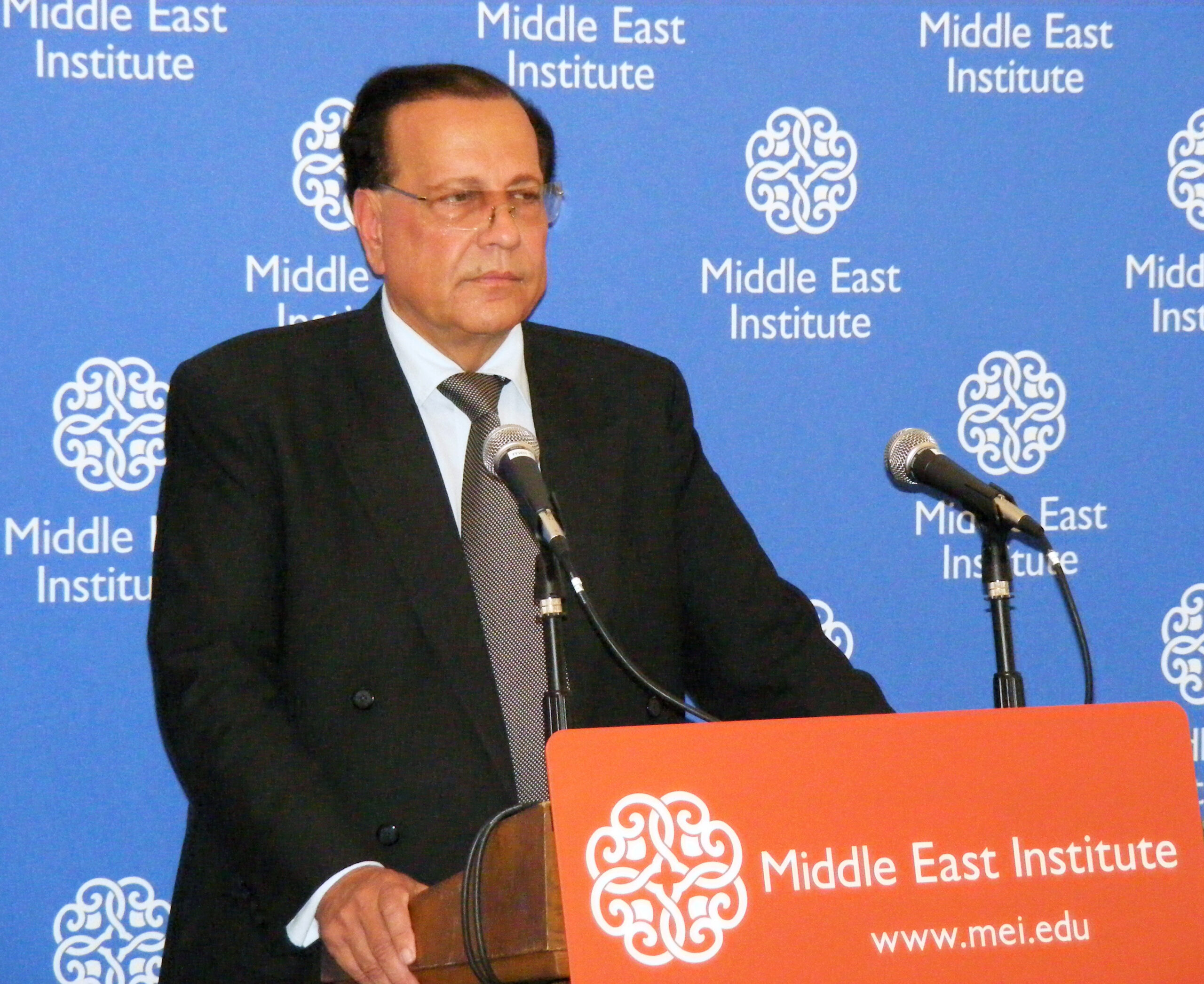

Pakistan 2010: Accomplishments and Opportunities
The Middle East Institute is proud to host Salman Taseer, the Governor of Pakistan's Punjab province. He will examine Pakistan's accomplishments over the past year and its looming challenges.

A Palestinian Perspective on Current Issues
The Middle East Institute is proud to host Dr. Hanan Mikhail Ashrawi, Member of the PLO Executive Committee and the Palestinian Legislative Council, or a discussion about Palestinian-Israeli proximity talks and other issues related to the peace process and the situation in the West Bank and Gaza.
Let’s Get Real About Talking to the Taliban
This Commentary first appeared as an op-ed in the McClatchy Tribune, May 10, 2010
Iran’s Green Movement and the Gray Strategy of Patience
This Commentary first appeared as an op-ed on ForeignPolicy.com’s Middle East Channel, April 30, 2010.
In Search of a Voice: Arab Soccer Players in the Israeli Media
Soccer is the most popular sport in Israel. As such, it is also a strategic research site in which to study Israeli society and its complex social and ethnic relations.
Patterns and Trends of Migration in the Maghreb
Originally posted May 2010
Throughout history, North African countries (i.e., Morocco, Algeria, and Tunisia) have experienced various forms of migration – internal and external, voluntary and forced, individual and collective, and legal and illegal.
Walls and Goals: The Israeli-Palestinian Encounter in Football
Dedicated to the memory of Israel Tzvi Raab Z”L, a true lover of the game
The long, complex encounter between the Israeli and Palestinian people has been examined in many cinematic and literary creations. In this essay, I will explore several that use football as a lens to read opposing political agendas and as a means to resolve conflict.
Yemeni Football and Identity Politics
The Republic of Yemen occupies the southwest corner of the Arabian Peninsula. Unlike its oil-rich neighbors, Yemen is the poorest country in the Arab world. Like other countries football (soccer) is Yemen’s most popular sport. Football has been played in parts of Yemen since before the turn of the 20th century, and since the 1970s, the game’s popularity has increased significantly.
Assyrians or Syriacs? Middle Eastern Identity Formation through Football in Sweden
It is the last Sunday in May 2009, and people in Södertälje – a small industrial town, half an hour’s drive southwest of the Swedish capital Stockholm – are enjoying the first hot day of the summer. It is also the day of the biggest football match of the year. Later in the afternoon, Södertälje’s two second division rivals, Assyriska FF and Syrianska FC, will clash. In the hours before kick-off, one sees flags and matching shirts everywhere, either in the white and red colors of Assyriska or in the red and yellow representing Syrianska.
A Step on the Path to Peace: How Basketball is Uniting Arab and Jewish Youth in Jerusalem
Basketball is a game where all five players need to share the ball. If it is played with great teamwork, the sum of the parts is greater than the individual. It’s a great forum for building trust. A lot of the game happens with things you can’t see. Communication and trust with teammates is the key. It seems to me that the same can be said of peacemaking.
–R.C. Buford, General Manager of the NBA’s San Antonio Spurs[1]
Al-Wihdat: The Pride of the Palestinians in Jordan
“Wahid, itnen, talagha ya Abu Hussein” (One, two, divorce her Abu Hussein), Al-Faisali supporters sing, as their soccer team plays against Al-Wihdat.[1] Al-Faisali is the club associated with ethnic Jordanians, while Al-Wihdat is the club of the Palestinians.
The Evolving Role of Afghan Female Athletes
Children can learn many lessons from playing sports: leadership, self-confidence, and the concept of working toward a common goal are a few such lessons. These are all skills that, when applied in life off the field, can augment the potential for success there as well.
Tradition Trumps Sport: A Female Wrestler Retreats
The 20th century has yielded new and expanding arguments for increasing sports opportunities for women and girls. From Title IX to the Women’s Sports Foundation, the importance of women’s access to sports has received a great deal of attention from academia, the media, and the non-profit circuit. While I agree that women should have access, and that our opportunities lag far behind those of men, I do not agree with the social and political promises of change made by some of these programs.



