Skip to Content

Sara Sadek

Affiliated Researcher and Coordinator

Expertise

Egypt, Iraq, Sudan

This individual is a guest contributor. MEI is not able to assist with contact requests.

Sara Sadek is an affiliated researcher and coordinator at the Center for Migration and Refugee Studies (CMRS) at the American University in Cairo. She obtained an MA in Refugee Studies from the University of East London. Since 2005, she has worked on  various research projects on Iraqi and Sudanese communities in Egypt, contributing to a report on Iraqis in Egypt and recently producing a paper on challenges of  integration for Iraqis in Arab states for the Henry L. Stimson Center’s forthcoming volume Transnational Challenges.

The Latest from Sara Sadek

Filter by
9993 Results
The United States and the Gulf: Trapped in transition?
Photo by SAUL LOEB/POOL/AFP via Getty Images
  • Analysis
  • The United States and the Gulf: Trapped in transition?

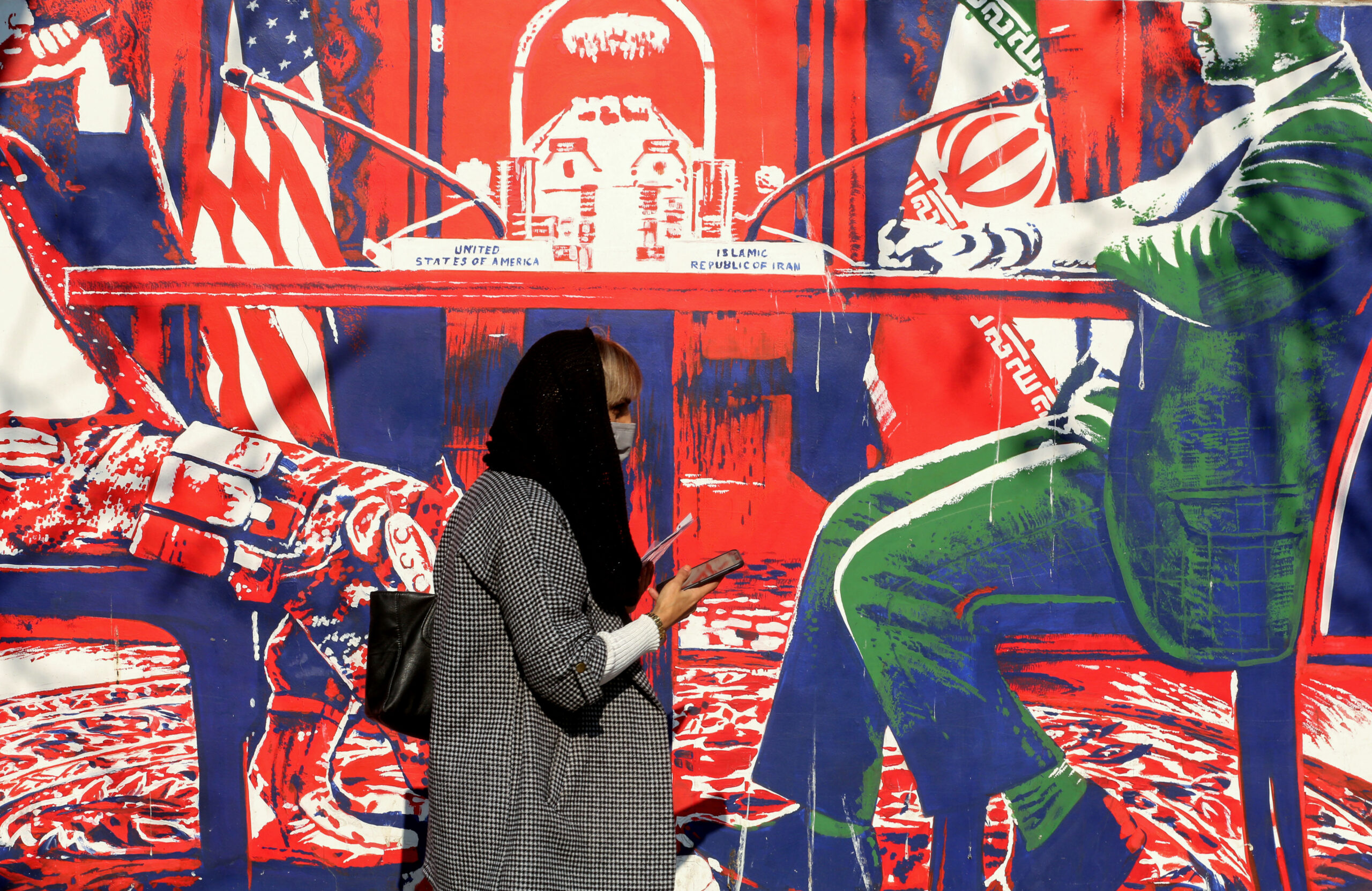
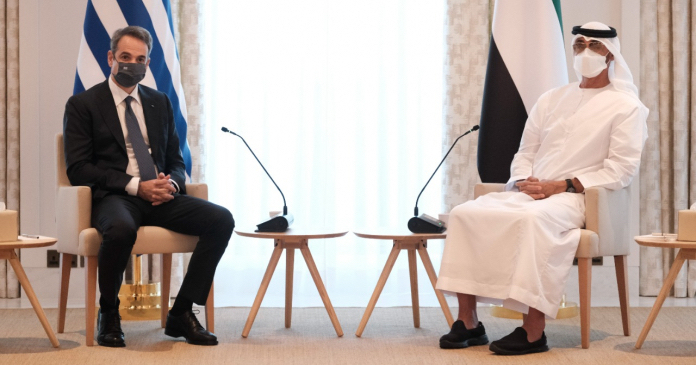
    The mixed messages and pendulum swings in U.S. Gulf policy in recent years are rooted in and have further fueled deep questioning and a largely unresolved debate within the United States about America’s role in the region, and indeed in the world. Like the U.S., relations between the GCC and Iran are locked in confrontation. Breaking this impasse requires decisive U.S. reengagement in Gulf affairs led by vigorous, sustained diplomacy that promotes intra-GCC reconciliation and supports efforts aimed at tempering the Saudi-Iran strategic rivalry.

    “Civilianizing” the State in the MENA and Asia Pacific Regions
    Middle East Institute
  • Analysis
  • “Civilianizing” the State in the MENA and Asia Pacific Regions

    There are numerous past and present cases around the world where security institutions — armed forces, police, intelligence services, militias and paramilitaries — have played important, if not decisive roles in buttressing or undermining the prolongation of authoritarian rule or conflict.

    January 2, 2021

    Turkey Faces Asia
    Middle East Institute
  • Analysis
  • Turkey Faces Asia

    Turkey lies at the crossroads of Europe and Asia. Fueled by a dynamic economy, Turkey has emerged in recent years as an important geopolitical actor not just within the surrounding region but in the global arena as well. Turkey’s foreign and economic policy horizons today extend to the Far East. These essays explore the development of cultural, political, and economic links between Turkey and Asia.

    January 1, 2021

    India’s Relations with West Asia: What Patterns and What Future?
    Middle East Institute
  • Analysis
  • India’s Relations with West Asia: What Patterns and What Future?

    India’s interests and capabilities extend well beyond the subcontinent. This series explores the geopolitical dimensions, economic ties, transnational networks, and other aspects of India’s links with the Middle East (West Asia) — a region that plays a vital role in India’s economy and its future.


    Writing in the July/August 2006 issue of Foreign Affairs, C. Rajan Mohan observed:

    January 1, 2021

    Key dates in the MENA region in 2020
    Photo by Mohammed Hamoud/Getty Images
  • Analysis
  • Key dates in the MENA region in 2020

    This calendar lists key dates in the MENA region over the course of 2020 broken down by month.

    December 30, 2020

    Let justice be done: Respect for female land rights in the Middle East and North Africa
    Young Afghan girl holding bread.
  • Analysis
  • Let justice be done: Respect for female land rights in the Middle East and North Africa

    Ownership of economic resources is integral to exercising agency and to assuring the human security needed to live free from fear, want, and indignity. In agrarian societies, land and its natural resources are instrumental to financial, physical, and psychological wellbeing. Yet in half the world, secure land ownership is out of reach for most females. In the Middle East and North Africa (MENA), there is a huge gender-based gap in holding agricultural land, including where agriculture is a vital source of livelihood. In Egypt, Morocco, Sudan, Tunisia, and Jordan, most females, regardless of their education or socio-economic status are landless. Gender-based inequalities are often rooted in cultural norms that permit and exacerbate patterns of discrimination against females within the family and in economic transactions. These discriminatory attitudes trump humanistic and moral considerations, creating and reinforcing inequality. Discrimination against females in resource ownership has far-reaching implications for their lives, their families, and society. It is imperative to combat this regressive practice to ensure a dignified life for all.

    December 28, 2020

    An Emboldened Horn of Africa Axis and an Unfolding Humanitarian Crisis Await the Biden Administration
  • Analysis
  • An Emboldened Horn of Africa Axis and an Unfolding Humanitarian Crisis Await the Biden Administration

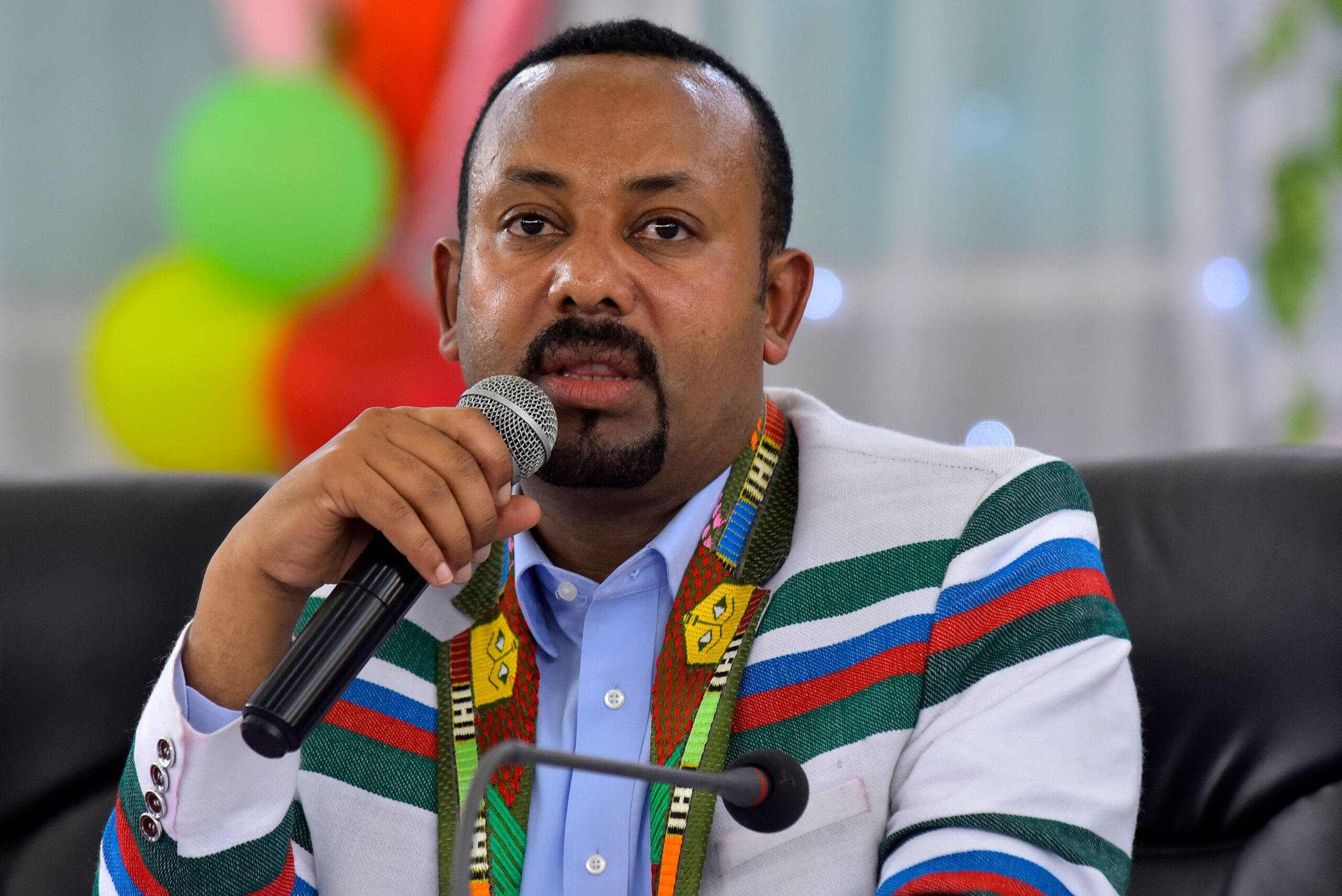
    As Joe Biden prepares to take office on January 20th of 2021, the U.S. and the world are facing multiple crises. Now is one of the worst times in American history as the country struggles through a major economic recession and a pandemic that has taken more than 300,000 American lives.In the Horn of Africa, his upcoming administration will grapple with longstanding challenges. However, this time, he will have to deal with the emboldened and unchecked leaders of the Horn of Africa — Prime Minister Abiy Ahmed of Ethiopia, President Mohamed Abdullahi (Farmaajo) of Somalia, and President Isaias Afwerki of Eritrea. Recently, the three leaders have formed an axis through the Horn of Africa Cooperation (HoAC) deal to consolidate security, stability, and economic integration.

    December 23, 2020

    China’s Libya Policy and the BRI: Sights Set on the Future
    China-Libya
  • Analysis
  • China’s Libya Policy and the BRI: Sights Set on the Future

    The political turmoil that has plagued the region since the Arab Spring uprisings in 2011, most notably the ongoing conflict in Libya, has made it difficult for China to realize its aim of incorporating the Maghreb into the BRI framework. This article discusses China’s efforts to protect and promote its economic interests in Libya, thereby advancing its prospects for extending the BRI to the region.

    December 22, 2020

    Political support, not terrorist designation, is key to moving forward in Yemen
    Photo by MOHAMMED HUWAIS/AFP via Getty Images
  • Commentary
  • Political support, not terrorist designation, is key to moving forward in Yemen

    Now is the time for a political reset in Yemen — and the United States must play an important role. This role must include encouraging all sides toward a more inclusive political process that reduces violence and raises Yemeni and international voices, and moves toward specific and achievable objectives over time. Solutions that purport to be either speedy or simple are, in fact, quite dangerous. To that point, the current administration’s consideration of designating Ansar Allah (the Houthi movement) as a foreign terrorist organization (FTO) will not help advance the United States or the other various participants in this conflict toward a durable strategic settlement.

    The US-Morocco quid pro quo
    Photo by AFP via Getty Images
  • Analysis
  • The US-Morocco quid pro quo

    The recent exchange of quid pro quos between the U.S. and Morocco has been handled well by both sides, despite the ritual carping to be expected from opponents of the quid and the quo.

    December 21, 2020

    How can China mediate between Israel and Pakistan?
  • Analysis
  • How can China mediate between Israel and Pakistan?

    Pakistan’s Prime Minister Imran Khan recently revealed that several countries are pressuring Islamabad to follow in the footsteps of the Gulf states by recognizing the state of Israel. Khan, however, expressed opposition to this idea, at least until there is a political settlement that meets Palestinian demands. While full normalization between Israel and Pakistan may still be out of reach, China could mediate between these two countries which have never established a diplomatic relationship.

    December 18, 2020

    The Fakhrizadeh assassination: A major failure for Iranian intelligence
    A funeral ceremony of Iranian Top nuclear scientist, Mohsen Fakhrizadeh Mahabadi, held at Defense Ministry of Iran in Tehran, Iran on November 30, 2020. Fakhrizadeh, who headed research and innovation at the defense ministry, was attacked Friday in Damavand county near Tehran.
  • Analysis
  • The Fakhrizadeh assassination: A major failure for Iranian intelligence

    The assassination of Mohsen Fakhrizadeh, the most important figure in Iran’s nuclear program, in late November 2020 is a major failure for Iran’s intelligence services. Despite all the secrecy and the emphasis on protecting Fakhrizadeh, however, he was still assassinated in the Absard area, about 70 km from Tehran, on Nov. 27. Why was he killed despite such a high level of protection, and what effect will his death have on the Iranian regime’s intelligence and security structures?

    December 18, 2020

    The Black Sea: How America Can Avoid a Great-Power Conflict
  • Analysis
  • The Black Sea: How America Can Avoid a Great-Power Conflict

    Many Americans find the whole swath of territory in eastern Europe, near Russia, very far away and hard to conceptualize. This part of the world involves a number of countries, small and large, that are generally not the most frequently discussed in American news nor frequented by American tourists. To make sense of much of this remote region, it can be helpful to take a perspective that centers on the Black Sea and views that body of water as the key point of reference for much of the region. Doing so not only helps clarify what Russia is up to in its near-abroad, but also shines a spotlight on Chinese activity, and what is required of America in response.

    December 16, 2020

    Year in review: The Middle East in 2020
    Middle East Institute
  • Podcast
  • Year in review: The Middle East in 2020

    In our final episode of the year, host Alistair Taylor interviews several MEI scholars on the key events that transpired across the Middle East in 2020 including in Iraq, Iran, and Afghanistan, and they discuss US defense and diplomatic strategy in region as the as the transition to the Biden administration gets underway. Guests include Paul Salem, Bilal Saab, Randa Slim, and Marvin Weinbaum.

    December 16, 2020