This individual is a guest contributor. MEI is not able to assist with contact requests.
Sara Sadek is an affiliated researcher and coordinator at the Center for Migration and Refugee Studies (CMRS) at the American University in Cairo. She obtained an MA in Refugee Studies from the University of East London. Since 2005, she has worked on various research projects on Iraqi and Sudanese communities in Egypt, contributing to a report on Iraqis in Egypt and recently producing a paper on challenges of integration for Iraqis in Arab states for the Henry L. Stimson Center’s forthcoming volume Transnational Challenges.
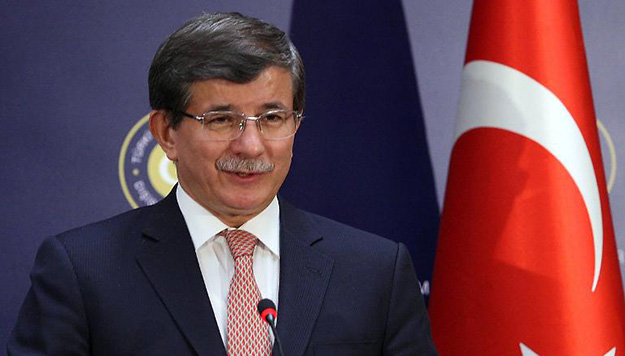
Turkish Foreign Minister Ahmet Davutoglu’s visit to Washington, D.C. last week came on the heels of a year of soul searching for Turkish foreign policy. After the Arab uprisings shook Turkey’s guiding principle of “zero problems with neighbors,” the country now seems intent on resuming the leadership role it enjoyed in the pre-Arab Spring Middle East.
Turkey-Pakistan Security Relations since the 1950s
The initial impulse for Pakistan and Turkey to pursue security cooperation stemmed from their common opposition to Communism in the 1950s. Over the past decade, Pakistan and Turkey have once again sought to cooperate in the security sphere, this time in countering terrorism and ensuring stability in Afghanistan.
The Iran Nuclear Deal: Risks and Opportunities for the Region
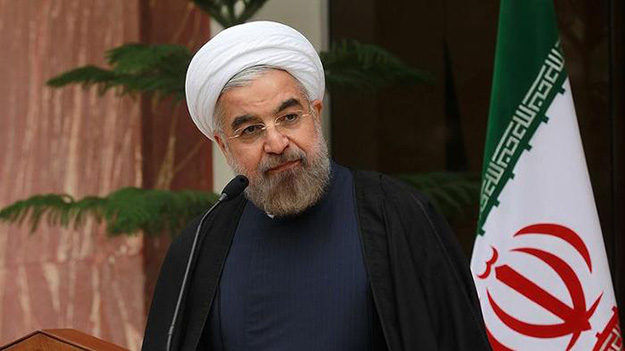
The nuclear deal with Iran, though still temporary and tentative, is ushering in a historic shift in the patterns of power, conflict, and diplomacy in the region. Like all historic shifts, it is laden with uncertainty and risk of new conflicts, but also carries with it potential opportunities for further diplomacy and finding common ground. Given the precedent of conflict and mistrust in the region, it is no surprise that the deal has raised concerns among many of America’s allies.
The Tortuous Route of the U.S.-Afghan Security Pact
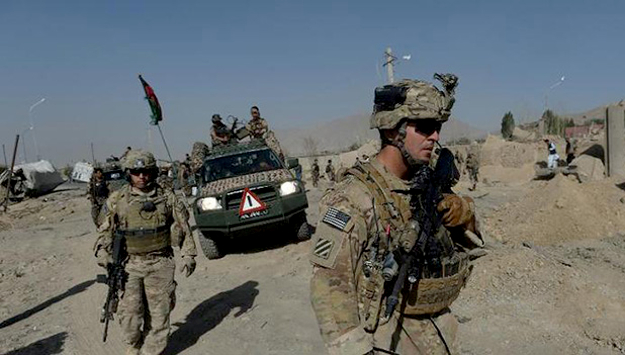
Yesterday, the United States and Afghanistan completed a bilateral security pact ensuring that U.S. troops will remain in the country. It now goes to a council of elders—the loya jirga—for authorization. MEI spoke with Scholar-in-Residence Marvin Weinbaum about the pact’s sticking points, next steps for its approval, and what each country gains from the agreement.
What does the U.S.-Afghan security pact stipulate?
MEI 67th Annual Conference – Beyond the Street: Arab Youth in Post-Uprising Politics
Moderator: Brian Katulis, Center for American ProgressLina Khatib, Stanford UniversityAhmad Maher, April 6 MovementMabrouka Mbarek, Tunisian Constituent Assembly MemberAyat Mneina, Libyan Youth Movement
MEI 67th Annual Conference – In Search of Coherence: US Policy in the Arab World
Moderator: Michael Hudson, National University of SingaporeAaron David Miller, The Woodrow Wilson CenterFred Hof, Rafik Hariri Center at the Atlantic CouncilRoula Khalaf, Financial TimesSteven Simon, International Institute for Strategic Studies
MEI 67th Annual Conference – Keynote Luncheon: Breaking the Impasse
Moderator: Amb. Daniel Kurtzer, Middle East InstituteMunib Masri, PADICO HoldingYossi Vardi, High-tech investor and entrepreneurMiroslav Dusek, World Economic Forum
MEI 67th Annual Conference – Sectarianism and the Balkanization of the Levant
Moderator: Kim Ghattas, BBCF. Gregory Gause, University of Vermont & Brookings DohaMohsen Milani, University of South FloridaPaul Salem, The Middle East InstituteMona Yacoubian, Stimson Center
MEI 67th Annual Conference – Assessing the Transitions: Egypt and Tunisia
Panel 1: Assessing the Transitions: Egypt and Tunisia
Moderator: Paul Salem, The Middle East InstituteKhalil al Anani, The Middle East InstituteLarry Diamond, Stanford UniversityNoureddine Jebnoun, Georgetown UniversityRabab El Mahdi, American University of Cairo