This individual is a guest contributor. MEI is not able to assist with contact requests.
Shahmahmood Miakhel is the Country Director in Afghanistan for the US Institute of Peace (USIP). Prior to that he was a Governance Advisor for the United Nations Assistance Mission in Afghanistan (UNAMA), and, from 2003–2005, a Deputy Minister of the Interior in the Government of Afghanistan. In 1994–1995 he worked for the United Nations Development Programme (UNDP) and United Nations Office for Project Services (UNOPS) in South and Southeast Afghanistan helping to establish District Rehabilitation Shuras (DRS). He also worked as a reporter for the Pashto service of the Voice of America from 1985–1990.
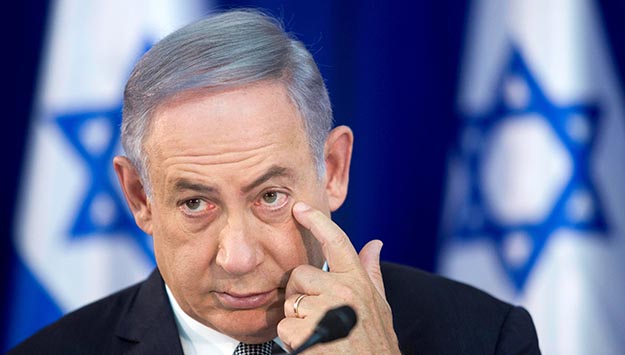
Any Middle East observer would find a question about the basic posture of Israel vs. ISIS a practical no brainer. Such an observer would confidently state that these two entities are staunch enemies, currently engaged in multiple types of warfare and destined to continue on that path. For Israel, according to this intuitive rational, ISIS is but another link in a long chain of terror entities sworn to its destruction, much like Hamas, Hezbollah, Palestinian Islamic Jihad, and many others. For ISIS, the narrative would continue to claim, Israel is a natural primary target.
Iraq’s Shrinking Revenues, the I.M.F. and the Oil Dilemma
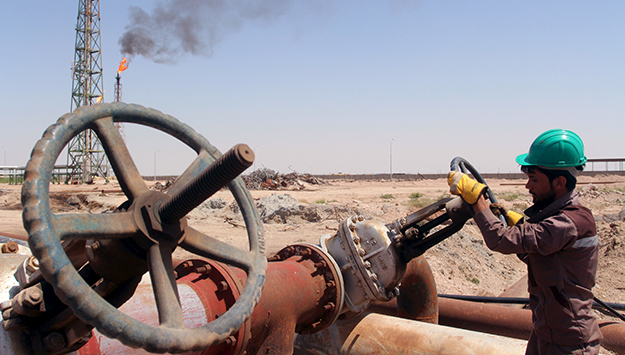
The International Monetary Fund announced in July that it has approved a three-year, $5.34 billion loan for Iraq under the Stand-By Arrangement facility, which it said was focused on “implementing economic and financial policies to help the country cope with lower oil prices and ensure debt sustainability.” The promised financial assistance was made conditional on—among other things—Baghdad settling all debts to international oil companies (IOCs) without adding new debts.
Monday Briefing: President Obama's Final UNGA Address
In this week’s Monday Briefing, MEI experts Paul Salem, Robert S. Ford, Charles Lister, Alex Vatanka, and David Mack provide analysis on recent and upcoming events including Obama’s upcoming final speech to the UN General Assembly, the Syrian collapsed ceasefire, the buildup to an eventual Mosul offensive, Rouhani’s trip to Latin America, and Libya’s oil exports.
Tunisia's Evolving Islamic Charitable Sector and Its Model of Social Mobilization
This essay discusses the evolution of Islamic charities in Tunisia since 2011 as new actors of associational life. In particular, it considers the extent to which they represent an alternative model of social mobilization.
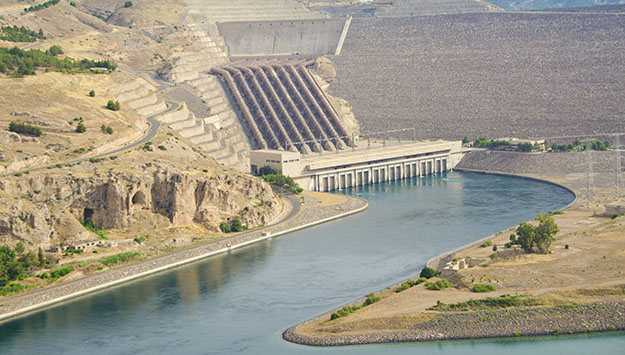
This Policy Paper is part of the Middle East Institute’s Regional Cooperation Series. Throughout 2016, MEI will be releasing several policy papers by renowned scholars and experts exploring possibilities to foster regional cooperation across an array of sectors. The purpose is to highlight the myriad benefits and opportunities associated with regional cooperation, and the high costs of the continued business-as-usual model of competition and intense rivalry.
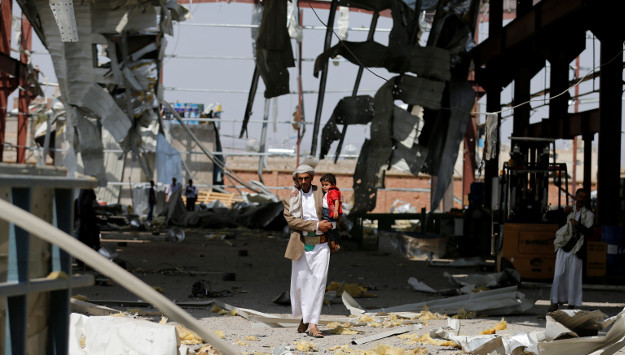
The War in Yemen: Political Impasse and Humanitarian Crisis
September 14, 2016 – Charles Schmitz, MEI scholar and professor of geography at Towson University, sits with Paul Salem to discuss the state of play in Yemen, where more than a year of war has led to thousands of civilian casualties and compounded a long-standing humanitarian crisis.
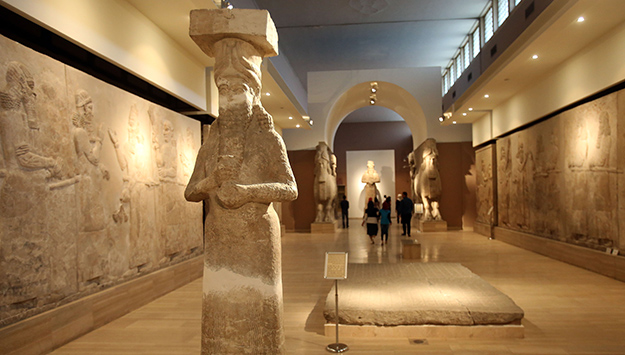
Ongoing conflict is robbing Iraq of both its future and its past by stripping the country of its tangible cultural heritage.[1] The Islamic State, as part of its strategy, is deliberately seeking to erase all aspects of Iraqi identity which compete with its own dogma. Iraq’s cultural heritage faces additional threats in the form of illicit looting, vandalism, government neglect, and political infighting.
Unregistered Women's Organizations in Turkey: Preliminary Insights
The omission of unregistered and informal organizations/groups means that the research and analysis of civil society to date has excluded a whole area of civil society organizations (CSOs). This essay discusses the findings from structured interviews with a small cohort of (mostly Kurdish) unregistered women’s organizations in Turkey regarding their sources of funding and their engagement with the political system.
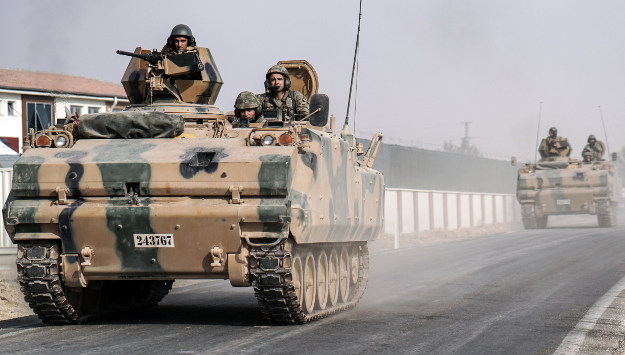
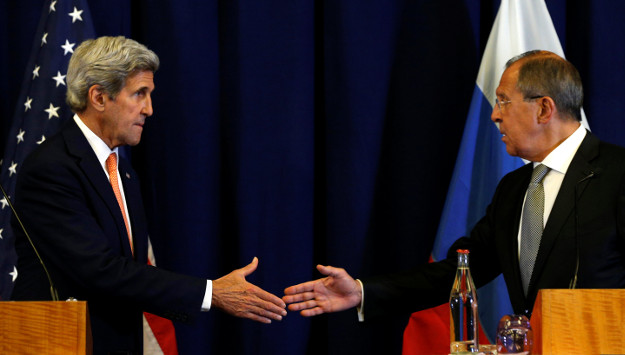
Monday Briefing: Cessation of Hostilities Deal in Syria Reached … Now What?
[Oops!: If our weekly e-mail sent you here by mistake, please click here for the Sept. 19 Monday Briefing.]
In this week’s Monday Briefing, MEI experts Robert S. Ford, Charles Lister, and Marvin G. Weinbaum provide analysis events including the announced cessation of hostilities in Syria, the Syrian rebels’ resonse to the deal, and the Afghan president’s upcoming visit to India.
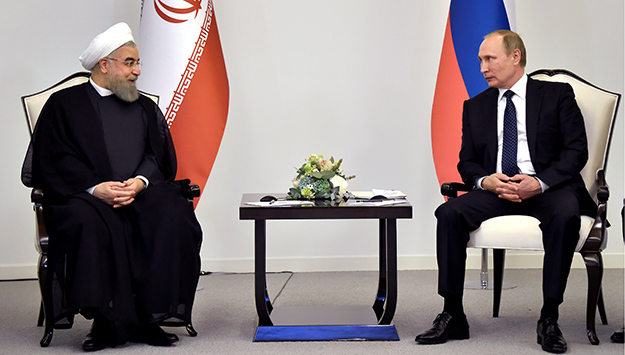
The relationship between Iran and Russia has been characterized more by competition than by cooperation in modern political history. Military incidents during the Soviet era created an atmosphere of distrust, but Russia has become an increasingly prominent economic and political partner of Iran as both countries have been targeted by Western sanctions regimes. More recently, upheaval in global energy markets and the deteriorating security situation in Syria have led to the forging of stronger commercial and political bonds between the two countries.
Middle East and North African Countries Unite to Fight Antiquities Looting, the Destruction of Cultural Heritage, and Terrorist Financing
Amman, Jordan – Seventeen countries from the Middle East and North Africa (MENA) and the League of Arab States convened today to launch an aggressive action plan to combat antiquities looting and the illicit trade in cultural heritage.