Skip to Content

Shana Cohen

This individual is a guest contributor. MEI is not able to assist with contact requests.

The Latest from Shana Cohen

Filter by
9991 Results
The Significance of Ukraine's Maritime Industry for the Black Sea, and Beyond
  • Analysis
  • The Significance of Ukraine's Maritime Industry for the Black Sea, and Beyond

    While the geopolitical importance of the Black Sea is indisputable, more attention is needed to its separate actors. Ukraine, having had the largest territory of coastline in the Black Sea before the illegal annexation of Crimea, is ideally positioned to play a central role in the future of the region.

    November 4, 2020

    Between the Coalition, ISIS, and Assad: Courting the Tribes of Deir ez-Zor
  • Analysis
  • Between the Coalition, ISIS, and Assad: Courting the Tribes of Deir ez-Zor

    In areas under the control of both the Syrian regime and Autonomous Administration in North and East Syria (AANES) in Deir ez-Zor Province, the governing bodies are failing to secure the loyalty and support of locals. The security structures built by the regime and the AANES have coopted and incorporated local tribes to a significant extent, but a lack of support from the central governing bodies amid increasing ISIS attacks threatens long-term stability in the province. These two regional dynamics are outlined and compared in this paper to illustrate the dual challenges both governance bodies face in appealing to locals and thwarting the resurgence of ISIS in the area.

    November 3, 2020

    Forget the US elections, the Palestinians need to choose their own way forward
    MAHMUD HAMS/AFP via Getty Images
  • Analysis
  • Forget the US elections, the Palestinians need to choose their own way forward

    Since Fatah and Hamas reached a reconciliation agreement in September, Palestinian scholars, activists, and journalists have speculated over when, how, and if this latest reconciliation might actually go forward. Many observers, both inside and outside of Palestine, view the move as a response to the recent rapprochement of Arab countries with Israel, as well as to uncertainty over this week’s U.S. presidential elections.

    November 3, 2020

    Pakistani politics at a crossroads: The new opposition to Imran Khan and to the military establishment
  • Analysis
  • Pakistani politics at a crossroads: The new opposition to Imran Khan and to the military establishment

    On October, 16, Pakistan’s former Prime Minister Nawaz Sharif set his country’s politics ablaze by offering a withering critique of the military establishment. Calling in from London via video conference, Sharif addressed a crowd of over 20,000 protestors at a rally in the Punjabi city of Gujranwalla organized by the Pakistan Democratic Movement (PMD), a recently formed coalition that brings together all major opposition parties. Under the PMD’s banner, erstwhile rivals like the Pakistan Muslim League-Nawaz (PML-N), the Pakistan People’s Party (PPP), and the Jamiat Ulema-e-Islam–Fazlur (JUI-F) have joined forces to achieve two goals that they see as intertwined: unseating Prime Minister Imran Khan and regaining power from the military.

    November 3, 2020

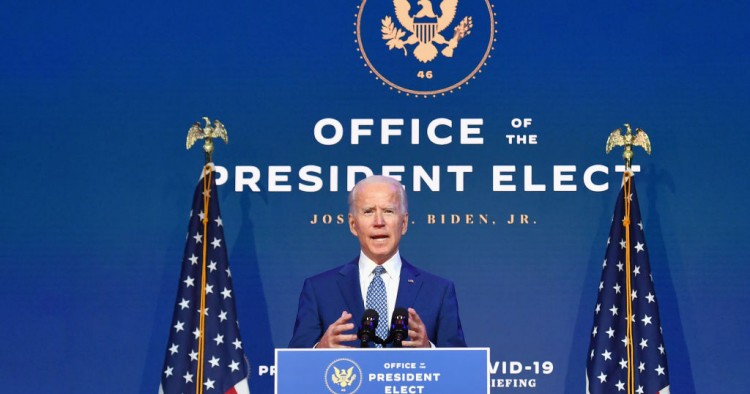
    How the U.S. elections will shape Iranian policy
  • Analysis
  • How the U.S. elections will shape Iranian policy

    At a rally in Florida, Donald Trump stated that Iran will be the first country to call to him after his reelection because the Iranians are “dying for a deal.” National Security Advisor Robert O’Brien added that “it is very difficult for Iran to refuse to negotiate” because “Iran cannot sustain economic pain much longer and… we don’t think they can hang in there for another four years.”

    There is no doubt that the Trump administration’s “maximum pressure” campaign has had serious negative impacts on Iran’s economy and that the country is experiencing a crisis. But, if the past is any indication, the sanctions or economic pressure will not be the main drivers of Tehran’s decision-making if it decides to compromise with the United States. To imagine that a deal is in the offing due to Iran’s dire economic straits seems simplistic.  

    November 3, 2020

    الاستعداد ليوم الثلاثاء الكبير والمرحلة الانتقالية التي ستليه
    Middle East Institute
  • Commentary
  • الاستعداد ليوم الثلاثاء الكبير والمرحلة الانتقالية التي ستليه

    “إذا ما تعرضت التجربة الديمقراطية للرفض في أحد أوطانها الرئيسية، فمن المؤكد أن ذلك سيجلب السلوى لكل من المستبدين والإسلاميين في الشرق الأوسط.”

    November 2, 2020

    How the UAE-Israel deal could change the regional power balance
    TEHRAN, IRAN - MAY 06: (----EDITORIAL USE ONLY â MANDATORY CREDIT -
  • Analysis
  • How the UAE-Israel deal could change the regional power balance

    While most experts believe that the recent normalization of ties between Israel and the UAE will not lead to a significant change in the regional balance of power, there are indications that it has the potential to bring about such a change in the long run.

    November 2, 2020

    Monday Briefing: Bracing for Tuesday and the interregnum
  • Commentary
  • Monday Briefing: Bracing for Tuesday and the interregnum

    This week’s briefing on recent news and upcoming events in the region featuring Paul Salem, Michael Sexton, Alex Vatanka, and Gerald Feierstein.

    November 2, 2020

    Iraq’s reform program: A white paper with no action plan
    Photo by Murtadha Al-Sudani/Anadolu Agency via Getty Images
  • Analysis
  • Iraq’s reform program: A white paper with no action plan

    Iraq’s economic and fiscal crises, which came to the forefront this year following the onset of the coronavirus pandemic, were bound to happen at some point. What corona and the ensuing drop in oil prices and declining demand for oil did is accelerate the timing, according to the recently released Iraqi government white paper, a report of the Emergency Cell for Financial Reform. What the paper doesn’t predict is that in the next 6-12 months, and possibly beyond, we could see a worsening of the crisis with both current and future governments trying to adjust oil production and revenues in an effort to contain public discontent.

    November 2, 2020

    Ayatollah Khamenei’s gamble and a green light for negotiations
    Iranian Supreme Leader Ali Khamenei makes statements regarding coronavirus (COVID-19) on March 22, 2020 in Tehran, Iran.
  • Analysis
  • Ayatollah Khamenei’s gamble and a green light for negotiations

    As the U.S. prepares to head to the polls to choose its next president, Iran finds itself at a dead end. Hit hard by American sanctions and its own mismanagement of the economy, Tehran needs to negotiate with Washington to get out of its current economic crisis and shore up its waning popular legitimacy. With an eye to addressing these issues and mindful of the steady erosion of support for the government, President Hassan Rouhani has obtained permission from Iranian Supreme Leader Ayatollah Ali Khamenei to negotiate with the U.S. While the news has not yet been made public, Rouhani has told Ayatollah Khamenei that he will begin talks to reach an agreement with the winner of the upcoming election — regardless of who it is — and the Iranian leader has given his initial consent.

    November 2, 2020

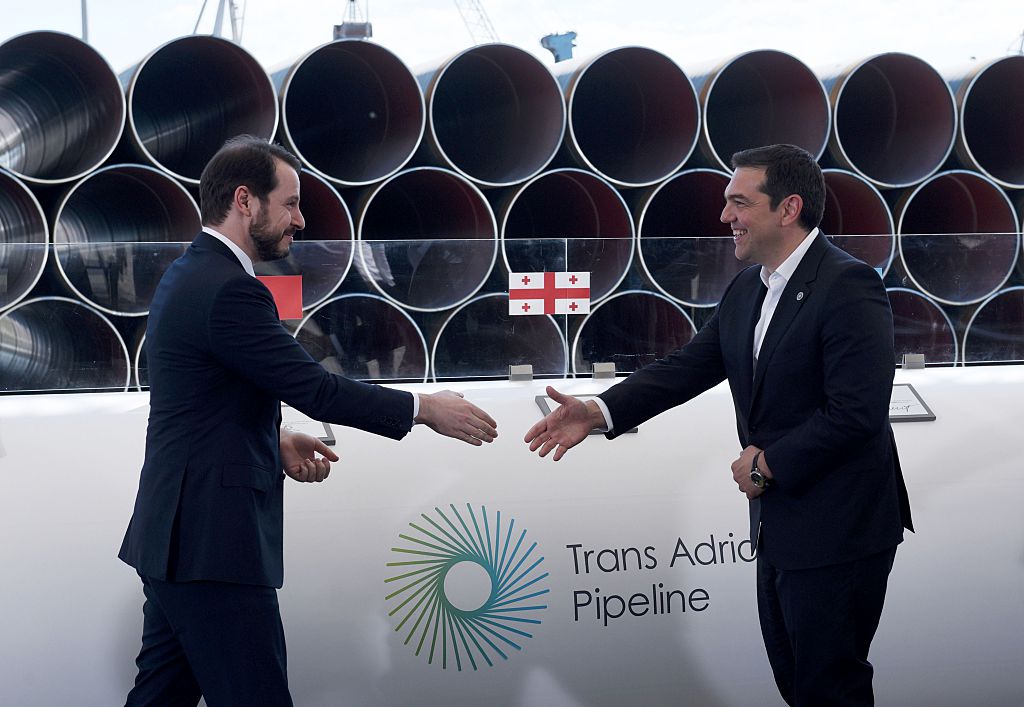
    TurkStream 2 or Balkan Stream? Either way, Moscow is the main beneficiary
  • Analysis
  • TurkStream 2 or Balkan Stream? Either way, Moscow is the main beneficiary

    TurkStream, the much discussed gas pipeline across the Black Sea, is now a reality. In January, President Recep Tayyip Erdogan and President Vladimir Putin presided over the launch ceremony in Istanbul. Gas shipped over the so-called “Western route” is now pumped into the Turkish grid through TurkStream rather than via Ukraine, Romania, and Bulgaria as before.

    November 2, 2020

    Stealing from the Saracens: How Islamic Architecture Shaped Europe
    Middle East Institute
  • Analysis
  • Stealing from the Saracens: How Islamic Architecture Shaped Europe

    Drawing on ideas and styles passed from vibrant Middle East trading cities into the West, the architectural heritage of Europe — and America — owes an important debt to the Arab and Islamic world.

    October 30, 2020