The Latest from Shana Cohen

Legitimacy or Credibility? The Case of the Afghan State
Originally posted December 2009
The Peripheralization of the Center: "Warlordism" in Afghanistan
Originally posted December 2009
An Island of Stability in Southern Afghanistan
Originally posted December 2009
The International Community and Afghan Elections: Helping or Hobbling Democratic Development?
Originally posted December 2009
Afghanistan's Second Presidential Vote: How to Respond to a Flawed Election
Originally posted December 2009
Political Legitimacy in Afghanistan
Originally posted December 2009
Afghanistan's Democrats: From Underground to Marginalization
Originally posted December 2009
Land Grab in Sherpur: Monuments to Powerlessness, Impunity, and Inaction
Originally posted December 2009
In September 2003, armed police and bulldozers violently ejected around 250 people from land in central Kabul and demolished their homes to make way for the lavish mansions of the freshly empowered elite.[1] Sherpur, as the area is known, lies in the shadow of the diplomatic enclave and as such is some of the most valuable land in the capital.
The Ways of the Nassara
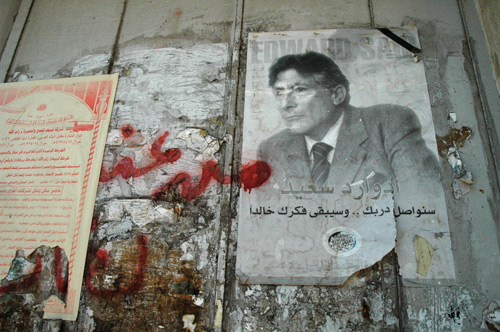
I had heard of Edward Said long before I discovered the world of theory and read Orientalism in the early 1990s, more than a decade after the book was published to great acclaim. I remember being vaguely intrigued by the public presence of a man with an English-Arab name. In a sort of fateful irony, Said’s parents seemed to have baptized their son to live across cultures, to be out of place, as Said wrote toward the end of his life. But it was the name’s hint of Arabness that first caught my attention.
Popular Culture, Orientalism, and Edward Said
Originally posted September 2009
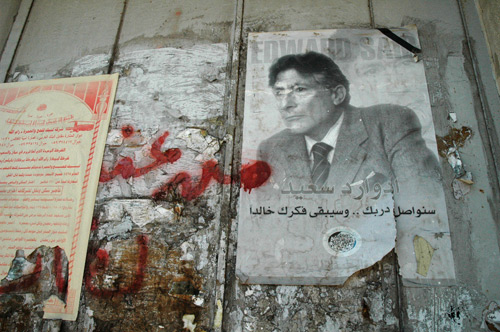
There are at least two unexamined axioms in Edward Said’s Orientalism: first, the primacy of the political in Orientalist discourse, and secondly the importance in that discourse of the intellectual and the literary (using “literary” in a high cultural sense). The first will not be discussed here, though it seems doubtful. The second deserves thinking about, and it is that which is discussed here.
Intimidating, Assassinating, and Leading: Two Early Mujahidin Commanders Reflect on Building Resistance Fronts
Originally posted December 2009
Saleh Mohammad and Ezzatullah Atif[1] were among the angry young Afghans who, in the first three years after the 1978 coup, drove their government out of the countryside. Mobilizing the youth of their areas into clandestine networks and then refashioning these into jabhas (resistance fronts) was their first experience of leadership. Their successful mobilization laid the foundations of the war of attrition, which eventually defeated the Soviet Union and toppled its client government.
Mullah Omar Wants You! Taliban Mobilization Strategies or Motivations for Joining the Insurgency
Originally posted December 2009
The Taliban insurgency in Afghanistan seemingly benefits from an unlimited reservoir of “foot soldiers” ready to take up the fight against the Afghan government and its international military supporters. The foot soldiers’ motivation is often attributed to ideology, poverty, and/or a lack of education. However, the ability of the Taliban insurgency to mobilize recruits is complex and driven by a mix of political, economic, and social factors.
Via Afghanistan: Regional Influences
Originally posted December 2009
Repeating History: Parallels between Mujahidin Tactics and Afghanistan’s Current Insurgency
Originally posted December 2009
Since 1747, all of the invaders or occupiers of Afghanistan have made almost the same mistakes. All were obliged to leave Afghanistan, resulting in the downfall or demise of their empires. In general, Afghans are independent thinkers and believe their own way of life to be the best. Interfering in their day-to-day affairs brings animosity and hatred against their would-be rulers, occupiers, and invaders. Nor do Afghans accept the imposition of rulers or types of government which would clash with their basic values.