MEI’s Syria Initiative seeks to provide insightful and grounded research and analysis on all things Syria in order to better inform a wide range of audiences and to help sustain and shape a more meaningful policy-oriented discussion. Drawing on the expertise of over a dozen renowned scholars, the Syria Program covers all aspects of Syria and its ongoing crises – from political, economic, legal, social, ethnic and religious dynamics, to conflict, insurgency and terrorism and the country’s history and possible futures.
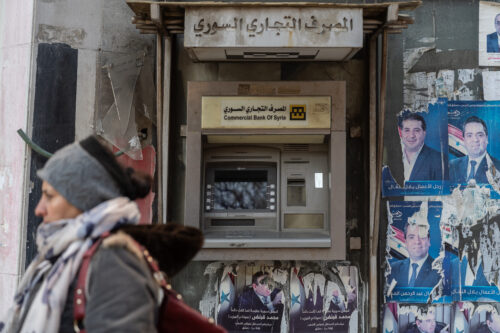
With sanctions repealed, Syrian policymakers must ensure that growing volumes of credit reach beyond the narrow political and commercial networks that have generally dominated Syrian finance. That will require a credit strategy aimed at sectors and regions historically excluded from formal finance. Syria’s specialized state banks offer an imperfect but ready-made mechanism to do so.
Integration or conflict in northeastern Syria? Ten key points to consider
After 10 months of US-mediated talks failed to achieve an integration of the Syrian Democratic Forces into Syria’s transitional state, hostilities erupted in early January. US diplomacy stepped in to try to calm tensions and force through the integration of the SDF’s Kurdish core into the Syrian state. Here are 10 key takeaways and indications of where things could go next.
How Damascus and the SDF came to blows in Aleppo — and what might come next
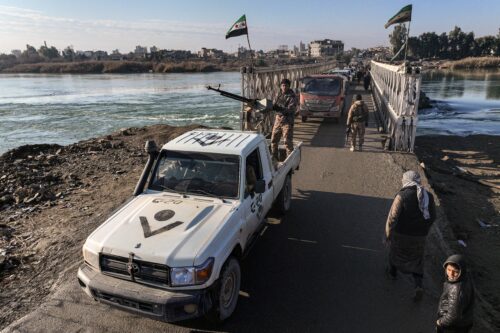
After months of building tensions, full-blown hostilities erupted between Syria’s transitional government and militia fighters linked to the Syrian Democratic Forces (SDF) in Aleppo on January 6. Through four days of fighting, government forces have now assumed full control of Syria’s second city, after expelling SDF-linked forces from its northwestern districts.
The Middle East Institute, The Atlantic Council, and European Institute of Peace collaborate with subject matter experts and policymakers in the US, Europe, and the Middle East to develop a holistic strategy to sustainably forge a pathway to resolving Syria’s crisis.
With sanctions repealed, Syrian policymakers must ensure that growing volumes of credit reach beyond the narrow political and commercial networks that have generally dominated Syrian finance. That will require a credit strategy aimed at sectors and regions historically excluded from formal finance. Syria’s specialized state banks offer an imperfect but ready-made mechanism to do so.
Integration or conflict in northeastern Syria? Ten key points to consider
After 10 months of US-mediated talks failed to achieve an integration of the Syrian Democratic Forces into Syria’s transitional state, hostilities erupted in early January. US diplomacy stepped in to try to calm tensions and force through the integration of the SDF’s Kurdish core into the Syrian state. Here are 10 key takeaways and indications of where things could go next.
How Damascus and the SDF came to blows in Aleppo — and what might come next
After months of building tensions, full-blown hostilities erupted between Syria’s transitional government and militia fighters linked to the Syrian Democratic Forces (SDF) in Aleppo on January 6. Through four days of fighting, government forces have now assumed full control of Syria’s second city, after expelling SDF-linked forces from its northwestern districts.
Admiral Brad Cooper, Commander of US Central Command, Addresses MEI
Admiral Brad Cooper, USN, Commander of US Central Command, gave opening remarks at MEI’s conference titled “Assessing US Policy on Post-Assad Syria & Its International Integration.”
“Today, one year since Syria’s transition began, we remain laser focused on the work ahead. We will continue to work with our Syrian partners to pursue ISIS and support SDF integration. A Syria at peace with itself and its neighbors can lead to a more peaceful and prosperous Middle East.”
The Middle East Institute has released the Syria trip report 'A New Day in Syria: Opportunities for Reconstruction and Renewal' in parallel to the recorded debrief. This 2025 Syria Trip Debrief provided context for the report and deeper insight into the recommendations mentioned.
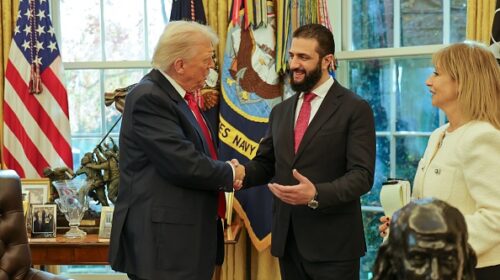
In this episode of Middle East Focus, hosts Alistair Taylor and Matthew Czekaj are joined by MEI Senior Fellow Charles Lister to unpack the historic November 10 meeting between US President Donald Trump and Syrian President Ahmed al-Sharaa.
Help Syria move forward — Repeal the Caesar Act sanctions
By repealing the 2019 Caesar Act sanctions, the United States today can take a meaningful, achievable step to reverse the Assads’ damaging legacy, supporting the emergence of a unified and integrated Syria that engenders peace and prosperity both at home and in the wider region.
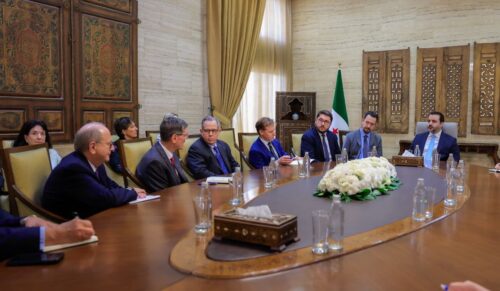
Ambassador Ryan Crocker reports on his visit to Lebanon and Syria on October 12-17 as part of a small delegation organized by the Washington office of the United Nations High Commissioner for Refugees (UNHCR).
Recent developments in Syria are causing surprise and confusion. In a bold move, President Trump and his administration acquiesced to requests from the Turkish and Saudi leadership and lifted most sanctions on the Ahmed al-Sharaa regime, his Salafist HTS movement, and Syria itself. It did so without conditionality, without much effort to understand the character, intentions, and capabilities of the new power in Damascus, and without a plan to use this windfall as leverage.