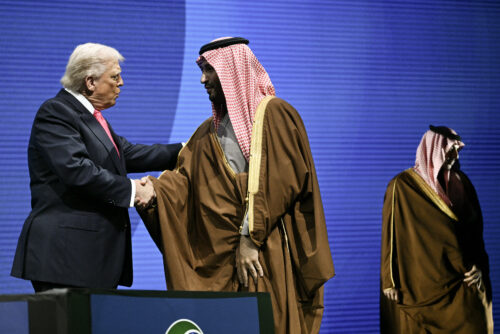
In 2016, Donald Trump was brand-new to the presidency and, by many accounts, did not expect to win. It took him time to learn the ropes of domestic and foreign policy, and for much of his first term, many in his foreign policy and defence teams were long-term professionals who often opposed many of his ideas.
In his second term, Mr Trump came back with the experience of a former president and picked a domestic and foreign policy team composed of loyalists who echo and amplify his positions. In the second year of this second term, Mr Trump has been further empowered by his success last year of upending domestic and foreign policy in a revolutionary way. Mr Trump is currently coming off the high of the dramatic US operation in Venezuela.
In the Middle East, Mr Trump’s return has had – and will continue to have – significant consequences.
Photo by BRENDAN SMIALOWSKI/AFP via Getty Images
The Middle East Institute (MEI) is an independent, non-partisan, not-for-profit, educational organization. It does not engage in advocacy and its scholars’ opinions are their own. MEI welcomes financial donations, but retains sole editorial control over its work and its publications reflect only the authors’ views. For a listing of MEI donors, please click here.