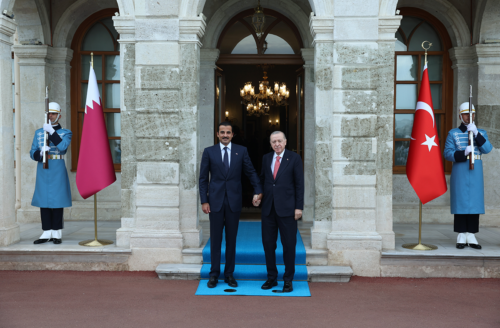
Turkey and Qatar signed a mutual defense agreement in Istanbul on November 13, pledging a unified stance against any external armed attack on either country. The agreement’s precise military obligations remain undisclosed, although an accompanying joint communiqué identifies consultations on a range of security threats and areas of potential cooperation.
The agreement formalizes a relationship that already has a substantial military and economic dimension. Turkish troops have been based in Qatar since 2015 under a 2014 accord. Bilateral trade, at approximately $1.3 billion last year, remains modest relative to the $5 billion target the two sides reiterated this week, although Turkish contractors have undertaken 206 projects in Qatar worth $20.8 billion.
More consequential than the agreement’s immediate military provisions are the strategic calculations likely driving Doha to deepen its relationship with Ankara. Despite hosting the largest American military installation in the Middle East and benefiting from an unusually explicit US security commitment, Doha is now broadening its security partnerships. Yet neither Washington nor Ankara can fully shield a country whose economic security depends on an exceptionally vulnerable export route.
Two related questions therefore merit attention. How much confidence can Qatar place in the American commitment, and what can additional security partnerships do to protect the economic foundations of the Qatari state?
The Credibility and Limits of America’s Guarantee
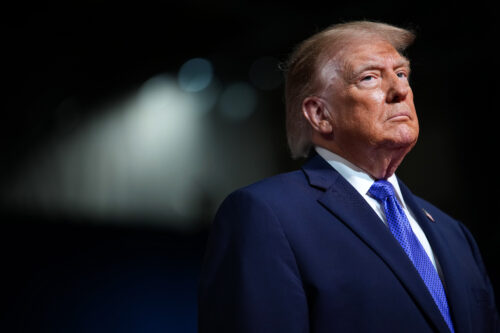
Washington’s commitment to Qatar rests on an executive order, not a ratified treaty — a distinction that is more than procedural. The September 29, 2025, Executive Order 14353 is an unusual, arguably unprecedented, form of security guarantee. It is a unilateral presidential pledge to defend a Middle Eastern partner, potentially with military force, issued without Senate approval or a reciprocal defense commitment from Qatar. Signed weeks after Israel struck Hamas leaders in Doha, the order pledges “all lawful and appropriate measures” in response to an armed attack on Qatar, including military action if necessary. Yet it creates no rights enforceable against the US government and can be revoked by a future president. Its practical force therefore rests on the political circumstances of any attack and the willingness of a president to honor the pledge, as Reuters noted at the time.
The 2026 war with Iran tested the US commitment. On March 18 and 19, Iranian missiles struck Ras Laffan, Qatar’s principal liquified natural gas (LNG) export hub, in retaliation for an Israeli attack on Iran’s South Pars facilities. Two of Qatar’s 14 liquefaction trains were damaged, reducing export capacity by approximately 17%. QatarEnergy’s chief executive warned that repairs could take three to five years and result in around $20 billion in annual lost revenue. President Trump publicly maintained that Washington had known nothing about the Israeli attack, although this account was subsequently challenged by Axios, which cited Israeli officials claiming that Netanyahu had alerted him before the missiles were launched. The White House disputed that account, and the precise timing and substance of any prior notification remain contested.
The threat may have deterred further attacks, but it came after substantial damage had been inflicted. The episode demonstrated Washington’s willingness to threaten retaliation while exposing its difficulty in protecting Qatar’s economic infrastructure from regional escalation.
That vulnerability extended to the American military presence itself. Iranian missiles severely damaged al-Udeid Air Base’s combined air operations center, underscoring the exposure of US facilities as well as Qatari assets.
Qatar continues to depend on American capabilities and strategic backing that other partners cannot readily replicate. Yet the 2026 attacks exposed a distinction between deterring further aggression and preventing the initial strike or shielding critical infrastructure from its consequences.
The Geography of Qatar’s Vulnerability
Qatar’s exposure is particularly acute because of its dependence on the Strait of Hormuz. The strait was effectively closed to normal commercial traffic after the war erupted in February 2026. Although some tanker movements resumed by September, passage remained risky and traffic was well below prewar levels. Reuters reported that visible Qatar-linked LNG movements had resumed, while subsequent reporting underscored the continuing risks and severe disruption to exports.
Saudi Arabia and the United Arab Emirates can, and have, diverted some crude oil exports through pipelines that bypass the strait. Qatar has no comparable alternative for its LNG exports, virtually all of which must pass through Hormuz.
The vulnerability extends beyond the threat to shipping. The attacks on Ras Laffan demonstrated the vulnerability of production facilities, while the disruption of shipping through Hormuz has underscored the difficulty of maintaining access to international markets.
Turkey has floated a longer-term alternative to Hormuz dependence by reviving the idea of a Qatar-Turkey pipeline through Saudi Arabia, Jordan, and Syria. Qatar previously dismissed reports of renewed interest as speculation, while the project’s economic viability and the political and security risks along its proposed route are open to question.
The latest joint communiqué offered no indication that the pipeline had advanced beyond discussion, expressing only a readiness to pursue concrete energy cooperation, particularly in LNG trade. Any overland alternative would require substantial investment and agreement among transit countries, as well as confidence in the route’s security and political stability.
For now, Turkey’s contribution to Qatar’s energy security remains indirect. Its military presence and expanding defense cooperation may strengthen Doha’s broader security position but cannot ensure uninterrupted access to international energy markets.
A Wider Network of Security Partnerships
The November 13 agreement also needs to be understood in the context of Turkey’s expanding defense relationships across the Gulf. The joint communiqué provides for regular consultations on security threats and defense policies, joint military exercises, and cooperation in defense industries and personnel training. These arrangements give the relationship a more institutionalized character,
The October 2026 Badr Memorandum, signed by Turkey, Qatar, Pakistan, and Indonesia, extends this cooperation into joint production, technology development, and defense-industrial capacity, reflecting a shared interest in strengthening indigenous capabilities and reducing reliance on external suppliers.
Turkey’s expanding regional role is also evident in its August defense agreement with Saudi Arabia and Pakistan, activated following Houthi attacks on October 5 and ratified by the Turkish parliament on November 5. Trump’s welcome for Turkish and Pakistani assistance to Riyadh suggests that Washington does not necessarily regard Ankara’s growing Gulf presence as contrary to American interests.
Together, these initiatives point to a gradual diversification of Gulf security relationships. Regional governments are building overlapping bilateral and minilateral arrangements with partners beyond their traditional American security framework. These remain distinct initiatives, not an integrated alliance system, but they reflect a growing preference for multiple security partnerships over reliance on a single external guarantor.
For Turkey, these arrangements extend its regional influence and reinforce its position as a military and diplomatic actor across competing alignments. Its North Atlantic Treaty Organization (NATO) membership, defense capabilities, and established presence in Qatar give it considerable scope to deepen these ties.
They also raise questions for NATO. A future confrontation involving Iran could test Ankara’s commitments to Gulf partners and complicate its relations with Washington and other alliance members, particularly if Turkey were drawn into a conflict they had no intention of joining.
For now, however, the agreement adds to rather than replaces Qatar’s security relationship with the United States. Doha continues to host American forces at al-Udeid and retains the protection pledged under the 2025 executive order. Washington, for its part, has shown little inclination to discourage Turkey’s expanding regional role.
The Limits of Diversification
Three developments will help clarify the agreement’s practical significance. The first is whether its operative provisions entail a commitment to military intervention or chiefly provide for consultation and cooperation. The second is whether Qatar’s LNG exports recover or remain disrupted, shaping the case for alternative export routes. And the third is how Washington reinforces its presence at al-Udeid while accommodating Turkey’s expanding role.
The pact reflects Doha’s effort to broaden its security partnerships while retaining its American relationship. Turkey brings additional military capabilities, defense-industrial cooperation, and strategic reach — but cannot remove Qatar’s dependence on the Strait of Hormuz. Indeed, the wider dilemma facing Qatar and its neighbors is that diversified partnerships can reduce reliance on any single guarantor but cannot eliminate the geographic vulnerabilities that make external protection necessary.
John Calabrese is a Senior Fellow at the Middle East Institute.
Photo by Turkish Presidency / Mustafa Kamaci / Handout/Anadolu via Getty Images
The Middle East Institute (MEI) is an independent, non-partisan, not-for-profit, educational organization. It does not engage in advocacy and its scholars’ opinions are their own. MEI welcomes financial donations, but retains sole editorial control over its work and its publications reflect only the authors’ views. For a listing of MEI donors, please click here.

Blue Wave, Regional Ripples: Turkey and Lebanon React to the Midterms