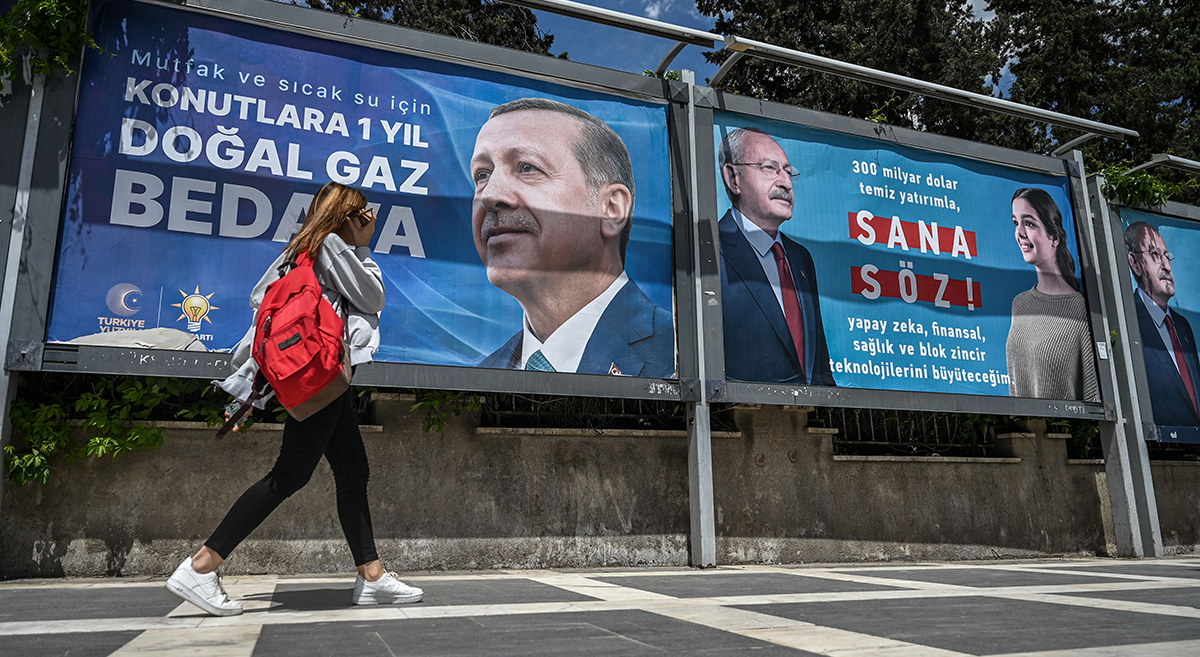
It is a cliché for politicians to claim that an upcoming election is the most critical vote in the history of the country. In Turkey’s case, however, the presidential and parliamentary elections on May 14 are indeed the most consequential ever. The prospects for Turkey’s democratic future are at stake. If President Recep Tayyip Erdoğan wins another term, Turkey will degenerate further into authoritarianism in which elections will not matter. If the opposition wins, however, Turkey’s democracy will have a shot at consolidating. While there is much optimism among opposition supporters that change through the ballot box is within reach, anxiety and fear over election security are not in short supply either.
The Middle East Institute’s Turkey Program put together a short report addressing the key issues in Turkey’s make-or-break elections. What do the polls say? What sort of campaigns are the candidates running? There’s been a lot of talk about the presidential elections, but what about the parliamentary ones that will be held on the same day? What does the opposition promise when it comes to domestic and foreign policy? What will be the economic impact of the elections? The following report explores these issues and more.
Contents
1. The dust has not yet settled ahead of Turkey’s elections
Can Selçuki
2. Polarizing populism vs. inclusive positivity: Erdoğan and Kılıçdaroğlu’s dueling campaign strategies
Seren Selvin Korkmaz
3. Assessing competing scenarios for Turkey’s parliamentary elections
Berk Esen
4. An opposition foreign policy in Erdoğan’s shadow
Alan Makovsky
5. The economic impact of Turkey’s elections: Six potential scenarios
M. Murat Kubilay
Photo by OZAN KOSE/AFP via Getty Images
The Middle East Institute (MEI) is an independent, non-partisan, not-for-profit, educational organization. It does not engage in advocacy and its scholars’ opinions are their own. MEI welcomes financial donations, but retains sole editorial control over its work and its publications reflect only the authors’ views. For a listing of MEI donors, please click here.
The Mecca Joint Défense Agreement: A New Geometry of Middle Eastern Power?
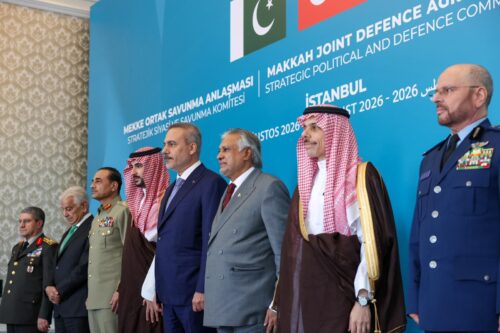
The Mecca Alliance Meets the Red Sea – Saudi Arabia’s New Defense Pact Faces Its First Major Test