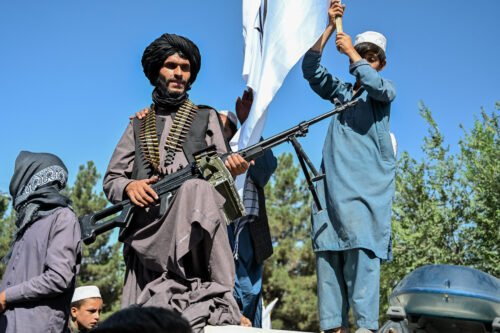
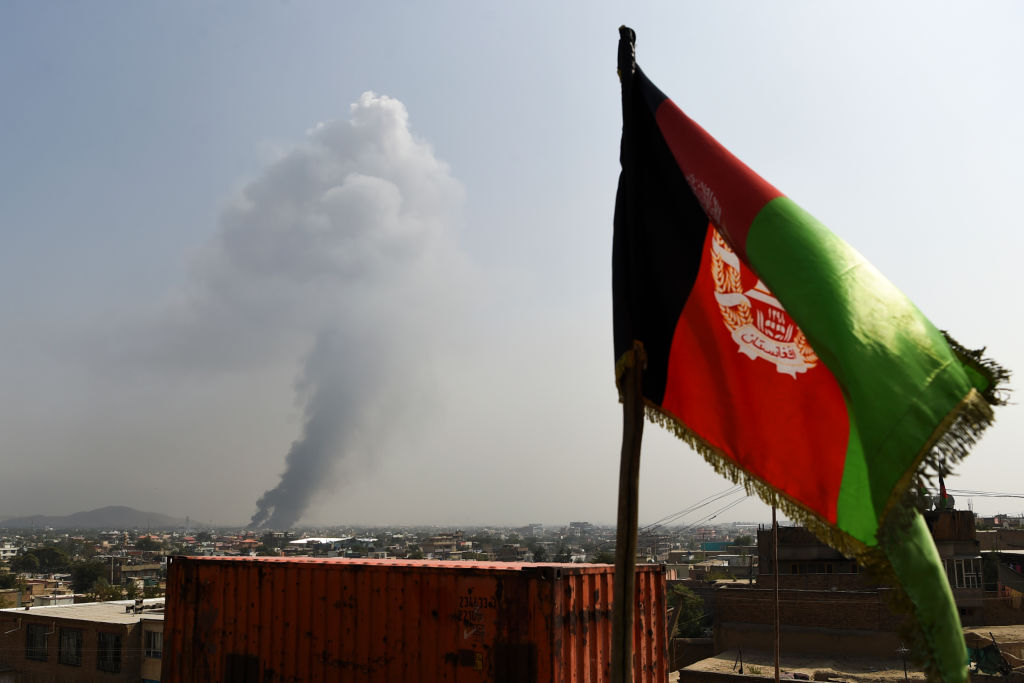
I was a teenage Afghan refugee in Pakistan’s tribal areas when the Twin Towers fell. Almost nobody around us understood the politics of what had happened, but we knew that something had changed for good. Afghanistan, which until then had been our private tragedy and our first exile from Taliban rule, had suddenly become the world’s concern, with the United States leading the response.
United States Central Command (CENTCOM), one of the US Department of Defense’s (DoD) six geographical combatant commands, is responsible for countering threats, responding to crises, and strengthening regional stability in the Middle East, Central Asia, and parts of South Asia.
A Strategic Conundrum: Pakistan’s Transit Corridor to Iran as Lifeline or Liability
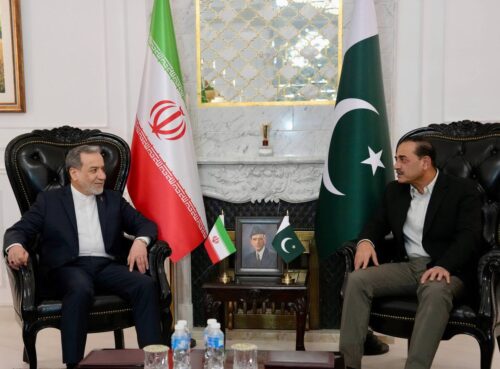
The US-Iran standoff over the Strait of Hormuz — disruptive to global trade and energy flows, and devastating for debt-burdened economies — has handed Pakistan an unexpected geoeconomic opportunity, one that may persist even if the framework agreement announced on June 14 results in a lasting peace and permanent reopening of the strait. But seizing it will have interlocking consequences for Islamabad’s ties with Tehran, Washington, and the Gulf states.
Monday Briefing: The reverberations of the US election in the Middle East
This week’s briefing on recent news and upcoming events in the region featuring Paul Salem, Alex Vatanka, Gonul Tol, Gerald Feierstein, Randa Slim, Khaled Elgindy, Charles Lister, Mirette F. Mabrouk, and Marvin G. Weinbaum.
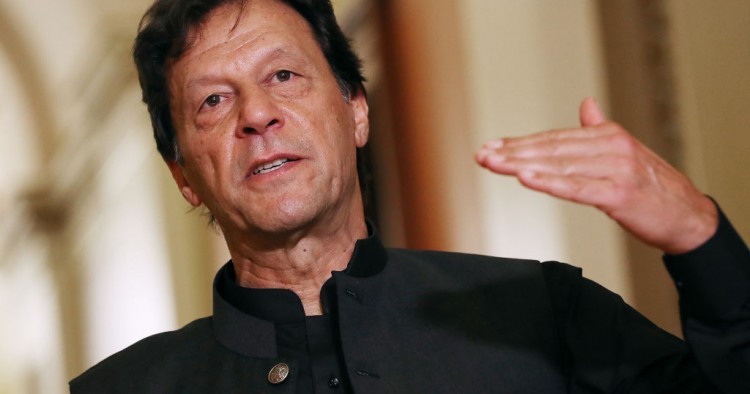
Pakistani politics at a crossroads: The new opposition to Imran Khan and to the military establishment
On October, 16, Pakistan’s former Prime Minister Nawaz Sharif set his country’s politics ablaze by offering a withering critique of the military establishment. Calling in from London via video conference, Sharif addressed a crowd of over 20,000 protestors at a rally in the Punjabi city of Gujranwalla organized by the Pakistan Democratic Movement (PMD), a recently formed coalition that brings together all major opposition parties. Under the PMD’s banner, erstwhile rivals like the Pakistan Muslim League-Nawaz (PML-N), the Pakistan People’s Party (PPP), and the Jamiat Ulema-e-Islam–Fazlur (JUI-F) have joined forces to achieve two goals that they see as intertwined: unseating Prime Minister Imran Khan and regaining power from the military.
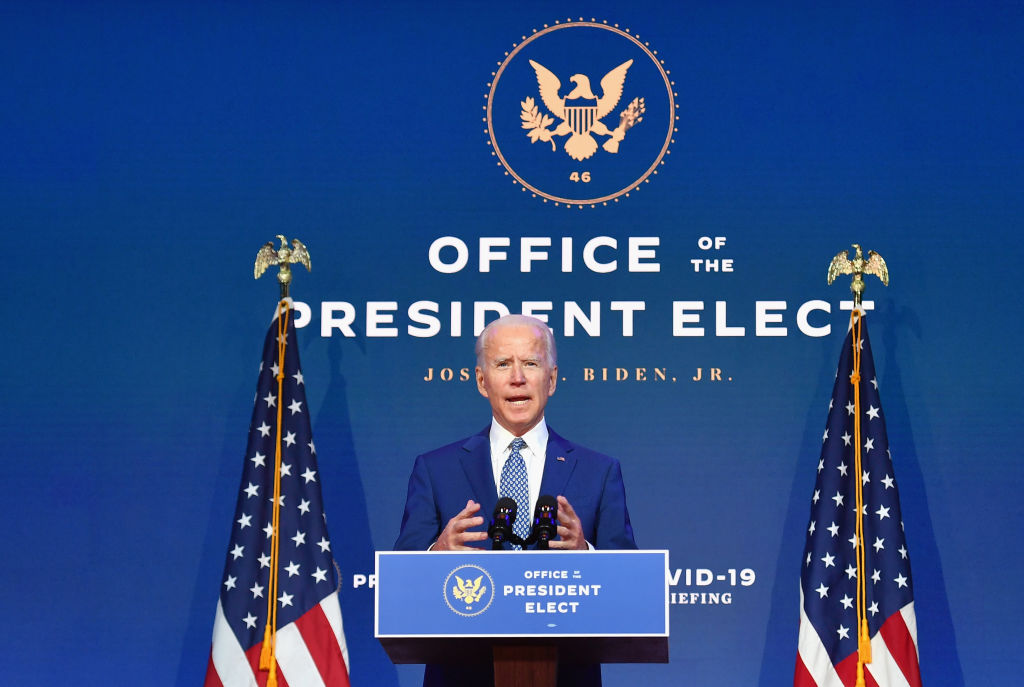
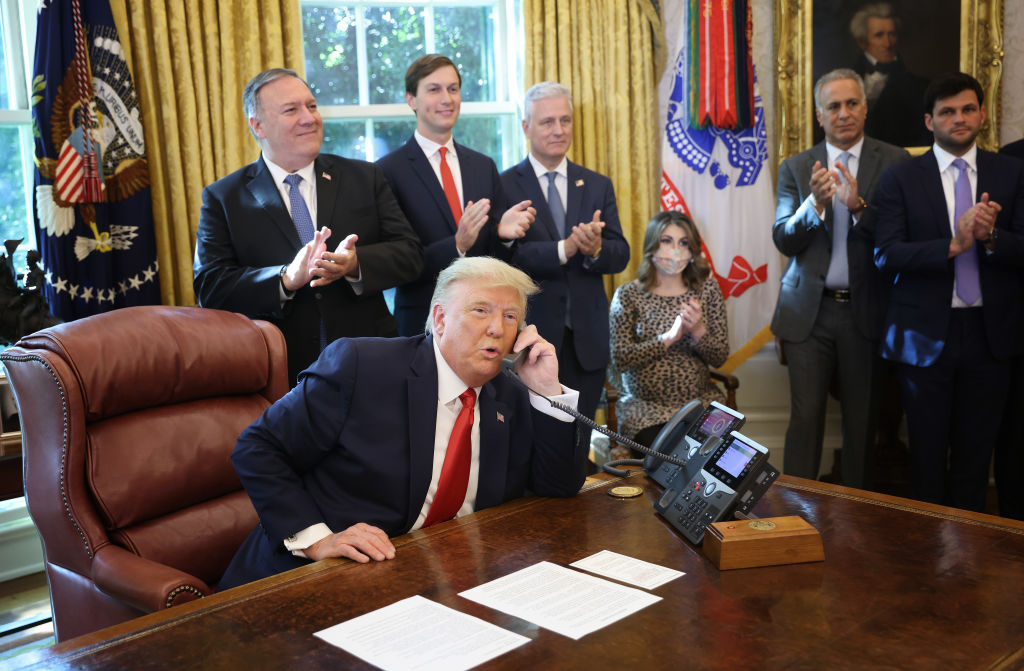
At a rally in Florida, Donald Trump stated that Iran will be the first country to call to him after his reelection because the Iranians are “dying for a deal.” National Security Advisor Robert O’Brien added that “it is very difficult for Iran to refuse to negotiate” because “Iran cannot sustain economic pain much longer and… we don’t think they can hang in there for another four years.”
There is no doubt that the Trump administration’s “maximum pressure” campaign has had serious negative impacts on Iran’s economy and that the country is experiencing a crisis. But, if the past is any indication, the sanctions or economic pressure will not be the main drivers of Tehran’s decision-making if it decides to compromise with the United States. To imagine that a deal is in the offing due to Iran’s dire economic straits seems simplistic.
How the UAE-Israel deal could change the regional power balance
While most experts believe that the recent normalization of ties between Israel and the UAE will not lead to a significant change in the regional balance of power, there are indications that it has the potential to bring about such a change in the long run.
Ayatollah Khamenei’s gamble and a green light for negotiations
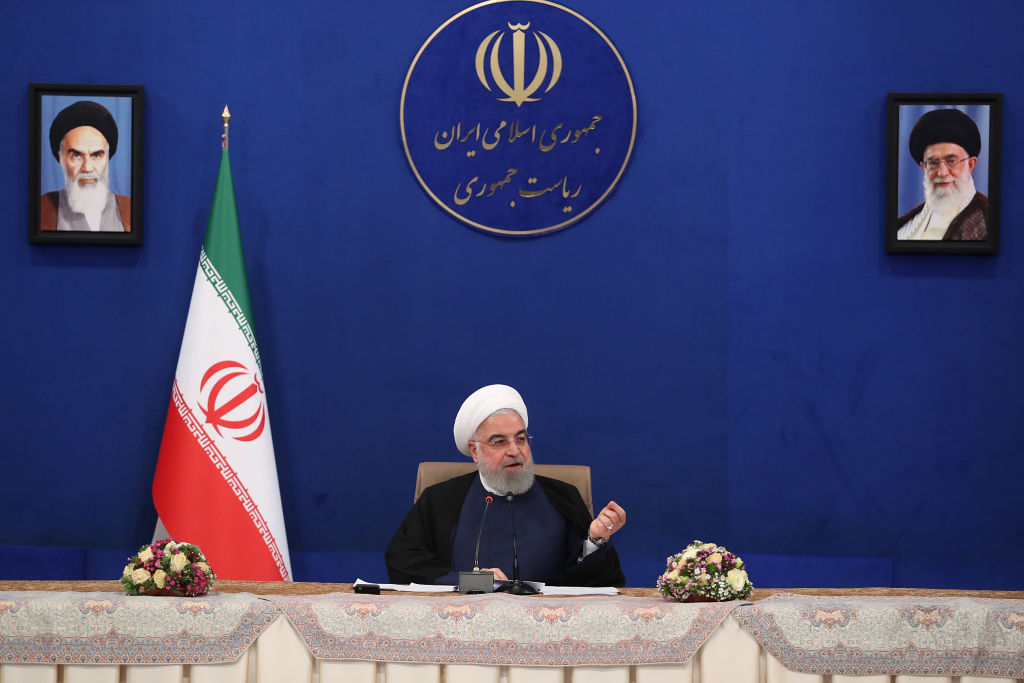
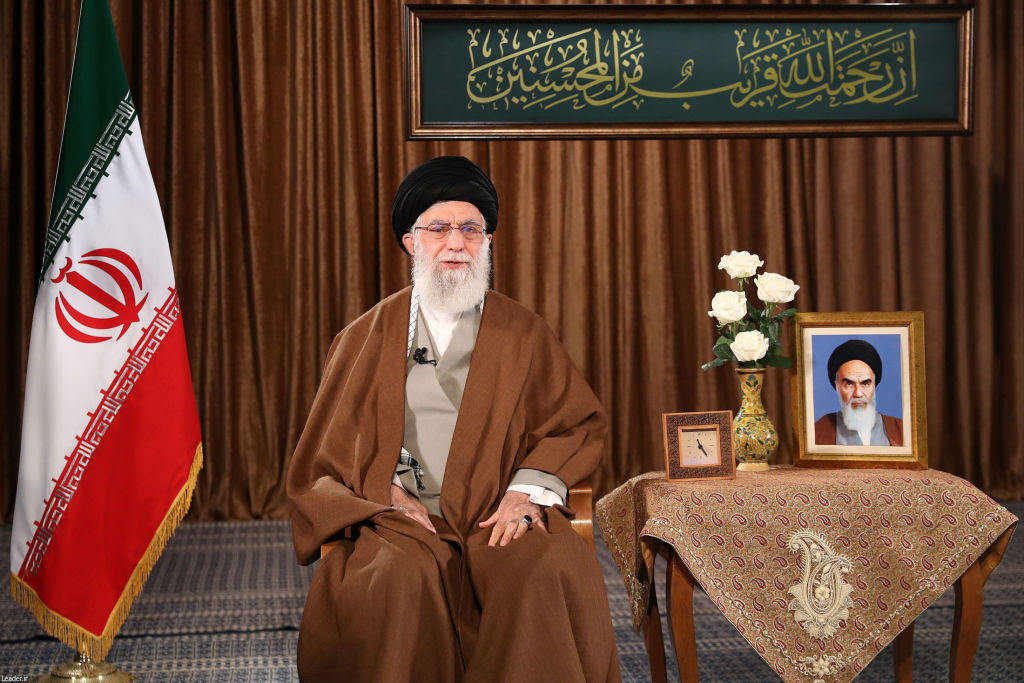
As the U.S. prepares to head to the polls to choose its next president, Iran finds itself at a dead end. Hit hard by American sanctions and its own mismanagement of the economy, Tehran needs to negotiate with Washington to get out of its current economic crisis and shore up its waning popular legitimacy. With an eye to addressing these issues and mindful of the steady erosion of support for the government, President Hassan Rouhani has obtained permission from Iranian Supreme Leader Ayatollah Ali Khamenei to negotiate with the U.S. While the news has not yet been made public, Rouhani has told Ayatollah Khamenei that he will begin talks to reach an agreement with the winner of the upcoming election — regardless of who it is — and the Iranian leader has given his initial consent.
Monday Briefing: Regional reverberations of the Sudan-Israel announcement
This week’s briefing on recent news and upcoming events in the region featuring Paul Salem, Jonathan M. Winer, Gonul Tol, Mohammed Soliman, Marvin G. Weinbaum, Elizabeth Dent, Mirette F. Mabrouk, and Robert S. Ford.
Afghanistan’s Terrorism Challenge: The Political Trajectories of al-Qaeda, the Afghan Taliban, and the Islamic State
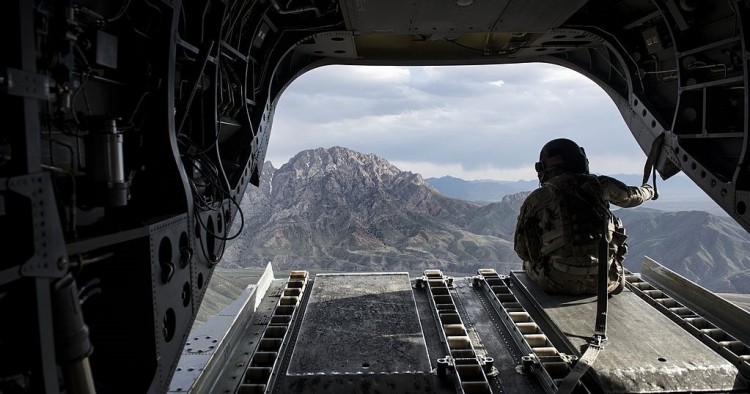
Afghanistan remains at the center of U.S. and international counterterrorism concerns. As America prepares to pull out its military forces from the country, policymakers remain divided on how terrorist groups in Afghanistan might challenge the security of the U.S. and the threat they pose to allies and regional countries. Advocates of withdrawal argue that the terrorism threat from Afghanistan is overstated, while opponents say that it remains significant and is likely to grow after the drawdown of U.S. forces. This report evaluates the terrorism challenge in Afghanistan by focusing on the political trajectories of three key armed actors in the Afghan context: al-Qaeda, the Afghan Taliban, and the Islamic State.
Monday Briefing: Secret diplomatic visit to Damascus raises questions about US Syria policy
This week’s briefing on recent news and upcoming events in the region featuring Charles Lister, Ruba Husari, Marvin G. Weinbaum, and W. Robert Pearson.
Regional transit trade isn’t enough to drive Pakistan’s Gwadar Port
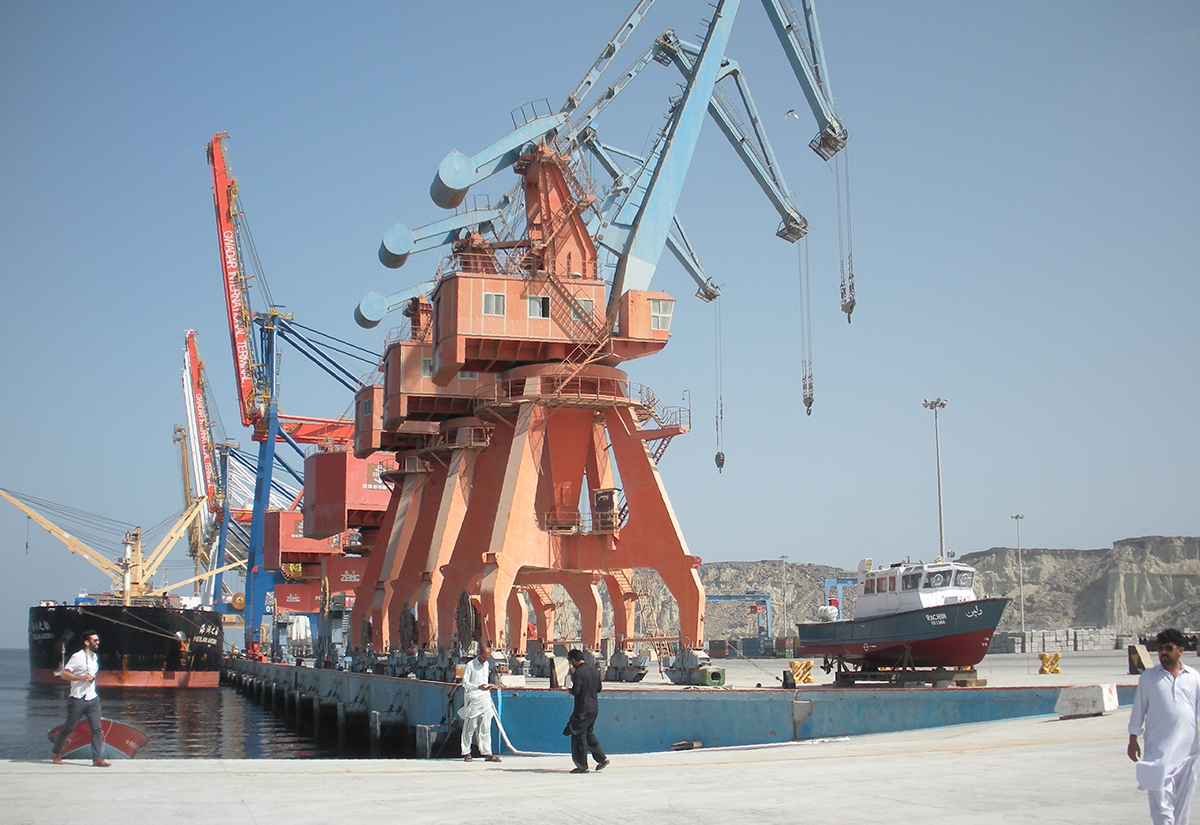
Landlocked Afghanistan has begun using the Chinese-operated Pakistani port of Gwadar for transit trade — a development Pakistani officials see as marking the start of Gwadar’s role as a gateway port through the China-Pakistan Economic Corridor. Pakistan’s hope to develop the Arabian Sea port into a gateway for Afghanistan, Central Asia, and China’s Xinjiang region has been a long-standing one — and it is misguided. Islamabad should instead focus on local drivers to build the port and use it as a vehicle to develop the impoverished, but resource-rich region of southern Balochistan.
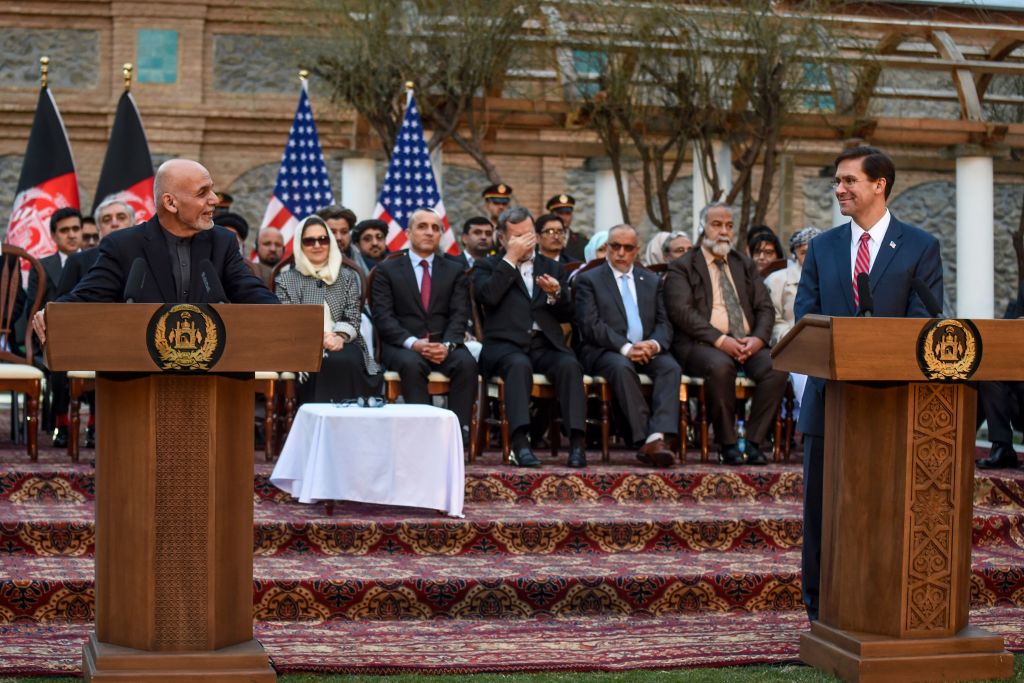
Weekly Briefing: The myth of US conditionality in Afghanistan
This week’s briefing on recent news and upcoming events in the region featuring Marvin G. Weinbaum, Alex Vatanka, Dima M. Toukan, and Syed Mohammad Ali.
Omar Samad and Marvin Weinbaum join host Alistair Taylor to discuss what to expect from the intra-Afghan talks underway in Doha, the ongoing violence on the ground in Afghanistan, and the challenges facing Afghan security forces as the US continues its troop drawdown.
On Sept. 13, Bahrain recognized Israel at a ceremony attended by US President Donald Trump at the White House. With the stroke of a pen, Bahrain became the fourth Arab state to have forged official ties with Israel, following in the footsteps of Egypt (1979), Jordan (1994), and most recently, the UAE (Aug. 13, 2020).
In the recently released Showtime documentary “Kingdom of Silence” by Alex Gibney and Lawrence Wright, I made the statement that with hindsight the U.S. may have been better off never having occupied Afghanistan. That comment has brought some questions and responses, so let me be clear about what I mean and why.
The oldest peer-reviewed publication dedicated to the study of the modern Middle East, MEI’s flagship journal covers politics, society, and culture in the region.