I was a teenage Afghan refugee in Pakistan’s tribal areas when the Twin Towers fell. Almost nobody around us understood the politics of what had happened, but we knew that something had changed for good. Afghanistan, which until then had been our private tragedy and our first exile from Taliban rule, had suddenly become the world’s concern, with the United States leading the response.
Russia’s Taliban Embrace Signals a New Power Shift in Afghanistan
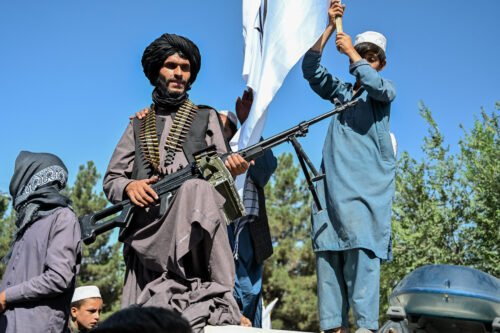
Sometimes the only thing more frightening than Afghanistan’s problems is the Taliban’s solutions and the recently signed Russia-Taliban military-technical agreement may be the most alarming one yet. The partnership signals that Afghanistan’s security architecture is being rebuilt without the United States, and increasingly by America’s rivals. Washington should pay close attention because the deal hands one of the world’s most repressive regimes a pathway to becoming more capable and deeply entrenched in a regional order where Russian influence is expanding at America’s expense.
The Pakistan-Afghanistan conflict: A strategic concern for the US
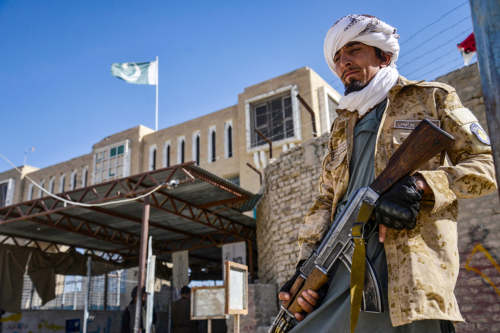
Pakistan’s relationship with the Afghan Taliban has shifted from open sponsorship in the 1990s to a silent partnership following 2001 to alienation and belligerence since 2021. Their current conflict, which comes at great cost to both countries and seems to have no easy military or political resolution, also poses a threat to the stability and prosperity of neighboring states. Although American strategic interests in the region greatly diminished following the United States’ military withdrawal from Afghanistan in August 2021, the region’s altered political dynamics have prompted a growing American engagement with Pakistan and tentatively with Afghanistan. At the same time, the US has become a factor in how both Islamabad and Kabul have come to form their national security strategies.
Civil Society and Community Mobilization in Afghanistan
Originally posted December 2009
Civil Society (CS) consists of various kinds of community-based, non-governmental movements that, without waiting for or requesting government orders or assistance, come together mainly to solve problems and effect change. CS actors in Afghanistan exist at the local, district, and national levels. They are engaged in resolving problems and in calling upon people to contribute to, or participate in, community-based activities.
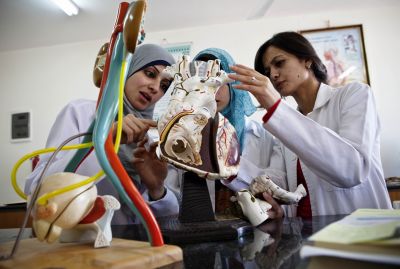
Experts throughout the massive aid community in Afghanistan agree that education is vital for development. Education shapes the quality of productivity, products, and services. Education informs citizens of the roles that they must play so that good governance may thrive. Education molds the quality of leadership. Yet, despite the rhetoric, the education sector is perennially underfunded; typically, it receives scarcely 10% of what is provided to other sectors.
The Emerging Afghan Media: Beyond the Stereotyping of Women?
Originally posted December 2009
For the past 30 or more years, media content in Afghanistan mostly has been controlled by the central government and its supporters. During this period, as throughout the 20th century, the most important and widely available forms of media have been national radio and television. However, rural perspectives and the realities of rural life have been conspicuously absent from most media content. Moreover, because of traditionally rigid gender roles, Afghan women have had very limited or almost no access to media and information sources.
Women's Agency in Afghanistan: From Survivors to Agents of Change
Originally posted December 2009
Often, policy debates on the empowerment of women in Afghanistan are impaired by the historic backlashes against radical top-down reforms and women’s emancipation (e.g., unseating kings) or by the assumption that the male-dominated culture makes it nearly impossible to create space for the advancement of women’s rights. As a result, the effort to develop a cohesive strategy for enhancing women’s participation in the reconstruction agenda is hampered.
The NGO people drive around in big white cars, live in our cities’ best houses and receive high salaries, though most of them would be jobless in their own country. They come here for two, three hours, and we tell them what they need to hear. They express empathy with our difficult situation, and then they get back into their air-conditioned four wheel drives and race off leaving us behind in a cloud of dust. Often they are never seen again. —Farmers in rural Kunduz Province, 2006
Rebuilding Afghanistan: Practical Measures for Improving the Economy
Originally posted December 2009
It is a difficult task to suggest a specific recipe for the improvement of the economy of any failed state. The case of Afghanistan presents even more challenges.
MEI’s Taliban Leadership Tracker is a detailed database mapping 1,200 leaders and appointees wielding influence throughout the Taliban government. Produced and maintained by MEI Non-Resident Scholar Javid Ahmad, the database can be used to help identify individuals who wield various forms of influence, ones who may be receptive to dialogue and collaboration, as well as those involved in rights violations, abuses, or criminal and terrorist activities.