I was a teenage Afghan refugee in Pakistan’s tribal areas when the Twin Towers fell. Almost nobody around us understood the politics of what had happened, but we knew that something had changed for good. Afghanistan, which until then had been our private tragedy and our first exile from Taliban rule, had suddenly become the world’s concern, with the United States leading the response.
Russia’s Taliban Embrace Signals a New Power Shift in Afghanistan
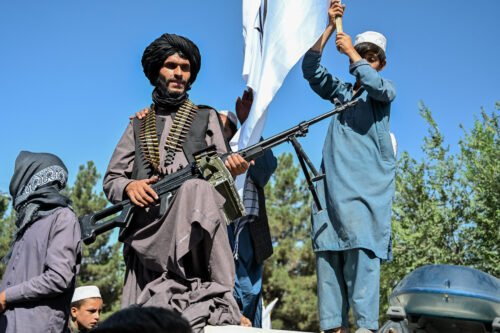
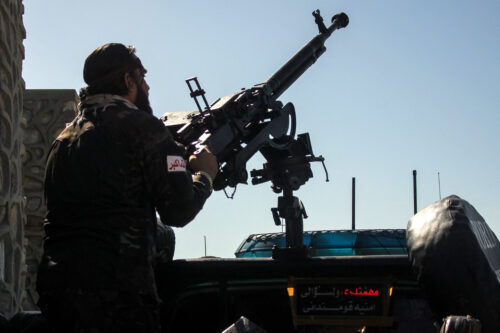
Sometimes the only thing more frightening than Afghanistan’s problems is the Taliban’s solutions and the recently signed Russia-Taliban military-technical agreement may be the most alarming one yet. The partnership signals that Afghanistan’s security architecture is being rebuilt without the United States, and increasingly by America’s rivals. Washington should pay close attention because the deal hands one of the world’s most repressive regimes a pathway to becoming more capable and deeply entrenched in a regional order where Russian influence is expanding at America’s expense.
The Pakistan-Afghanistan conflict: A strategic concern for the US
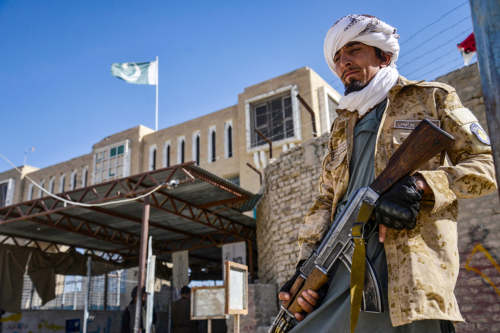
Pakistan’s relationship with the Afghan Taliban has shifted from open sponsorship in the 1990s to a silent partnership following 2001 to alienation and belligerence since 2021. Their current conflict, which comes at great cost to both countries and seems to have no easy military or political resolution, also poses a threat to the stability and prosperity of neighboring states. Although American strategic interests in the region greatly diminished following the United States’ military withdrawal from Afghanistan in August 2021, the region’s altered political dynamics have prompted a growing American engagement with Pakistan and tentatively with Afghanistan. At the same time, the US has become a factor in how both Islamabad and Kabul have come to form their national security strategies.
Political Leadership in Post-Taliban Afghanistan: The Critical Factor
Originally posted December 2009
A hasty, fluid, and poorly conceived process of creating leadership in a post-war situation mainly provides the space for rich and powerful — mostly corrupt — individuals to prevail because their roles, styles, and abilities overshadow concerns about their background, characteristics, homogeneity, and behavioral patterns.[1] Regrettably, such is the case in post-Taliban Afghanistan.
Perspectives on Democracy and Democratization in Afghanistan
Originally posted December 2009
In the post-2001 era, many assumptions have been made about the benefits of democracy in Afghanistan.[1] International assistance has focused on the re-establishment of representative democratic institutions, such as a presidential system, bicameral parliament, and provincial councils. However, little attention has been paid to Afghan perceptions of democracy. Indeed, far from unquestionable, the benefits of democracy are not universally acknowledged among Afghans.
The United States and NATO effort to stabilize Afghanistan is showing signs of severe tension. As Afghanistan further descends into chaos, President Barack Obama’s administration is not of one mind about what course of action to follow in Afghanistan. The current review of President Obama’s Af-Pak policy, which was announced in late March 2009, has turned into a divisive debate of irreconcilable options between his senior national security team. The reverberations emanating from this debate are clearly felt in war-torn Afghanistan.
South Asia is a region in crisis — plagued by a set of interlocking problems that have deep and tangled roots. And Pakistan, not Afghanistan, is at the center.
Afghanistan has been plagued by war for 30 years. The conflicts that have occurred during this time have involved major world powers, Afghanistan’s neighbors, and various Afghan factions. The cumulative toll of these conflicts on the country and its people is enormous. Yet, despite three calamitous decades of death and destruction, peace and stability is achievable.
The move to hold a second round of elections in Afghanistan on November 7, 2009 has at least had one positive result: it has brought out the fundamental limitations of introducing Western democratic election processes in a deeply divided society that, moreover, is at war with itself and with external forces.
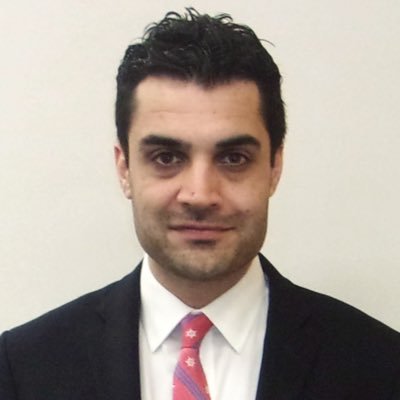
MEI’s Taliban Leadership Tracker is a detailed database mapping 1,200 leaders and appointees wielding influence throughout the Taliban government. Produced and maintained by MEI Non-Resident Scholar Javid Ahmad, the database can be used to help identify individuals who wield various forms of influence, ones who may be receptive to dialogue and collaboration, as well as those involved in rights violations, abuses, or criminal and terrorist activities.