Trump’s Midterm Loss Opens a Window for Iran Diplomacy
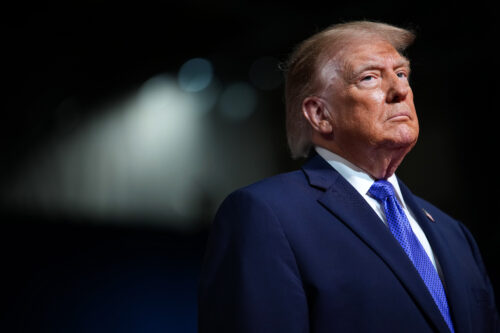
Eight months after launching the war alongside Israel, Trump has yet to explain what an American victory would look like or how much longer the United States must keep fighting to achieve it. While Americans opted to vote for the Democratic Party, which is preparing to challenge the logic of the war, Trump retains much executive power to stay in the war. Going forward, this means the political risks for him and his party will be high.
Brian is joined by His Excellency Talal Al Rahbi, the ambassador of the Sultanate of Oman to the United States of America, to discuss what it means to represent the “Switzerland of the Middle East” and the role of Oman’s quiet diplomacy. He also reflects on growing up during Oman’s transformation, his time spent in the United States, and why the two nations’ long-standing partnership matters today.
After decades of political setbacks, Iran’s former Revolutionary Guards commander has returned to the center of power. Is he an incidental beneficiary of war, or have observers underestimated him all along?
This Commentary first appeared in the American Interest's Middle East Blog on January 31, 2011.
The end is now at hand for the government of Hosni Mubarak, ruler of Egypt for the last thirty years. Two outstanding questions face us now: What will the army do? And how should the United States react?
America's War on Terror After Iraq and Afghanistan
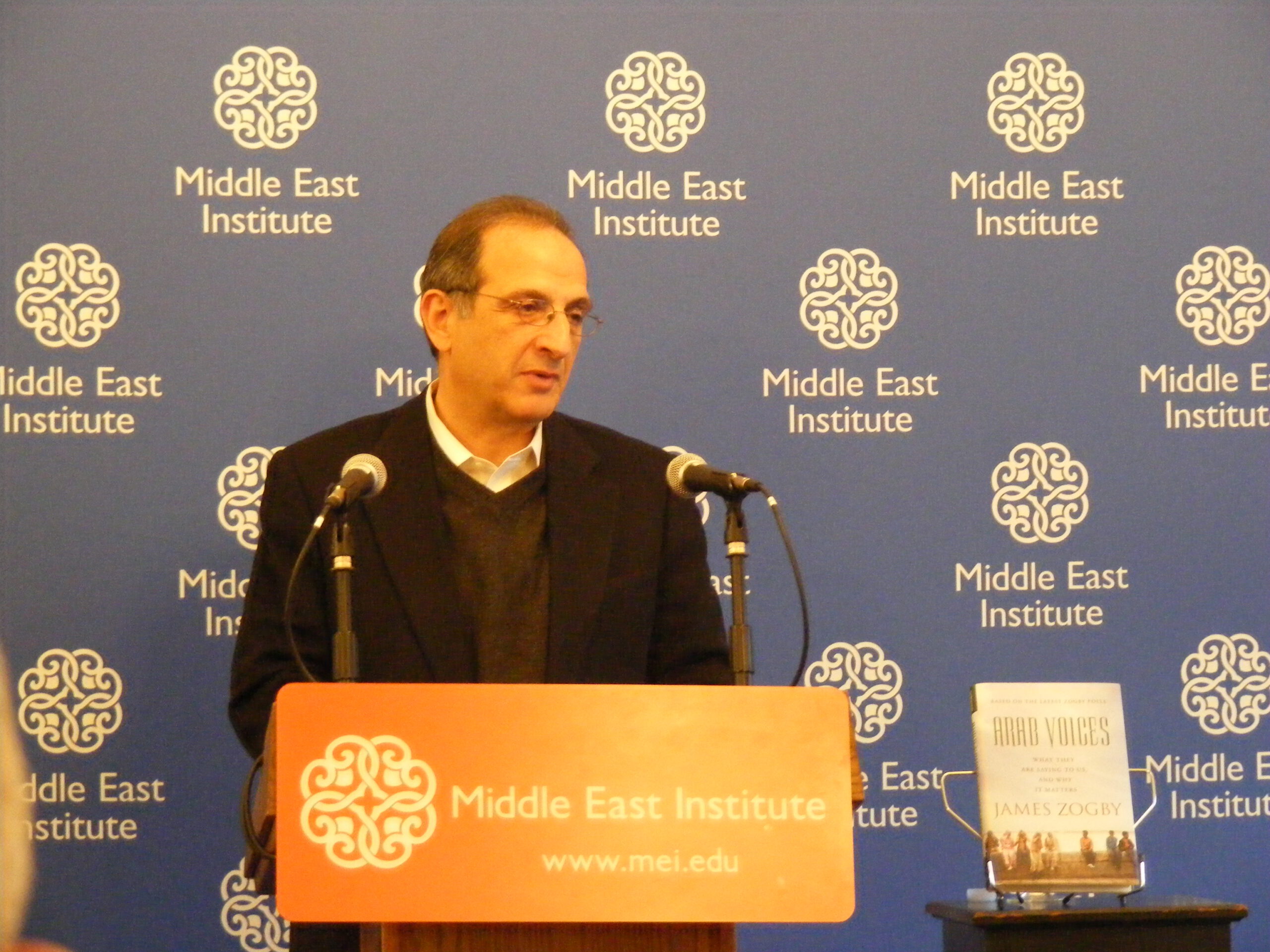
The Middle East Institute hosts a lecture and discussion with Mark N. Katz, examining the impact of the current and future US withdrawals from Iraq and Afghanistan on Islamic radicals. Katz argues that the US withdrawals from both countries will lead radicals to conclude they have defeated the US in the "War on Terror" and that US regional strength is on the decline. This, he argues, will spur Islamic radicals to seek further gains elsewhere.
Few question the desirability of finding a political resolution to the Afghan conflict or doubt Pakistan’s pivotal role. The growing divide of opinion in this country is over how best to achieve that outcome. One camp led by our military strategists insists that various political agreements are likely to result from accumulated military successes, sustained by Afghan governance reforms and economic improvements. Visible counterinsurgency gains are expected to gradually wean fighters away from the ranks of the insurgency.
This Commentary first appeared in McClatchy News on January 5, 2011.
The assassination of Salman Taseer, the governor of Punjab, Pakistan's largest province, has illustrated the increasingly chaotic environment in that country, which only promises to get worse in the new year. Weeks before his death, Taseer had the courage to say what his fellow politicians were unwilling to: that Pakistan's blasphemy law must be repealed in order for Pakistan to enter the community of modern nations.
The US and Libya: Normalization of a Stormy Relationship
*This article was first published in January 2011 by the Foreign Service Journal.
Relations between Libya and the U.S. have a turbulent history: War at the beginning of the 19th century; U.S. government support for Libyan independence after World War II; official and private-sector American engagement in the development of Libya’s oil wealth and human resources in the mid-20th century; Libyan terrorism and U.S. military retaliation in the 1980s; U.S.-engineered economic sanctions and isolation in the late 20th century; and restoration of diplomatic relations in 2006.
Iraq's Nobel No Show Suggests Democracy in the Balance
An earlier version of this Commentary first appeared in the American Interest on December 10, 2010
Iraq, the newest democracy in the Middle East, turned down an invitation to attend the December 10 investiture ceremony for the Chinese Nobel Peace Prize laureate Liu Xiaobo. It thus kept company with a litany of repressive governments that declined invitations to the ceremony, including Afghanistan, Cuba, Egypt, Iran, Kazakhstan, Morocco, Pakistan, Russia, Sudan, Saudi Arabia, Serbia, Tunisia and Venezuela.
Kān Yāmā Kān: Curriculum Development in the GCC – Adopting (Adapting) Models of Higher Education
Once upon a time in the land where the light of creation first shone, the fertile grounds around Baghdad nurtured the House of Wisdom.[1] Even as Europeans were looking for the light at the end of the Dark Ages, Caliph Haroon al-Rasheed and his son Caliph al-Mamoon had made Baghdad a center of learning. In Baghdad, scholars put words on “real” paper. They preserved Aristotle, Plato, Hippocrates, Euclid, Ptolemy, Pythagoras, and Brahmagupta and translated Greek, Persian, and Indian manuscripts.
Partnerships, Collaborations, and International Education in the UAE: The Question of Context and Relevancy
Education reform is essential for the continued social and educational development of the United Arab Emirates (UAE).[1] The country has grown considerably over the past decade, and opportunities for business and professional opportunities have expanded. Educational development has been deemed necessary for the citizens of the country to take advantage of such opportunities.
A New Paradigm of Educational Borrowing in the Gulf States: The Qatari Example
More than in any other world region, the Arab Gulf states are experiencing a “higher education boom” in terms of the quantity and quality of institutions and programs now available. Over the past two decades, the Gulf states have imported a Western, largely American, model of higher education to address inefficiencies in labor markets and invest in their economic futures, to meet national reform agendas, and in some cases, to function as profit-making ventures.
The oldest peer-reviewed publication dedicated to the study of the modern Middle East, MEI’s flagship journal covers politics, society, and culture in the region.