Trump’s Midterm Loss Opens a Window for Iran Diplomacy
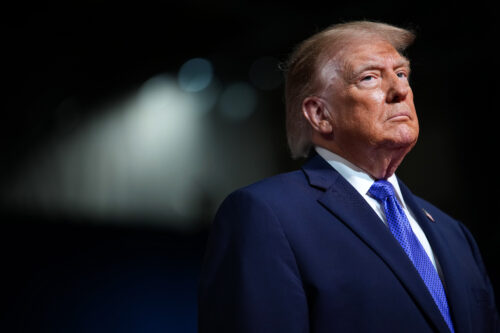
Eight months after launching the war alongside Israel, Trump has yet to explain what an American victory would look like or how much longer the United States must keep fighting to achieve it. While Americans opted to vote for the Democratic Party, which is preparing to challenge the logic of the war, Trump retains much executive power to stay in the war. Going forward, this means the political risks for him and his party will be high.
Brian is joined by His Excellency Talal Al Rahbi, the ambassador of the Sultanate of Oman to the United States of America, to discuss what it means to represent the “Switzerland of the Middle East” and the role of Oman’s quiet diplomacy. He also reflects on growing up during Oman’s transformation, his time spent in the United States, and why the two nations’ long-standing partnership matters today.
After decades of political setbacks, Iran’s former Revolutionary Guards commander has returned to the center of power. Is he an incidental beneficiary of war, or have observers underestimated him all along?
Cooperation under the Radar: The US-Saudi Arabian Joint Commission for Economic Cooperation (JECOR)
Economists and political analysts who write about Saudi Arabia often say that the most difficult part of their research is finding accurate statistics about the Kingdom. Population, food production, water resources, oil and gas reserves, industrial output — many kinds of data that are essential to sound planning and accurate evaluation cannot be taken at face value, especially if they are generated by Saudi government agencies.
The past 30 years of the Saudi-American relationship have seen highs of intense geopolitical cooperation and the lows of the post-September 11, 2001 period. What has tied those ups and downs together is the fluctuating relationship between both governments and the transnational Salafi Islamist movement. Both governments fostered the movement — domestically in Saudi Arabia and as an international force — during the Afghan jihad against the Soviet Union in the 1980s. Both have seen the movement shift from a tool of their foreign policies to a threat.
In various entries in his unpublished diaries, British Mesopotamian officer Harry St. John Philby, on special mission to central Arabia during 1917-1918, recorded the minutes of his many private “interviews” with Ibn Saud. He concluded that the newly re-emerging Wahhabi movement under Ibn Saud would, with British political and military support, effectively serve British military and political objectives in the Arabian Peninsula and beyond during the ongoing war and in its aftermath.
The United States and Saudi Arabia: Challenges Ahead
The Obama Administration confronts a vexing set of challenges across the greater Middle East, an area that stretches from Egypt in the west, Afghanistan and Pakistan in the east, Central Asia in the north and Yemen in the south. In the midst of this “arc of instability” sits Saudi Arabia, a long-standing partner whose relationship with the United States has been enduring but fraught.
Kuwait Looks towards the East: Relations with China
Originally posted September 2009
There is a growing tendency among the Gulf Cooperation Council (GCC) states to benefit from the favorable conditions in the rapidly growing economies of the East. As was amply demonstrated at a symposium organized by the Centre for Gulf and Arabian Peninsula Studies at Kuwait University in May 2009 on the “Reality of GCC-Asian Relationship — opportunities and challenges,” Kuwait exemplifies this trend.
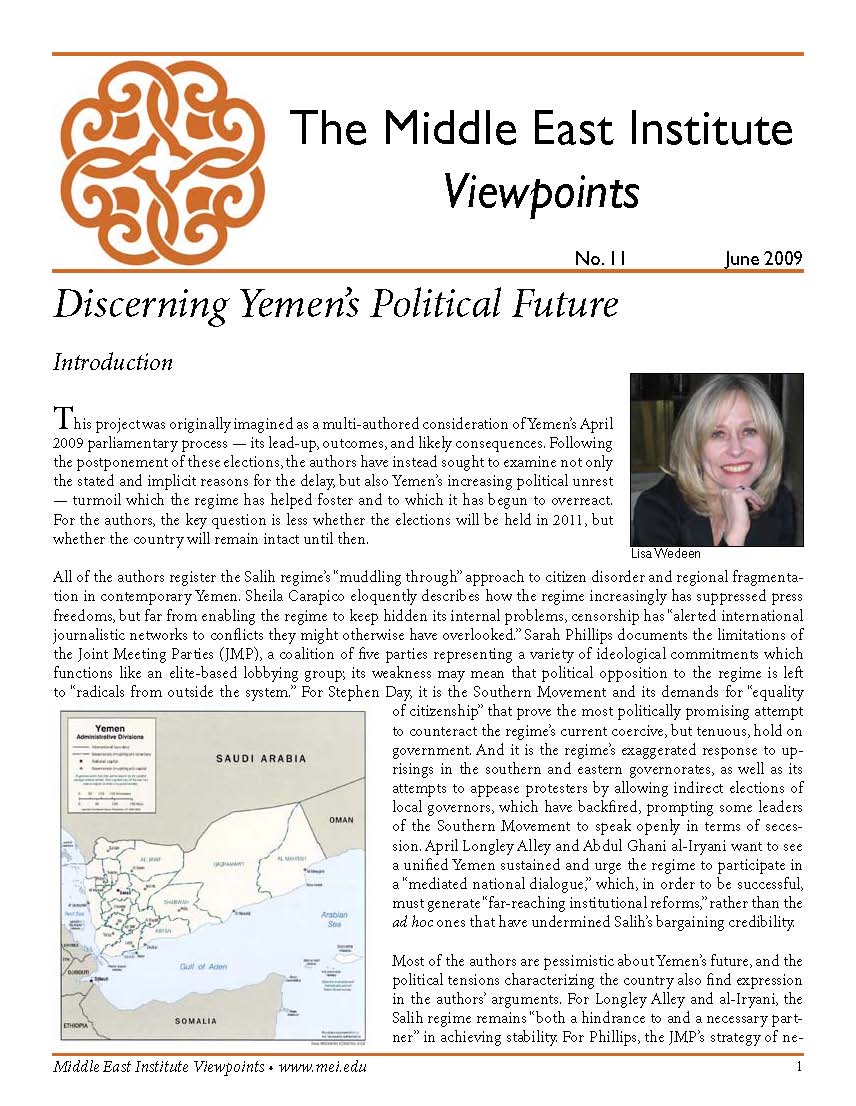
This project was originally imagined as a multi-authored consideration of Yemen’s April 2009 parliamentary process — its lead-up, outcomes, and likely consequences. Following the postponement of these elections, the authors have instead sought to examine not only the stated and implicit reasons for the delay, but also Yemen’s increasing political unrest — turmoil which the regime has helped foster and to which it has begun to overreact. For the authors, the key question is less whether the elections will be held in 2011, but whether the country will remain intact until then.
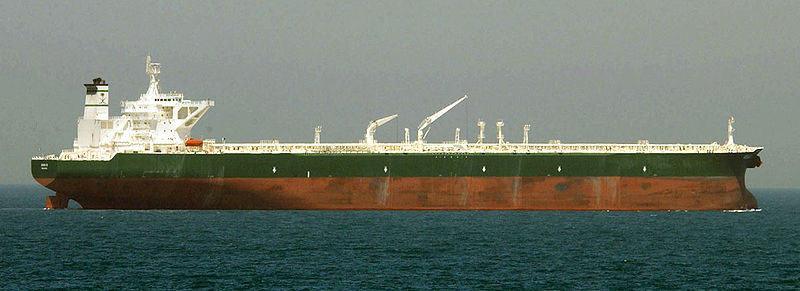
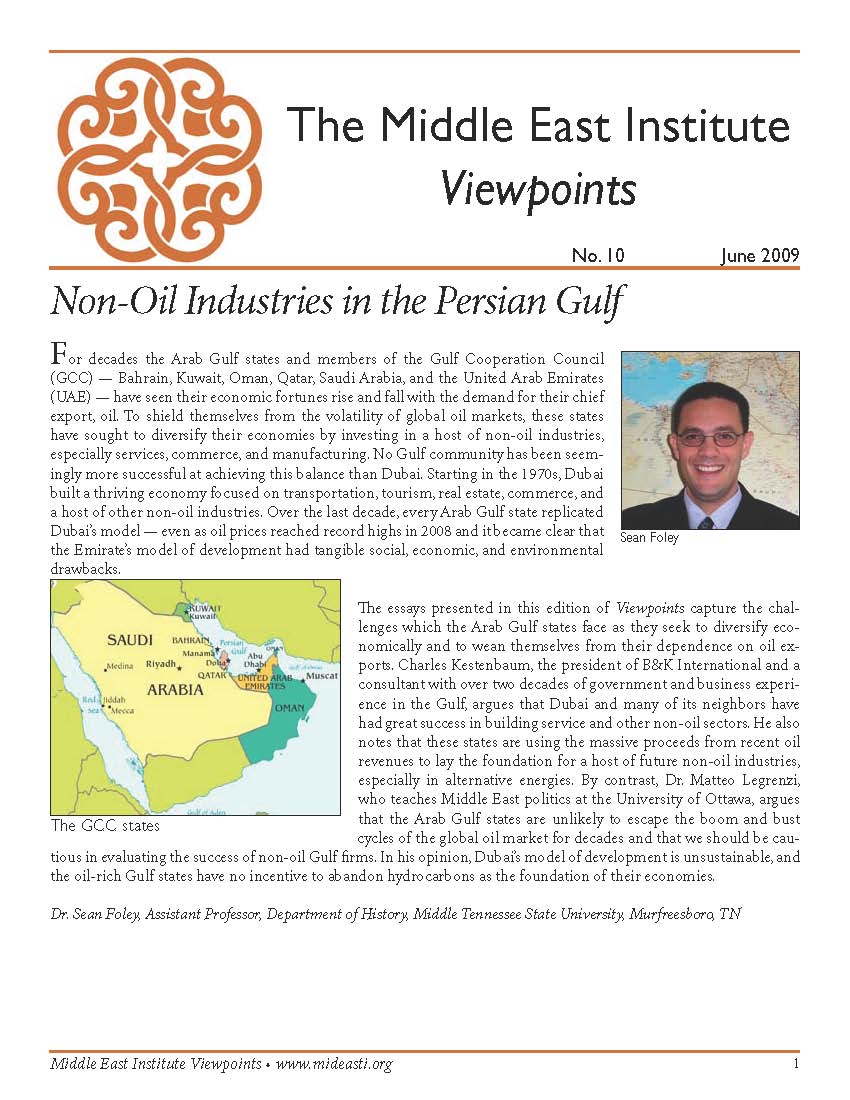
For decades the Arab Gulf states and members of the Gulf Cooperation Council (GCC) — Bahrain, Kuwait, Oman, Qatar, Saudi Arabia, and the United Arab Emirates (UAE) — have seen their economic fortunes rise and fall with the demand for their chief export, oil. To shield themselves from the volatility of global oil markets, these states have sought to diversify their economies by investing in a host of non-oil industries, especially services, commerce, and manufacturing.
The oldest peer-reviewed publication dedicated to the study of the modern Middle East, MEI’s flagship journal covers politics, society, and culture in the region.