Skip to Content
A Post-War Model for Verifying Iran’s Missile Arsenal
  • Report
  • A Post-War Model for Verifying Iran’s Missile Arsenal

    This study proposes a model for constraining and verifying Iran’s ballistic missile arsenal by employing a layered Strategic Verification Model with seven components: comprehensive baseline declarations; missile test and launch monitoring; intrusive inspections; quantitative and qualitative limits on missile capabilities; production controls, especially on solid-fuel manufacturing; a robust enforcement and compliance architecture; and regional confidence building measures.

    A New US-Iraq Relationship?
  • Analysis
  • A New US-Iraq Relationship?

    The US administration appears to have great expectations for Iraq’s new prime minister, Ali Falah al-Zaidi. But the expectations need to be tempered.

    June 25, 2026

    The Gulf Cannot Afford to Retreat from Lebanon
  • Analysis
  • The Gulf Cannot Afford to Retreat from Lebanon

    The 2026 Iran war has made Lebanon a core Gulf security concern, and Saudi Arabia, the UAE, and Qatar now have a narrow opportunity to curb Hizballah’s influence by leading reconstruction, strengthening Lebanese state institutions, and tying economic re-engagement to reform.

    June 25, 2026

    Featured Experts

    Filter by
    4448 Results
    Will Saudi Arabia and Iran Take Fight Into the Open?
  • Analysis
  • Will Saudi Arabia and Iran Take Fight Into the Open?

    Read the full article on CNN.

    Relations between Iran and Saudi Arabia have always been thorny, but rarely has the state of affairs been as venomous as it is today.

    Tehran and Riyadh each point to the other as the main reason for much of the turmoil in the Middle East. In its most recent incarnation, the Iranian-Saudi conflict by proxy has reached Yemen in a spiral that both sides portray as climatic.

    Is Iran Overstretched in Syria?
  • Analysis
  • Is Iran Overstretched in Syria?

    Read the full article on Foreign Policy.

    For the majority of Arabs, Syria symbolizes all that is wrong with Iranian influence in the Middle East. Since 2011, Tehran and its regional proxies have poured men, money, and weapons into Syria to prevent President Bashar al-Assad’s military defeat. In June 2013, Hezbollah’s intervention in the western city of Qusayr single-handedly turned the tide of the war in Assad’s favor.

    April 20, 2015

    Iraq's Leader Finds Friends in Washington, but Faces Battles at Home
  • Analysis
  • Iraq's Leader Finds Friends in Washington, but Faces Battles at Home

    This article was first published by NPR.

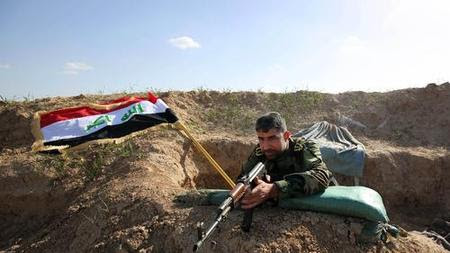
    When Iraqi Prime Minister Haider al-Abadi weighs the pros and cons of running such a fractured country, here’s the upside: He can count on five separate military groups supporting his battle against the self-declared Islamic State.

    The downside is that he has limited control of these groups, and of much of his country.

    April 17, 2015

    Kalaam-e-Arifaan: Poetry of Mystics and Sufis

    Kalaam-e-Arifaan: Poetry of Mystics and Sufis

    April 16 – January 1, 1970, April 16 - 6:00 PM – 12:00 AM
    January 1 - 6:00 PM – 12:00 AM

    The Oman Library at the Middle East Institute, 1761 N Street NW, Washington, District of Columbia 20036

    Turkey’s Balancing Act between Iran and Saudi Arabia
  • Analysis
  • Turkey’s Balancing Act between Iran and Saudi Arabia

    Turkish Foreign Minister Mevlut Cavusoglu, reiterating Turkey’s support for a diplomatic solution over the use of force regarding Iran’s nuclear program, welcomed the interim deal between Tehran and the world powers. Turkey’s slowing economy may be among the first to reap economic benefits from the deal, and Ankara’s longtime quest to become an energy hub could finally be realized. Yet the deal could also pose a challenge to Ankara’s Iraq and Syria policies and its recent rapprochement with the Saudis.

    The Middle East in China’s Silk Road Visions: Business as Usual?
    Middle East Institute
  • Analysis
  • The Middle East in China’s Silk Road Visions: Business as Usual?

    Chinese President Xi Jinping’s 2013 proclamation of the Silk Road Economic Belt (“One Belt, One Road”) and Twenty-First Century Maritime Silk Road initiatives provided an overarching framework for understanding China’s strategic priorities over the coming decade. The land-based and sea-based Silk Roads will link Asia and Europe via the Middle East and Central Asia through a series of transcontinental railroads, pipelines, ports, airports, and other infrastructure projects.

    April 14, 2015

    The Hashd: Redrawing the Military and Political Map of Iraq
  • Analysis
  • The Hashd: Redrawing the Military and Political Map of Iraq

    Al-Hashd al-Sha‘bi—also known as the Popular Mobilization Units, the Shi‘i militias, or simply “the Hashd”—has joined Iraqi security forces and the Kurdish peshmerga to spearhead Iraq’s ongoing offensive against ISIS. The coordinated assault has scored significant successes in various parts of Diyala, Babil, and Salah al-Din, including the recapture of Tikrit. With this string of recent triumphs, the Hashd has provided a potent rallying point for a reinvigorated sense of Iraqi nationalism, albeit one with distinctly Shi‘i overtones.

    April 9, 2015

    Camp David, Dayton, Lausanne
  • Analysis
  • Camp David, Dayton, Lausanne

    Read the full article on LobeLog.

    In the past four decades, the greatest achievements of American diplomacy were probably the Camp David Accords and the Dayton Agreement. Camp David led to the end of the perpetual state of war between Israel and Egypt. Dayton ended the carnage of the war in the Balkans.

    April 9, 2015

    Ambassador Lukman Faily on the Future of Iraq
    Middle East Institute

    Ambassador Lukman Faily on the Future of Iraq

    April 7 – January 1, 1970, April 7 - 3:00 PM – 12:00 AM
    January 1 - 3:00 PM – 12:00 AM

    Johns Hopkins School of Advanced International Studies , Rome Auditorium, 1619 Massachusetts Ave, NW, Washington, District of Columbia 20036

    Collection Spotlight: See No Evil
    Middle East Institute
  • Analysis
  • Collection Spotlight: See No Evil

    Robert Baer’s See No Evil presents a firsthand account of the life of a CIA case officer in the war on terror. From recruiting agents in the volatile Bekaa Valley in Lebanon to wiretapping Abu Nidal students in France, Baer provides a fascinating description of his CIA service.

    April 6, 2015

    What Iranians Are Saying about the Nuke Deal
  • Analysis
  • What Iranians Are Saying about the Nuke Deal

    Read full article at The National Interest.

    Iran’s foreign minister, Javad Zarif, was on his way back to Tehran from Lausanne as accolades began to pile up. At the airport, he received a rapturous reception, as if the Team Melli, Iran’s national soccer team, had beat Germany.

    Will the Nuclear Deal Help or Harm Regional Stability?
  • Analysis
  • Will the Nuclear Deal Help or Harm Regional Stability?

    As the United States and other world powers pursued nuclear negotiations with Iran over the past 18 months, the Middle East descended into one of the worst periods of chaos and proxy conflict in its modern history, with Iran engaged aggressively in many of the region’s hotspots. Most leaders in the region fear that a nuclear deal with Iran will abet its aggressive interventionism and lead to further geopolitical and sectarian confrontation. But could the agreement—if it is completed—also create conditions for rebuilding stability?

    April 3, 2015

    Misadventures in Violence in Yemen: Operation Resolute Storm
  • Analysis
  • Misadventures in Violence in Yemen: Operation Resolute Storm

    Saudi Arabia’s military intervention in Yemen is a risky move motivated by various Saudi objectives in Yemen and in the region. The immediate objective is to save President Abdu Rabbu Mansour Hadi from Ansar Allah’s advance on Aden and reinstall him as head of state by forcing Ansar Allah to make major political concessions. But the operation also marks the increasing willingness of the Saudis to use their own military rather than rely on the United States.

    April 2, 2015

    Read the Middle East Journal

    The oldest peer-reviewed publication dedicated to the study of the modern Middle East, MEI’s flagship journal covers politics, society, and culture in the region.