The Kurdistan Region of Iraq (KRI), also known as Iraqi Kurdistan, is a semi-autonomous region in northeastern Iraq with a population of approximately 6.5 million. The KRI’s contemporary politics are rooted in a century of Kurdish efforts to achieve self-rule.
Reflections on a Diplomatic Career in the Middle East: A Conversation With Ambassador Yael Lempert
Brian is joined by Amb. (ret.) Yael Lempert, Vice President for Outreach at MEI, to discuss her career in diplomacy and the importance of US diplomatic efforts abroad. She shares stories from postings across the Middle East in Baghdad, Cairo, Tripoli, Jerusalem, and Amman and examines how her personal and professional experiences shaped her approach to the work. Together, Brian and Yael discuss the realities of life in the Foreign Service, the core tenets of American diplomacy, and why it matters in today’s Middle East.
It has become a commonplace for Americans to describe our current war with Iran as stuck in a kind of limbo, neither full war nor real peace. We’re not the only ones. Iraq finds itself caught in a limbo of its own, between America and Iran, between the tolerable and the intolerable, between progress and relapse.
Iran-Backed Badr Organization Calls on U.S. Troops to Leave Iraq
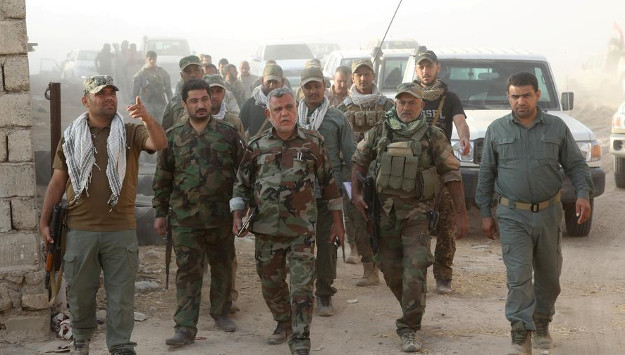
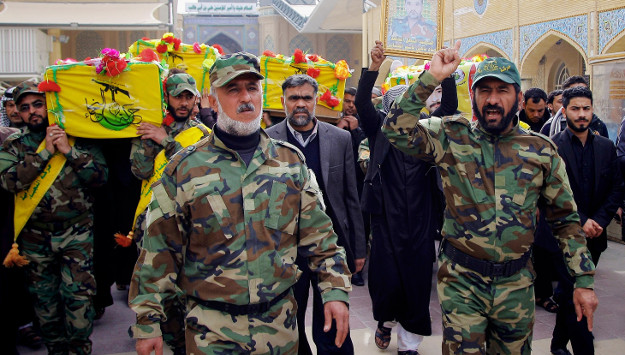
A prominent Iranian-backed commander of Iraq’s Popular Mobilization Force (P.M.F.) has called for the withdrawal of American troops from the country following the defeat of the Islamic State. “We will adopt a parliamentary decision to pull out all American troops” Hadi al-Ameri, the head of the Badr Organization, said in an exclusive interview with Iran’s Press TV. He emphasized that the P.M.F. will not allow a single U.S. soldier to remain in Iraq now that ISIS is being driven out of its last pockets in the country.
Syrian, Iranian-Led Forces Capture Abu Kamal, Threaten to Confront U.S. and S.D.F.
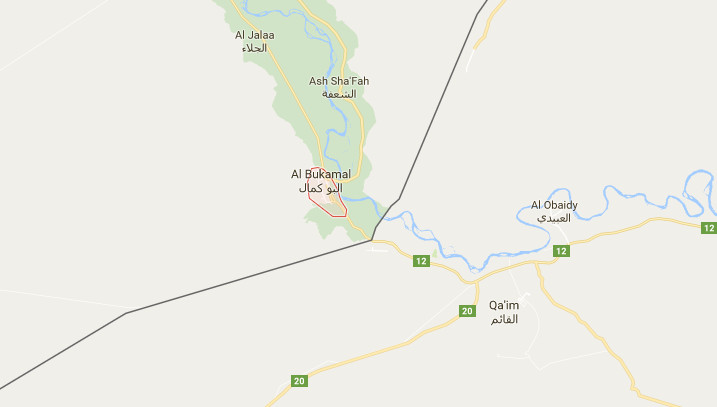
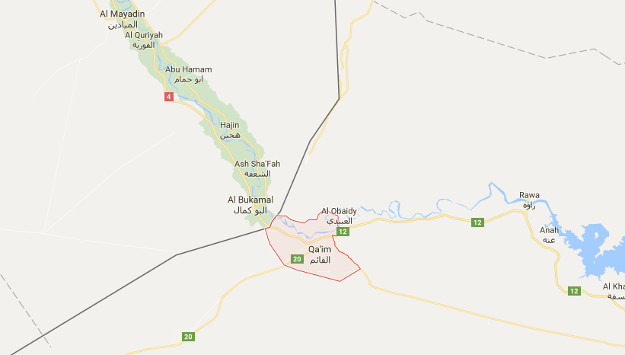
The Syrian Army and Iranian-led forces have captured Abu Kamal, a strategic border town in eastern Syria and the last major ISIS stronghold in the country, Iranian and Arab media report. While the physical and military defeat of the Islamic State is good news, the rapid territorial gains by pro-Syrian regime forces, particularly in the oil-rich eastern province of Deir Ezzor, have increased the risk of a potential confrontation with U.S.-backed Syrian opposition forces that have also captured strategic areas from ISIS in northern and eastern Syria.
Harakat al-Nujaba Reacts to U.S. Move to Sanction Iran-Backed Iraqi Militias
Harakat al-Nujaba, a militia unit within Iraq’s Popular Mobilization Forces (P.M.F.), lashed out at the United States for seeking to impose sanctions against the group and other Iranian-sponsored militia organizations fighting in Iraq and Syria. On November 3, a bill was introduced the U.S. House of Representatives, entitled “Iranian Proxies Terrorist Sanctions Act of 2017,” which, if passed, will impose terrorism-related sanctions with respect to Asa’ib Ahl al-Haq and Harakat al-Nujaba groups.
Mohammed bin Salman’s High-Wire Act | Monday Briefing
In this week’s Monday Briefing, MEI experts Gerald Feierstein, Paul Salem, Ruba Husari, Amal Kandeel, and Gonul Tol provide analysis on recent and upcoming events including the arrests of numerous prominent Saudi government officials and leading businessmen on charges of corruption, Lebanese Prime Minister Hariri’s resignation, oil prices in the Middle East hitting new highs, the threat to MENA due to rising temperature levels in the region, and the Turkish prime minister’s visit to Washington.
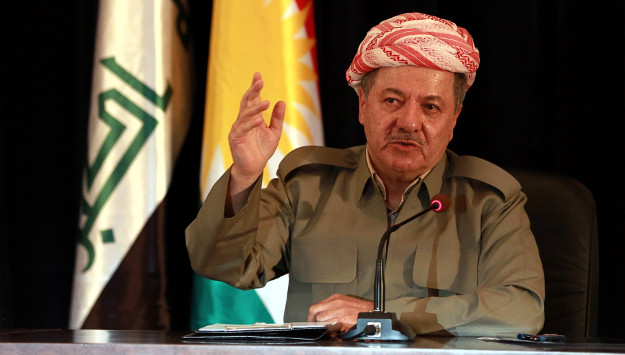
The sudden resignation of Massoud Barzani as president of the Kurdish Region of Iraq (K.R.I.) casts into high relief the challenges that confront U.S. policy in the region today. Focused military action has set ISIS on its heels. Chairman of the Joint Chiefs of Staff General Joseph Dunford, U.S.
The NYC Terror Attack and U.S. Counterterrorism Policy
November 2, 2017 – Charles Lister, director of MEI’s Extremism and Counterterrorism program, discusses what the recent terror attack in lower Manhattan, and the suspect’s claimed connection to ISIS, means for U.S. security and counterterrorism policy.
Iranian-Backed Militias Trying to Link up along Iraqi-Syrian Border
A leader of the Iraqi Popular Mobilization Forces (P.M.F.) announced today that the paramilitary forces will participate in the military operation to capture the town of al-Qaim in western Anbar Province near the Syrian border. He added that Islamic State fighters are fleeing into Syria. According to Iran’s Fars News Agency, the P.M.F. and Iraqi security forces are 13 kilometers away from the center of al-Qaim.
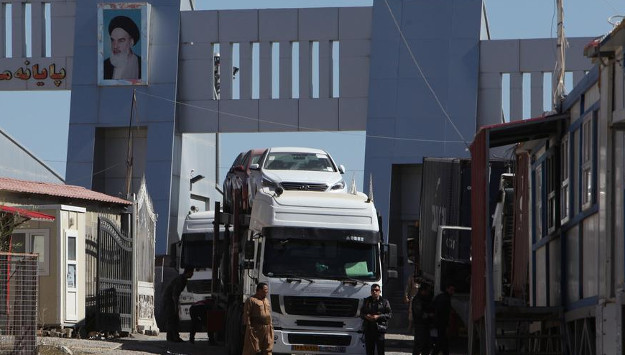
Iran Will Reopen All Border Crossings with Iraqi Kurdistan Region
The chief of staff of Iranian Armed Forces said on Monday that the country will reopen all its border crossings with the Iraqi Kurdistan region, Iranian media reported.
Akram al-Kaabi, the leader of Iranian-sponsored Iraqi militia group Harakat al-Nujaba, visited prominent Lebanese Shiite cleric Sheikh Afif al-Nabulsi to discuss regional affairs, Iranian and
Barzani Stands Down as K.R.G. President | Monday Briefing
In this week’s Monday Briefing, MEI experts Randa Slim, Yousef Munayyer, Charles Lister, Charles Schmitz, and Alex Vatanka provide analysis on recent and upcoming events including President Barzani’s decision to step down from the KRG, the Trump administation’s silent response to Israeli settlement expansion in Jerusalem , the Armed Syrian Opposition’s attendance of the seventh round of Astana Talks, Saudi foreign minister blaming Iran for lack of progress in peace talks in Yemen, and President Rouhani’s failure to advance the reform cause in Iran.
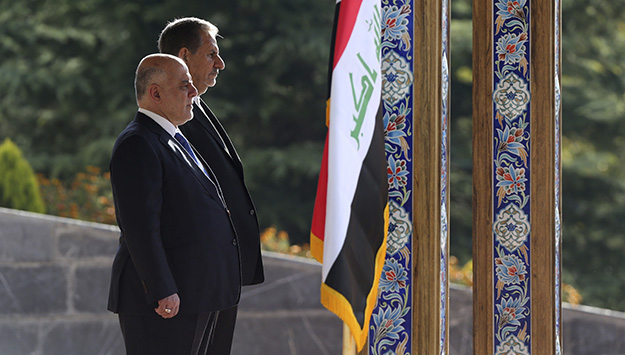
Iraqi Prime Minister Haider al-Abadi visited Turkey on Wednesday to discuss potential joint steps against northern Iraq’s Kurdistan Regional Government (K.R.G.) following last month’s independence referendum. Ankara is hoping to influence Iraqi politics by cultivating close ties to Baghdad, but the newly forged Turkish-Iraqi alliance is unlikely to hold, leaving Turkey isolated in the post-referendum Iraq.
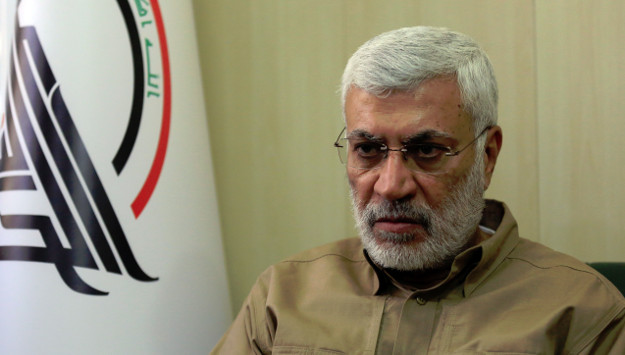
P.M.F. Spokesman: We’ll Hold U.S. Responsible for Calling Muhandis “Terrorist”
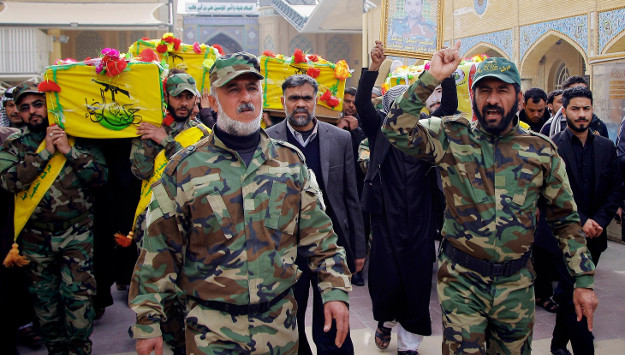
Leaders of Iraqi Popular Mobilization Forces (P.M.F.) rushed to defend Abu Mahdi al-Muhandis, the paramilitary forces’ chief operational commander, after U.S. State Department Spokesperson Heather Nauert called Muhandis a “terrorist” at a press briefing on Thursday. “These remarks indicate a direct threat to Muhandis’ life and we hold America responsible for any attempt or harm to the life of the deputy head of the Popular Mobilization Forces,” P.M.F.
The oldest peer-reviewed publication dedicated to the study of the modern Middle East, MEI’s flagship journal covers politics, society, and culture in the region.