Skip to Content

Iraq

A New US-Iraq Relationship?
  • Analysis
  • A New US-Iraq Relationship?

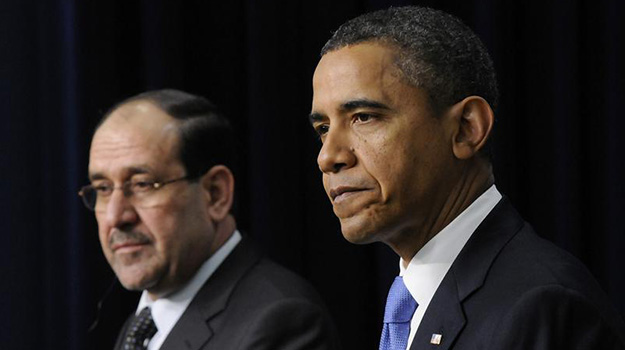
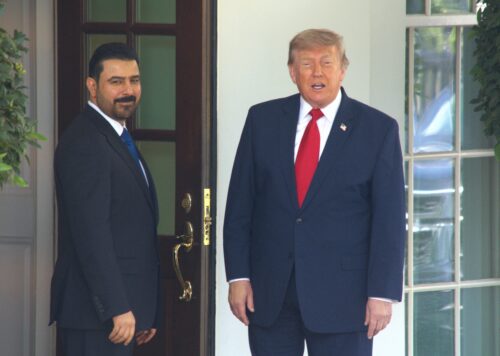
    The US administration appears to have great expectations for Iraq’s new prime minister, Ali Falah al-Zaidi. But the expectations need to be tempered.

    June 25, 2026

    Attacked by All Sides Iraq’s New Government Faces Old Problems
  • Podcast
  • Attacked by All Sides Iraq’s New Government Faces Old Problems

    After months of deadlock following the November 2025 elections, Iraq’s parliament approved a new government under Prime Minister Ali al-Zaidi on May 14, 2026 — just as the country has become a battleground in the US-Israel-Iran war. Zaidi inherits a daunting brief: reviving a struggling economy, reining in armed factions, and steering Iraq through a perilous regional landscape. Dr. Renad Mansour, deputy director of the Middle East and North Africa Programme and director of the Iraq Initiative at Chatham House, joins host Alistair Taylor to discuss the war’s impact on Iraq — from Iran’s militia networks to the surge of attacks on the Kurdistan region — and how it’s reshaping Baghdad’s ties with Tehran and Washington.

    June 11, 2026

    Iraq in Between Iran and the United States
  • Podcast
  • Iraq in Between Iran and the United States

    Hosts Alistair Taylor and Matthew Czekaj are joined by MEI Distinguished Diplomatic Fellow Amb. (ret.) Robert S. Ford to examine what is at stake for Iraq in the Iran war. The only country to have been hit by both sides, Iraq is caught in the middle of a regional conflict, with the local Iranian-backed Popular Mobilization Forces (PMF) carrying out attacks on American interests and personnel — and the US responding. This escalation comes at a period of internal political transition in Iraq, which has been locked in negotiations to form a new government since the November 2025 elections. Ford, who served as Deputy and later Acting Ambassador in Baghdad from 2008 until 2010, unpacks how Iraq is navigating the current moment, how the Kurdistan region fits into this equation, and what this all means for the future of US-Iraqi relations.

    April 9, 2026

    Featured Experts

    Filter by
    925 Results
    Iraq After the Elections

    Iraq After the Elections

    May 13 – January 1, 1970, May 13 - 10:00 AM – 12:00 AM
    January 1 - 10:00 AM – 12:00 AM

    The Rome Auditorium at Johns Hopkins University - SAIS, 1619 Massachusetts Avenue, NW, Washington, District of Columbia 20036

    Five Arab Elections in Search of a Democratic Transition
    Middle East Institute
  • Analysis
  • Five Arab Elections in Search of a Democratic Transition


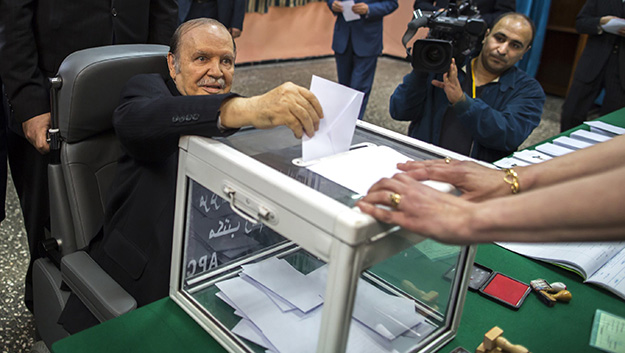
    Algerian President Abdelaziz Bouteflika casts his ballot on April 17.

    In the current two months between mid-April and early June, five Arab countries—Algeria, Lebanon, Iraq, Egypt, and even war-torn Syria—are holding key elections, with little sign that any is moving in the direction of meaningful democratic transition.

    May 9, 2014

    U.S. Policy and the Iraq Elections
  • Analysis
  • U.S. Policy and the Iraq Elections

    With Iraq’s elections scheduled for April 30, the United States should be acutely aware of its reduced but remaining influence in the country. Even in 2006 and 2010, when more than 100,000 U.S. soldiers were present in Iraq, it was largely Iran that had the final say on the premierships, if not the exact shape of the cabinets that were formed after the elections.

    April 28, 2014

    Iraq’s Make Up or Break Up Elections
  • Analysis
  • Iraq’s Make Up or Break Up Elections

    Two years after the U.S. withdrawal and four years into Prime Minister Nuri al-Maliki’s second term, Iraq is on the brink of breaking apart. The upcoming parliamentary elections scheduled for April 30, and the political process of government formation that will follow, present an opportunity to push for a return to more inclusive politics in Iraq. Unless Maliki is replaced or drastically changes his policies, these might be the last elections in a nominally united Iraq.

    April 25, 2014

    Erbil Meeting Report
  • Analysis
  • Erbil Meeting Report

    The Middle East Dialogue is a regional Track II forum that meets twice a year and brings together current and former officials and senior experts from the Middle East, the United States, Russia, China, and the EU to discuss emerging political & security trends in the region.  What follows is a report from the latest meeting of the Dialogue in Erbil, Iraq, on March 30-31, 2014, led by MEI’s Director of Track II Dialogues Randa Slim and VP for Policy and Research Paul Salem.

    April 21, 2014

    Comments by KRG President Massoud Barzani at Middle East Dialogue in Erbil
  • Analysis
  • Comments by KRG President Massoud Barzani at Middle East Dialogue in Erbil

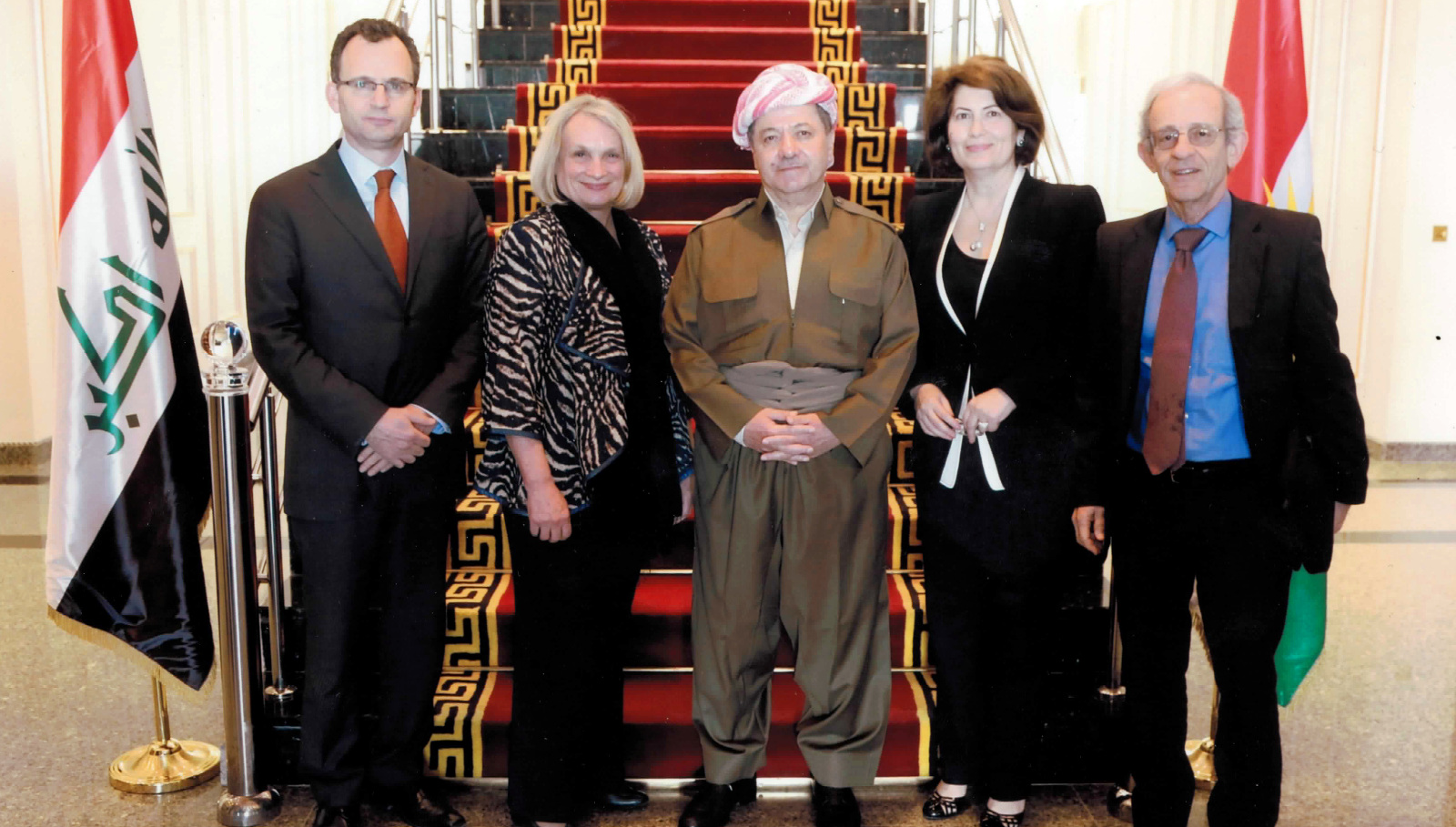
    The Middle East Dialogue is a Track II forum focusing on emerging political and security trends in the region that meets twice a year, bringing together current and former officials and senior experts from Egypt, Saudi Arabia, the UAE, Iraq, Iran, Turkey, Jordan, Lebanon, Kuwait, the United States, Russia, China, and the EU. Members of the delegation, led by The Middle East Institute’s president, Wendy Chamberlin, met March 31 with Kurdistan Regional Government (KRG) President Massoud Barzani in Erbil, the capital of Iraqi Kurdistan.

    April 9, 2014

    Erbil, Baghdad, and Implications of the Oil Dispute
  • Analysis
  • Erbil, Baghdad, and Implications of the Oil Dispute

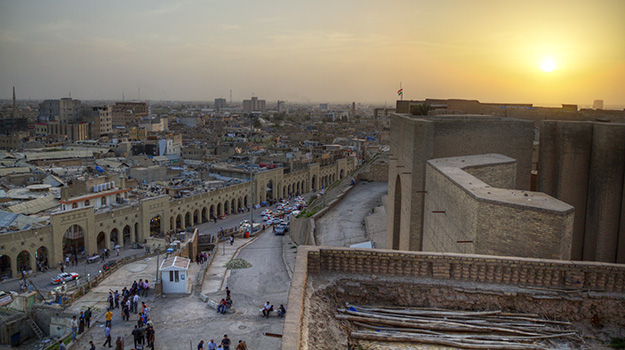
    Erbil—the capital of Iraqi Kurdistan—was once a chaotic and dusty backwater. Today, it is well on its way to becoming an attractive and orderly commercial and government center. A decade ago there were virtually no trees, as they had all been cut down for firewood to heat Kurdish hearths during the 1990s wars among Kurds and between Kurds and Saddam Hussein’s army. A magnificent wooded park now graces the mile or so from the high-rise hotel district to the Kurdistan Regional Government’s parliament and offices.

    April 8, 2014

    De-Ba`thification in Iraq: How Not to Pursue Transitional Justice
    Middle East Institute
  • Analysis
  • De-Ba`thification in Iraq: How Not to Pursue Transitional Justice

    The de-Ba`thification process in Iraq has fallen profoundly short as a transitional justice mechanism over the past decade. Poorly conceived, badly implemented, and controlled by hard-liners, the process has been so highly politicized that it has eroded the rule of law and intensified the sectarian tensions that are at the heart of the violence haunting Iraq.

    January 30, 2014

    Qanats and Water Cooperation for a Sustainable Future
    Middle East Institute
  • Analysis
  • Qanats and Water Cooperation for a Sustainable Future

    This essay is part of the Middle East-Asia Project (MAP) series on “Harvesting Water and Harnessing Cooperation: Qanat Systems in the Middle East and Asia.” 

    January 19, 2014

    Iraq: Reversing the Reversal
  • Analysis
  • Iraq: Reversing the Reversal

    Since the departure of U.S. ground forces from Iraq in 2011 in the wake of failed negotiations to extend the 2008 Status of Forces Agreement, the security situation in Iraq has steadily declined. To many, the situation was predictable, as the absence of a residual U.S. force to mature the Iraqi security forces and moderate long-standing political tensions among the sects led to a security vacuum filled by extremists and terrorists. To others, 10 years of investment and over 4,000 troops lost was enough, and it was time for the Iraqis to resolve their own internal conflicts.

    January 10, 2014

    Iraq’s Tangled Foreign Interests and Relations
    Middle East Institute
  • Analysis
  • Iraq’s Tangled Foreign Interests and Relations

    The following is an excerpt from “Iraq’s Tangled Foreign Interests and Relations,” written by MEI Vice President Paul Salem and published by the Carnegie Middle East Center on December 24, 2013.  Click here to view the full report.

    January 6, 2014

    Read the Middle East Journal

    The oldest peer-reviewed publication dedicated to the study of the modern Middle East, MEI’s flagship journal covers politics, society, and culture in the region.