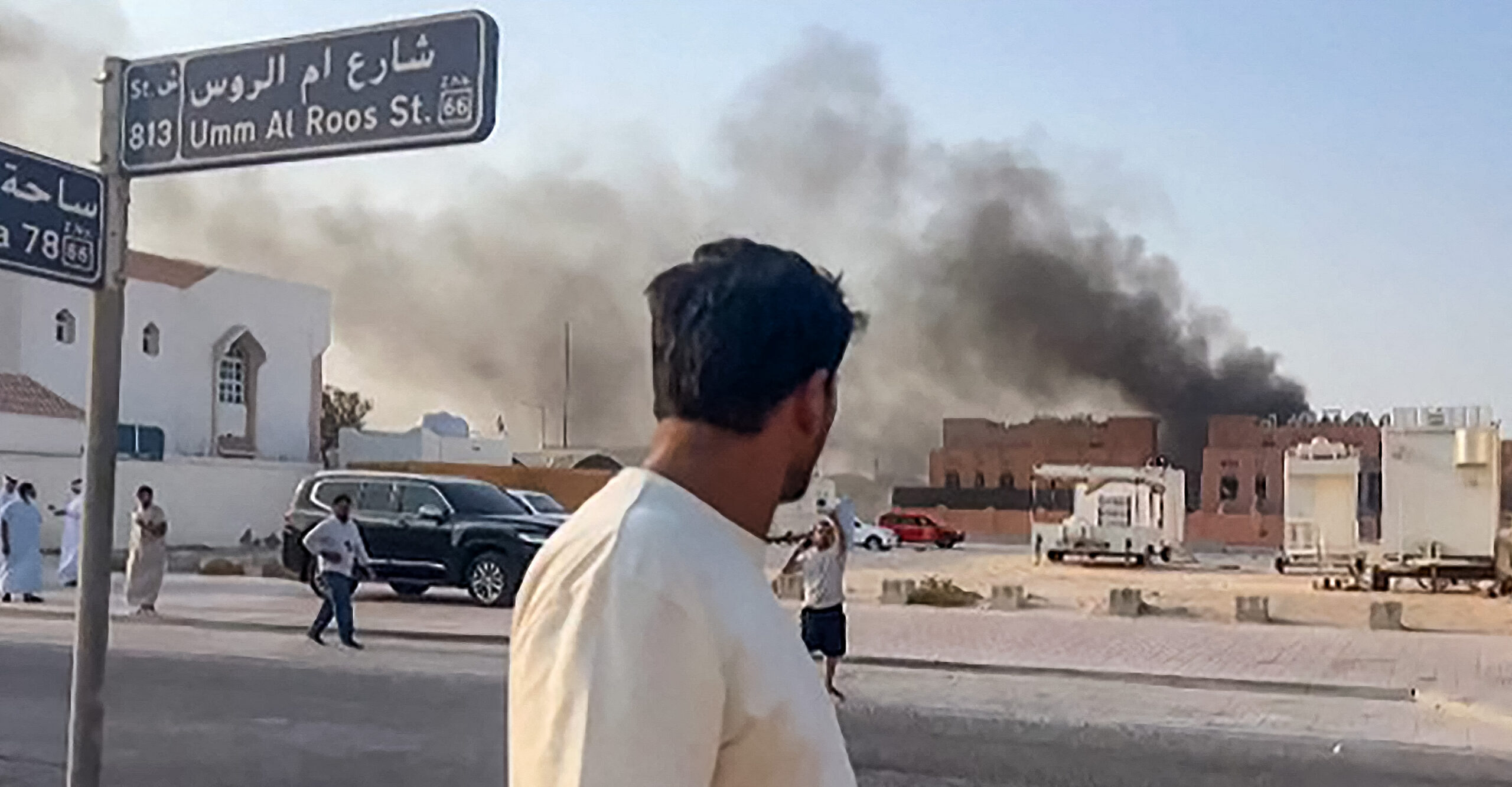
After the US-Israel-Iran war — and the strikes that followed the cease-fire — the Gulf states find themselves dangerously exposed. Host Alistair Taylor is joined by MEI Associate Fellow Gregory Gause to discuss the war’s impact on the Gulf, their partnership with the United States, and whether the turmoil of recent months will push Gulf leaders to reassess their alliances and international engagement.
From the Middle East to West Asia: Redefining America’s Global Strategy
MEI Senior Fellow Mohammed Soliman joins hosts Alistair Taylor and Matthew Czekaj to discuss his new book, West Asia: A New American Grand Strategy in the Middle East. The book argues that it is time for the United States to move decisively away from nation-building and focus instead on order-building, outlining a framework for a new regional order that links Europe to the Indo-Pacific. Soliman also shares how he conceived of the core ideas behind his book and explains why his thesis is especially relevant in today’s geopolitical, economic, and technological landscape.
Israel’s Doha strike could further destabilize region, undermine US security partnerships
The reverberations of Israel’s strike on the Hamas negotiating team in Doha yesterday are still rippling across the globe and will continue to for the foreseeable future. Its ramifications are profound and will alter the geopolitical landscape not just in the Middle East but likely on a global scale.
A New Paradigm of Educational Borrowing in the Gulf States: The Qatari Example
More than in any other world region, the Arab Gulf states are experiencing a “higher education boom” in terms of the quantity and quality of institutions and programs now available. Over the past two decades, the Gulf states have imported a Western, largely American, model of higher education to address inefficiencies in labor markets and invest in their economic futures, to meet national reform agendas, and in some cases, to function as profit-making ventures.
Over the past decade, migration to the wealthy states of the Arabian Peninsula has emerged as an increasingly central facet of scholarly attention to the region. This attention has resulted in the exponential expansion of our collective knowledge, and the near future promises even more nuanced and microcosmic analyses as recent and current fieldwork in the region bears fruit. Nevertheless, there has been little discussion of the “labor camps” in which many of the unskilled migrants dwell during their sojourn in the Gulf states.
The oldest peer-reviewed publication dedicated to the study of the modern Middle East, MEI’s flagship journal covers politics, society, and culture in the region.