Yemen: The Houthis’ Role in the Next Evolution of the Axis of Resistance
The outbreak of the war with Iran demonstrated the strategic value of maritime chokepoints in the Islamic Republic’s confrontation with the United States. But as Tehran’s strategy of using the Strait of Hormuz to pressure Washington seems to be backfiring, Iran is working with the Houthis to strengthen its leverage over another strategic chokepoint: the Bab el-Mandeb. The recent escalation in Yemen should be viewed within this context.
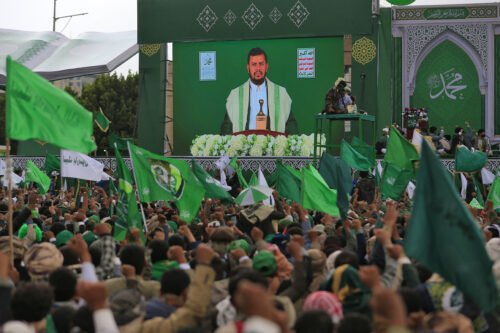
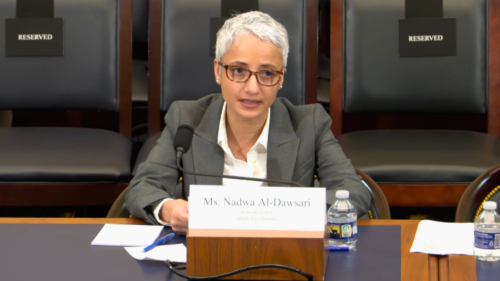
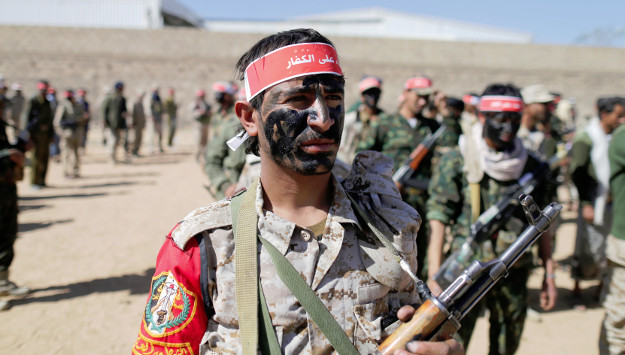
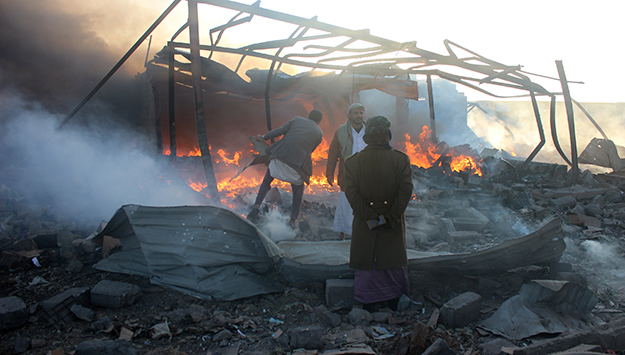
Over the past several weeks, the Houthis have seized the port city of Mokha, Yemen’s western coastline, and several islands in the Bab el-Mandeb Strait, and they are now massing around Marib and Taiz in the first major frontline shift since 2022. MEI Associate Fellow Nadwa Al-Dawsari joins host Matthew Czekaj to unpack the latest developments. Together, they discuss what has allowed the Houthis to advance against Yemeni government forces, the role the militant group plays in Iran’s regional strategy, and what it will take to contain the threat.
Can the Hodeidah offensive open the door to dialogue?
With the Saudi-led coalition’s offensive operations against the strategic port and city of Hodeidah stalled, eyes are now on UN Special Envoy Martin Griffiths as he attempts to negotiate a political resolution. Fatima al-Asrar, senior analyst at the Arabia Foundation, and Sama’a al-Hamdani, director of the Yemen Cultural Institute for Heritage and the Arts, join guest host Gerald Feierstein to assess the state of the four-year-old Yemen conflict and its impact on the Yemeni people.
There are promising signs that the Saudi-backed coalition in Yemen’s assault on the port of Hodeida is opening a window of opportunity for a return to the political process. After a year of stalling, the Houthis have reportedly expressed a willingness to hand over operation of the port to a neutral third party, most likely the U.N. itself. Meanwhile, U.N.
The battle for Hodeida and the humanitarian crisis in Yemen
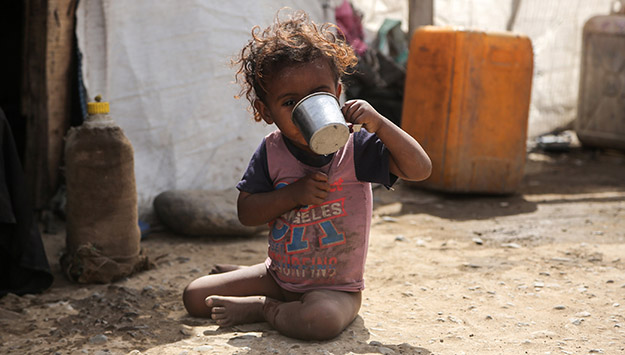
Aid groups are warning that a major offensive underway to capture the strategic port of Hodeida could make Yemen’s humanitarian crisis even worse. Basma Alloush (Norwegian Refugee Council), Farea Al-Muslimi (Sana’a Center for Strategic Studies), and Gerald Feierstein (MEI), join host Paul Salem to assess the situation.
In a region beset with conflicts, Oman has served as a valued intermediary in foreign relations, including as a facilitator in U.S.-Iranian contacts that led to the Iran nuclear deal. How is it managing its delicate diplomatic balancing act as it works to mediate the Yemen civil war and the dispute between Qatar and other GCC states? Sayyid Badr bin Hamad al-Busaidi, secretary general of Oman’s ministry of foreign affairs, joins guest host Gerald Feierstein to discuss.
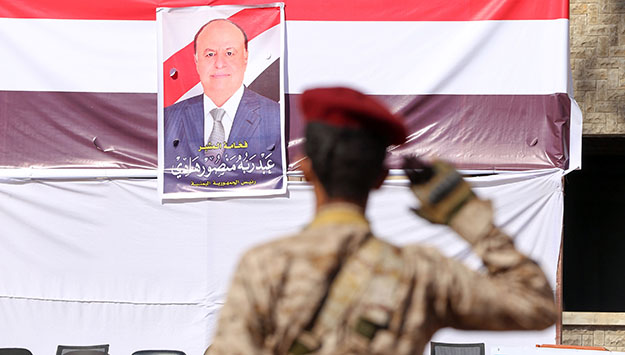
A ray of hope for Yemen finally appeared on Apr. 17 when Martin Griffiths, the new U.N. special envoy to Yemen, announced that he will put in place a framework for new talks within two months. However, a string of resignations and revelations in the Yemeni government raises questions about Hadi’s leadership of the anti-Houthi forces.
Iran’s regional allies threaten Saudi Arabia and US after Houthi leader’s death
Iran’s regional militia allies have vowed retaliation for the death of Houthi leader Saleh al-Sammad in Yemen, the Iranian media reported. The Houthi rebels as well as Iran’s regional militia proxies said they would hold not only Saudi Arabia but also the United States accountable for the killing of al-Sammad. The Iraqi Hezbollah said the Houthi leader’s assassination will open a new chapter in the fight against Saudi Arabia, which it said is “mired in the Yemeni quagmire.” It also accused Washington of complicity.
In this week’s Monday Briefing, MEI experts Gonul Tol, Paul Salem, Nathan Stock, Alex Vatanka, Gerald Feierstein, and Marvin G. Weinbaum provide analysis on recent and upcoming events including upcoming snap elections in Turkey, Lebanon’s Free Patriotic Movement party, protests in Gaza, the future of the Iran nuclear deal, Yemeni peace talks, and the ISKP attack on Shiite Hazaras.
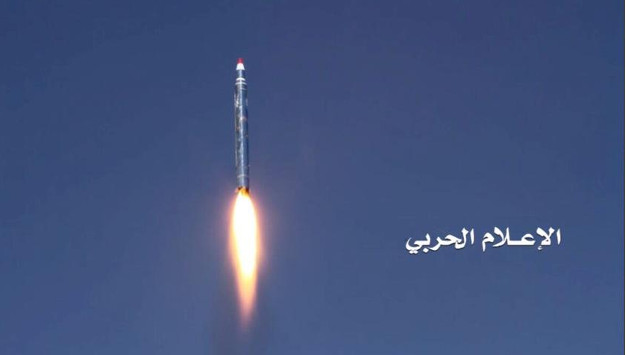
In this week’s Monday Briefing, MEI experts Paul Salem, Bilal Y. Saab, Gerald Feierstein, Gonul Tol, and Ibrahim al-Assil provide analysis on recent and upcoming events including the appointment of John Bolton to national security advisor, the Houthi missile attack on Riyadh, Egypt’s regressive referendum, the Yemeni war’s third anniversary, EU-Turkey diplomacy, and the worsening crisis in Ghouta.
Mohammed bin Salman in Washington: Impact on U.S.-Saudi relations
Saudi Crown Prince Mohammed bin Salman passed through D.C. this week to sell his Vision 2030 roadmap for transforming the Saudi economy. Karen Young, senior resident scholar Arab Gulf States Institute in Washington, and Gerald Feierstein join host Paul Salem to discuss this, as well as other key policy issues affecting U.S.-Saudi relations, from the war in Yemen to the Kingdom’s internal crackdown on corruption.
Monday Briefing: Senate moves to end US engagement in Yemen conflict
In this week’s Monday Briefing, MEI experts Gerald Feierstein, Alex Vatanka, Nathan Stock, and Randa Slim provide analysis on recent and upcoming events including the Senate’s decision to pull out of Yemen, enduring Iran-Pakistan political strain, Egypt’s role in Palestinian reconciliation, and America’s dissolving influence in Syria.
Turmoil in Aden over the past few weeks has underlined the existential crisis confronting Yemen. The alliances that have been at the center of the three-year-old civil war—the Hadi government and its Saudi-led coalition of supporters versus the Houthi alliance with former President Ali Abdullah Saleh—have fractured.
Revitalized coffee economy provides Yemen a boost amid conflict
Yemen’s national emblem depicts a relief of the Marib Dam, Yemen’s greatest manmade feature—and a coffee plant, Yemen’s most storied natural resource. This is no coincidence. Coffee drinking, as we know it today, originated in Yemen in the 15th century when Sufis discovered red coffee berries in the country’s mountain highlands.
Tightening the screws on Pakistan | Monday Briefing
In this week’s Monday Briefing, MEI experts Marvin G. Weinbaum, Charles Lister, and Gerald Feierstein provide analysis on recent and upcoming events including the placement of Pakistan on a global terrorist financing “gray list,” the ongoing assault on eastern Ghouta following a UNSC cease-fire resolution, and diplomatic efforts on the war in Yemen.
The oldest peer-reviewed publication dedicated to the study of the modern Middle East, MEI’s flagship journal covers politics, society, and culture in the region.