Skip to Content

Lebanon

MP Fouad Makhzoumi on Lebanon’s Future
  • Podcast
  • MP Fouad Makhzoumi on Lebanon’s Future

    A fragile cease-fire between Lebanon and Israel is barely holding as military delegations from both countries arrive in Washington for a new round of direct talks scheduled for this Friday. But diplomatic success could mean new strategic opportunities for the Lebanese nation. Guest host and MEI Senior Fellow Brian Katulis is joined by Lebanese Member of Parliament Fouad Makhzoumi to unpack the challenges facing the Lebanese government today, Hizballah’s influence over state institutions, and what all of this means for the country’s future. Makhzoumi also reflects on his personal journey and what inspired him to transition from business to politics in an effort to help shape a better life for his granddaughters in Lebanon.

    May 28, 2026

    Lebanese Heritage Under Siege
  • Arts & Culture
  • Lebanese Heritage Under Siege

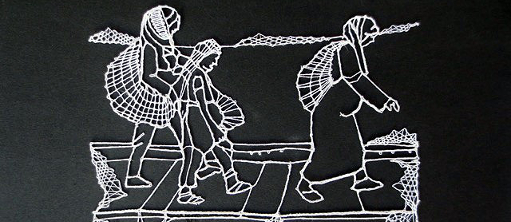
    The news from Lebanon reads like a litany of loss. Since the war began more than two months ago, not only have 2,882 people been killed and 8,768 wounded, according to Lebanon’s Health Ministry, but once again multiple heritage sites — especially those in the south — have been damaged and destroyed. Indeed, Lebanese heritage, inexorably linked to its peoples, shares in their vulnerability and suffering.

    May 14, 2026

    How to Wrest Lebanon From Iran’s Grip
  • Podcast
  • How to Wrest Lebanon From Iran’s Grip

    Despite efforts to extend the cease-fire in Lebanon and disarm Iranian proxy Hizballah, fighting continues between the militant group and Israeli forces. Hosts Alistair Taylor and Matthew Czekaj are joined by MEI Senior Fellow Fadi Nicholas Nassar to examine what the renewed fighting means for attempts to counter Iranian influence in Lebanon and what could lie ahead. They discuss the prospects for a lasting agreement, Iran’s broader proxy strategy, and how Washington can help strengthen the sovereignty of the Lebanese state.

    May 7, 2026

    Filter by
    564 Results
    Collection Spotlight: In the Name of Oil: Anglo-American Relations in the Middle East, 1950-1958
    Middle East Institute
  • Analysis
  • Collection Spotlight: In the Name of Oil: Anglo-American Relations in the Middle East, 1950-1958

     Ivan L. G. Pearson’s In the Name of Oil: Anglo-American Relations in the Middle East, 1950-1958 provides a comprehensive analysis of the extent to which British interests in the Middle East influenced or were furthered by the United States between 1950 and 1958.

    March 20, 2015

    Drug Use and Harm Reduction in the MENA Region and in Lebanon
  • Analysis
  • Drug Use and Harm Reduction in the MENA Region and in Lebanon

    Repressive policies that stigmatize and punish drug users have tended to exacerbate social problems rather than mitigate them. In contrast, harm reduction (HR) approaches to drug use have been shown to prevent the spread of blood-borne viruses (such as HIV, HBV, and HCV), thereby lowering morbidity and mortality rates. Over the past 15 years, many HR initiatives have been launched in the MENA region, including Lebanon. However, continued progress in HIV prevention will require more structured and comprehensive HR interventions, adjusted to the needs of local populations.

    February 12, 2015

    Israel’s Attack on Hezbollah and Iran
  • Analysis
  • Israel’s Attack on Hezbollah and Iran

    An Israeli helicopter fired rockets on a convoy in the Golan Heights on January 18, killing six members of Hezbollah and an Iranian general. MEI’s Randa Slim explains the context surrounding the attack and the likely repercussions.

    Why did Israel choose this time to attack Hezbollah and Iranian targets in the Golan Heights?

    January 22, 2015

    The Current Status of Lebanon’s Sunni Islamists
  • Analysis
  • The Current Status of Lebanon’s Sunni Islamists

    As fears of an ISIS surge in northern Lebanon continue to rise, it is important to have a balanced perspective on the makeup of current Lebanese Sunni Islamist groups. I recently spent three months conducting fieldwork in Lebanon, interviewing representatives from a wide variety of Islamist groups. I present my findings below. 

    December 9, 2014

    The Syrian Conflict and the Ascendancy of the Lebanese Armed Forces
  • Analysis
  • The Syrian Conflict and the Ascendancy of the Lebanese Armed Forces

    In the past, the Lebanese Armed Forces’ (LAF) inability to confront or deter Israel was reflected as political weakness for the Lebanese government vis-à-vis Hezbollah. Israel’s withdrawal from south Lebanon in 2000 heralded a growing political role for Hezbollah. This role was further enhanced by the 2006 war with Israel, with Hezbollah claiming victory and consolidating its influence within the LAF and the government.

    November 25, 2014

    Hezbollah: In Syria for the Long Haul
  • Analysis
  • Hezbollah: In Syria for the Long Haul

    As Syrian President Bashar al-Assad gazes across Damascus from his palace on Mount Qasioun, he can be grateful to his Russian, Iranian, and Hezbollah allies that he is still in a position to enjoy such a view.

    November 18, 2014

    Lebanese Presidential Election Unlikely to Alter Hezbollah’s Syria Calculus
    Middle East Institute
  • Analysis
  • Lebanese Presidential Election Unlikely to Alter Hezbollah’s Syria Calculus

    The presidential vacuum in Lebanon since May 24, when president Michel Sleiman’s term ended without the Lebanese parliament having elected a successor, is likely to continue until an electable candidate is found who respects Hezbollah’s military autonomy and does not challenge its Syria policy.

    August 7, 2014

    Five Arab Elections in Search of a Democratic Transition
    Middle East Institute
  • Analysis
  • Five Arab Elections in Search of a Democratic Transition


    Algerian President Abdelaziz Bouteflika casts his ballot on April 17.

    In the current two months between mid-April and early June, five Arab countries—Algeria, Lebanon, Iraq, Egypt, and even war-torn Syria—are holding key elections, with little sign that any is moving in the direction of meaningful democratic transition.

    May 9, 2014

    The Impact of the Syria Conflict on Salafis and Jihadis in Lebanon
  • Analysis
  • The Impact of the Syria Conflict on Salafis and Jihadis in Lebanon

    This MEI Policy Focus seeks to address the Syrian war’s effects on Lebanon against the backdrop of exacerbated sectarian tensions and political-religious instability. The study first provides a brief background on the state of Salafism in Lebanon, followed by an assessment of the situation of the Sunni street at large. It then examines the wider implications that the Syrian war has had on Lebanon, namely the call for jihad launched in 2013 by Sunni sheiks around the country and the resulting burgeoning of relations between Salafis and Syrian military and radical organizations.

    April 18, 2014

    Lebanon at the Crossroads
  • Analysis
  • Lebanon at the Crossroads

    Testimony by MEI’s Paul Salem before the U.S. Senate Committee on Foreign Relations, Subcommittee on Near Eastern and South and Central Asian Affairs, delivered February 25, 2014.  Find more information here about the hearing, including full video (Salem’s testimony begins at 1:22:40).

    February 26, 2014

    Keynote Luncheon Featuring USAID Administrator Rajiv Shah

    Keynote Luncheon Featuring USAID Administrator Rajiv Shah

    January 31 – January 1, 1970, January 31 - 12:30 PM – 12:00 AM
    January 1 - 12:30 PM – 12:00 AM

    The National Press Club, 529 14th St. NW, 13th Floor, Washington, District of Columbia 20045

    Scenarios of Change and Possibilities of Reform in Lebanon
    Middle East Institute
  • Analysis
  • Scenarios of Change and Possibilities of Reform in Lebanon

    The recent spate of bombings in Beirut underline the degree to which Lebanon has become entangled in the wider regional conflict being fought in and around Syria, but the paralysis of Lebanon’s political institutions indicate an equally deep domestic dysfunction. There is no doubt that part of Lebanon’s problems derive from its difficult geostrategic environment and require external developments and changes, and part of them come from the weaknesses of its domestic political and socioeconomic system and require internal reform.

    January 6, 2014

    Beirut Car Bombing Continues Deadly Escalation
  • Analysis
  • Beirut Car Bombing Continues Deadly Escalation

    On January 2, only days after a car bomb in Beirut took the life of former Finance Minister Mohamad Chatah and several bystanders on December 27, another bomb struck the capital’s southern suburbs.  With initial reports of four dead and 40 wounded, this latest, and possibly retaliatory, attack fits into an ominous pattern as Syria’s conflict spills into Lebanon. 

    January 2, 2014

    Read the Middle East Journal

    The oldest peer-reviewed publication dedicated to the study of the modern Middle East, MEI’s flagship journal covers politics, society, and culture in the region.