Turkey’s Nuclear Ambitions in the Post-Iran War Environment
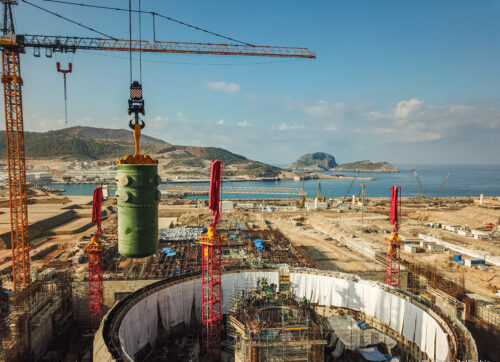
Turkish ambitions to develop nuclear weapons are not new, but the changing security environment is strengthening Ankara’s motivations and rationale for moving away from its longstanding role as a champion of nonproliferation and toward a strategy of preserving the option to build nuclear weapons without actually pursuing them. The challenge for Washington is to manage the nuclear trajectory of regional powers such as Turkey and Saudi Arabia rather than preventing them from acquiring greater nuclear capabilities altogether.
A Turkish court has taken a dramatic step that could reshape the country’s political landscape. It annulled the results of the CHP’s 2023 party congress, effectively overturning the election of Özgür Özel as leader of Turkey’s main opposition party and potentially paving the way for former chairman Kemal Kılıçdaroğlu to return.
Turkey’s ideologically inspired foreign policy is shifting to concentrate more directly on bolstering domestic nationalist support and highlight its regional religious identity. Ankara seeks to divert attention from its policy setbacks in Syria, as well as its internal and economic problems, while continuing to blunt U.S. efforts to crush ISIS.
The United States has been pushing Turkey for a campaign to eject ISIS from a 60-mile stretch of border that it still controls between the Syrian towns of Jarabulus and Azaz. However, the joint U.S.-Turkey operation has faced several roadblocks. From the outset, the United States and Turkey have had different goals. Washington wants Ankara to close the border, which is the sole remaining crossing point for ISIS militants.
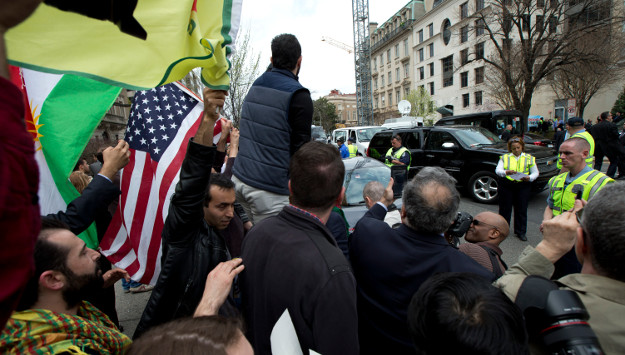
Monday Briefing: Erdogan's Failed Washington Trip, Iraq's Cabinet Reshuffle, and Other Key Issues in Week Ahead
In this week’s Monday Briefing, MEI experts Gonul Tol, Robert S. Ford, Charles Lister, and Paul Salem provide analysis on recent events including Turkish President Erdogan’s visit to Washington, the reshuffling of Iraq’s cabinet, King Salman’s forthcoming visit to Egypt, and the latest attempts by Jabhat al-Nusra over the weekend to disrupt the Syrian political process.
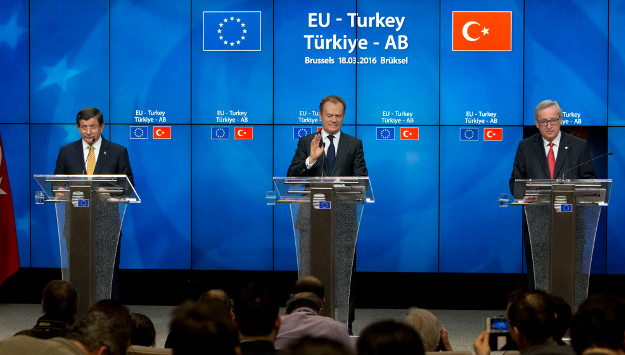
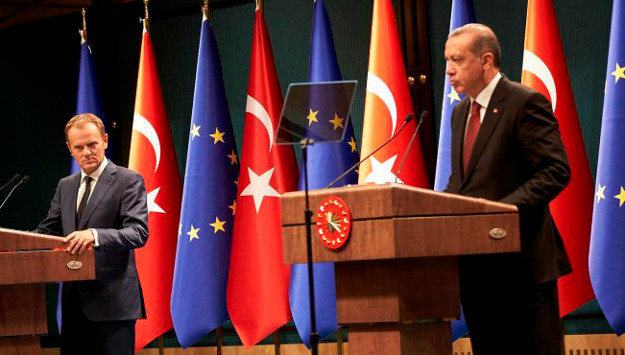
Turkey and the European Union have reached what they have labelled an “historic” agreement. The Europeans believe they have papered over an expanding and divisive refugee problem, while the Turks think they have a wider door for E.U. membership. The Europeans, however, have no intention of bringing Turkey into its fold anytime soon as it would dramatically accelerate the growth of its rightwing parties. Neither do the Turks have a genuine interest in solving Europe’s refugee crisis, since the crisis itself is Turkey’s leverage to gain concessions from Europe.
Support for civil society and civil society organizations (CSOs) has been an integral part of endeavors by most major policy makers to advance democratization across the globe, with particular emphasis on the Middle East North Africa (MENA) region since the late 1980s. The role envisaged for CSOs within this context is to increase government accountability, filter the interests of ordinary citizens into policy processes, and advance democratization generally, this process is often connected with human rights and social progress. This essay investigates how this vision of civil society is constituted in the case of Turkey, using empirical evidence gathered through 38 in-depth qualitative interviews with women’s organizations from across the political, religious, and geographical spectrum.
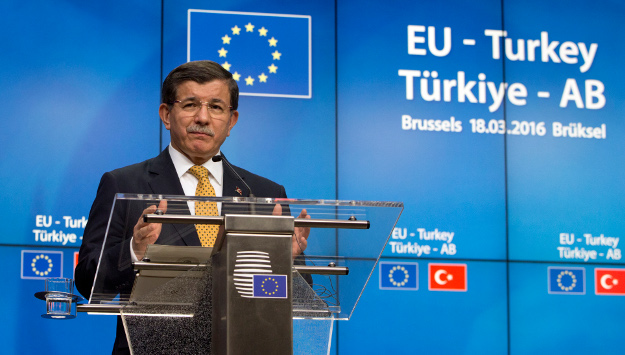
The European Union and Turkey agreed March 17 on a plan to address the Syrian refugee crisis. Under the deal any migrants arriving in Europe, starting next week, will be sent back to Turkey. Ankara, in exchange, will receive expedited aid intended to help Syrians in Turkey, as well as the promise of reignited E.U. membership talks.
Turkey first applied for associate membership in the European Economic Community in 1959, and Europe has ever since had the upper hand in relations with Ankara. But the EU’s relationship with Turkey has been turned upside down by the Syrian refugee crisis, and the alarm it has caused in European countries.
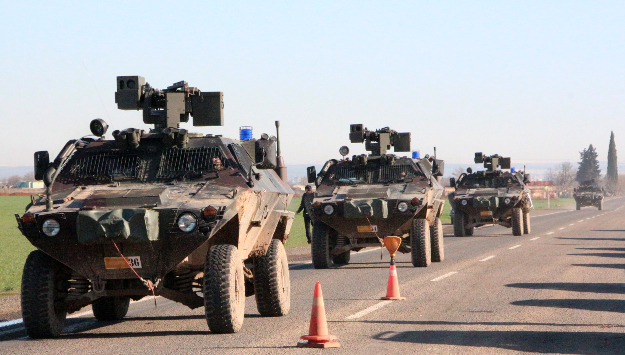
Turkey is confronting a nightmare as its two archenemies, President Bashar al-Assad’s regime and the Kurdish Democratic Union Party (PYD), gain ground in Syria with the help of U.S. and Russian air cover. Turkey has long called for a no-fly zone in northern Syria to protect areas held by the opposition and a halt to the PYD advances west of the Euphrates. Frustrated with U.S. cooperation with the PYD, Ankara has insisted that the PYD is a terrorist organization and poses a grave danger to Turkey’s national security.
What MEI’s Experts Say on Situation in Northern Syria
MEI experts Charles Lister, Paul Salem, Randa Slim, and Gonul Tol weigh in on the intensifying battles in northern Syria, with dire predictions for the humanitarian situation as well as for the internal stability of neighbors. Lister argues the loss of the Azaz corridor would be a “catastrophic morale blow” to the Syrian opposition, while Tol believes current Turkish attacks on YPG positions is not a prelude to an invasion.
Turkey Squeezed by Russian-backed Offensives in Syria
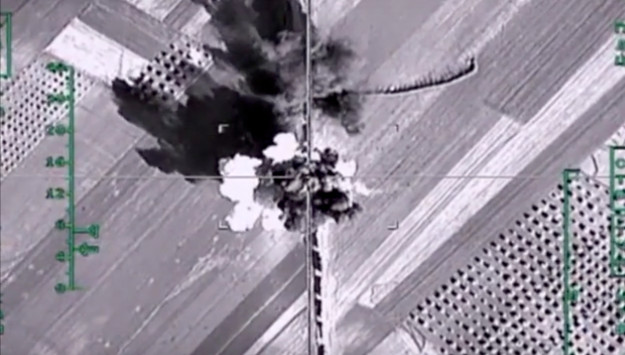
The cessation of hostilities was to begin in Syria on February 19. As was the case with the late 2011 and mid-2012 ceasefire efforts, this one is likely to fail. Instead of halting fire, the Syrian government is currently trying to isolate and assert dominion over the rebel-held portion of Aleppo, and, just as importantly, to block armed opposition supply lines extending down from Turkey. The Syrian government and its Russian and Iranian allies want to impose surrender terms on the armed opposition, not negotiate a compromise political deal.
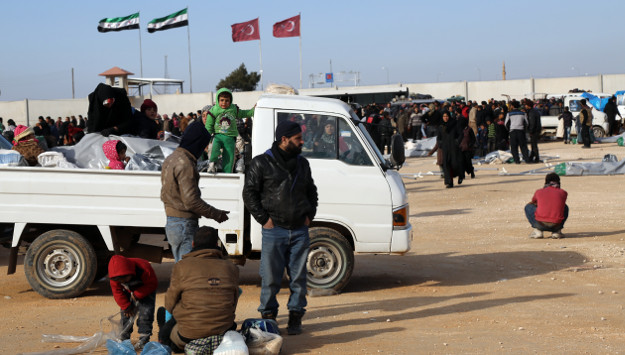
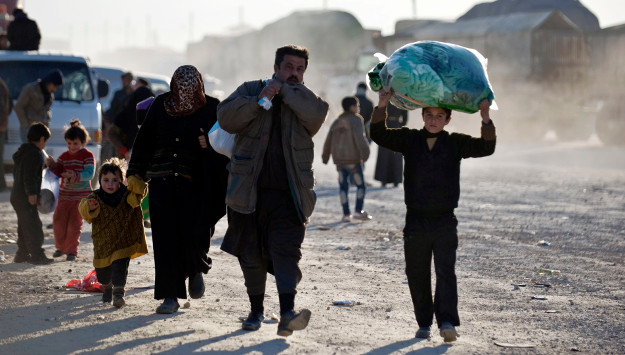
Not only is the battle for Aleppo sending tens of thousands of desperate people fleeing toward Turkey, but the fall of the rebel-held city would deliver a major blow to Ankara’s Syria policy.
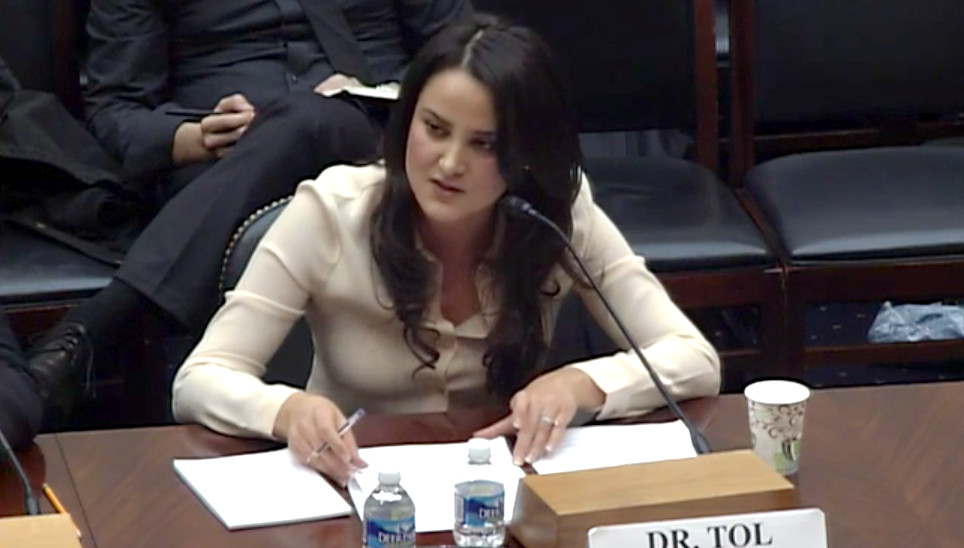
Gonul Tol, director of MEI’s Center for Turkish Studies, delivered the following testimony at a hearing of the U.S. House of Representatives’ Foreign Affairs Subcommittee on Europe, Eurasia, and Emerging Threats on February 3, 2016. Click here for video of the hearing.
Mr. Chairman, members of the Committee, it is an honor to be invited to speak with you today about the political trends in Turkey in 2016.
Turkey Should Avoid Getting Involved in the Saudi-Iran Row
Turkey’s reaction to the latest spat between Saudi Arabia and Iran spells more trouble for Ankara at a time when it is already at loggerheads with many of its neighbors. Initial remarks by Deputy Prime Minister Numan Kurtulmus criticizing both sides were an attempt to keep Turkey out of the rift. He was upstaged, however, by Turkey’s foreign ministry, which followed up with a statement singling out Iran for condemnation.
Washington and Ankara are in yet another difficult phase in a relationship cycle that runs from very good to very bad. American public opinion about another country forms slowly, but persists through time once set. As Turkey changes, we keep trying to fit new evidence into the old paradigm. At some point, the contradictions are too obvious to explain away, and the new narrative emerges. Right now, Americans are caught in that dilemma regarding Turkey. Unless we have a better idea of which Turkey we are dealing with, we are certain to make bad choices.
The oldest peer-reviewed publication dedicated to the study of the modern Middle East, MEI’s flagship journal covers politics, society, and culture in the region.